In the 1950s, drive-in culture took off, turning cars into social hubs where you could enjoy movies, music, and quick bites without leaving your vehicle. Soft serve ice cream became a favorite treat, thanks to innovative machines and colorful toppings, perfectly complementing the fun and convenience of drive-ins. This lively scene created lasting memories and symbols of progress, community, and leisure. Want to discover how these elements shaped one of the era’s most iconic lifestyles?
Key Takeaways
- The 1950s drive-in culture revolutionized social life by combining movies, music, and food in a convenient, fun setting.
- Soft serve ice cream’s innovations, such as smooth textures and colorful toppings, boosted its popularity at drive-in eateries.
- Drive-in theaters and restaurants became iconic symbols of optimism, community, and leisure during the era.
- Soft serve treats allowed customers to enjoy desserts safely in their cars, enhancing the drive-in experience.
- The era’s drive-in culture and soft serve traditions continue to evoke nostalgia and symbolize 1950s Americana.
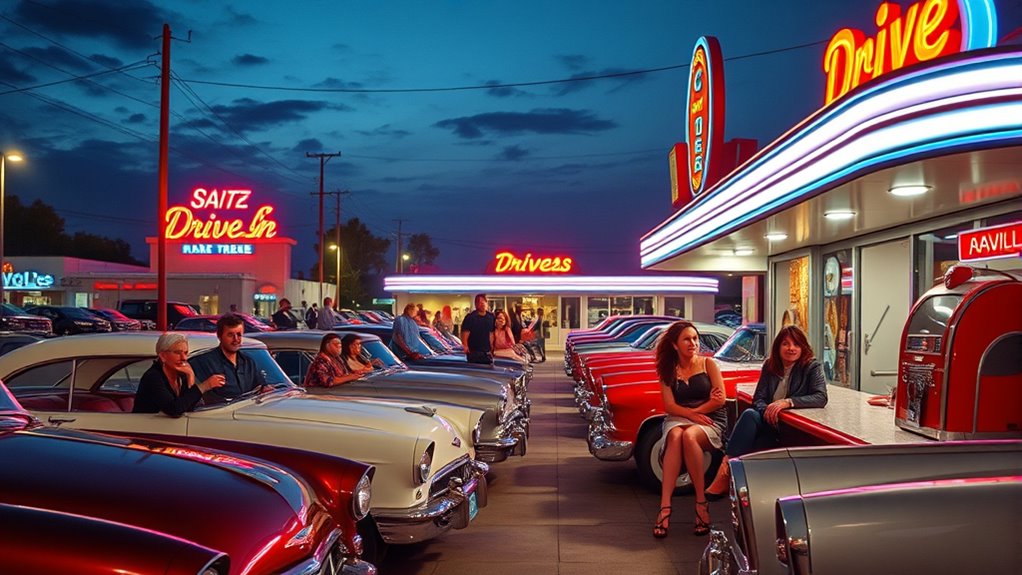
During the 1950s, drive-in culture exploded in popularity, transforming the way Americans socialized and enjoyed leisure time. Suddenly, you could grab a quick bite, enjoy entertainment, and socialize without even leaving your car. These drive-in restaurants became more than just places to eat; they turned into social hubs that embodied the optimism and prosperity of the era. As you cruised in your car, you experienced a new kind of freedom—one where convenience and fun went hand in hand. The allure of drive-in nostalgia grew stronger each year, as movies, music, and food merged into a unique cultural experience. Drive-in theaters and restaurants became symbols of this movement, providing a sense of community and leisure that felt modern and exciting.
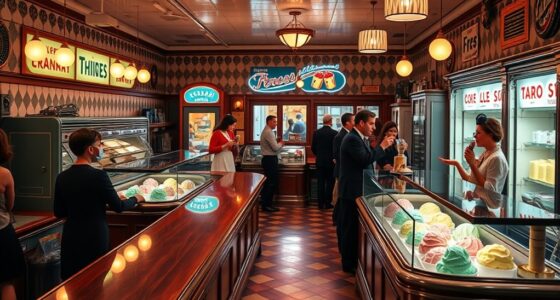
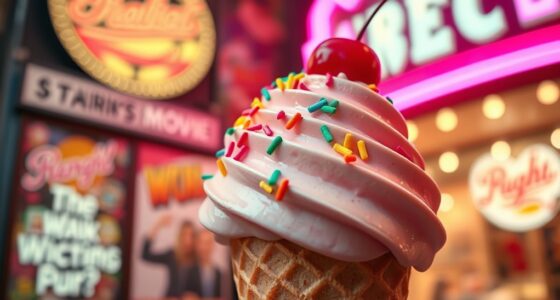
One of the standout features that made drive-ins so appealing was their innovative approach to food, especially soft serve ice cream. Soft serve innovations took center stage, transforming the simple act of enjoying ice cream into an experience. The introduction of soft serve machines allowed for quick service, smooth textures, and a variety of flavors, making it a favorite treat for many. You’d often find drive-ins offering a rainbow of soft serve options—classic vanilla, chocolate, and more adventurous combinations—appealing to every taste. This innovation not only made ice cream more accessible but also elevated it to an art form, with swirl patterns and colorful toppings that made each cone a small delight. Soft serve’s popularity skyrocketed during this period, and drive-in establishments capitalized on this trend by offering creative flavors and toppings, enticing customers to indulge. Additionally, the development of vetted soft serve products ensured safety and quality, further boosting its popularity among consumers.
The combination of drive-in nostalgia and soft serve innovations created a powerful cultural phenomenon. You could enjoy a milkshake or cone while sitting comfortably in your car, listening to music or watching a movie. The experience was casual, fun, and perfectly suited to the post-war era’s optimism. Drive-in restaurants became iconic symbols of the 1950s, capturing the spirit of innovation and leisure that defined the decade. The appeal of these establishments wasn’t just about convenience; it was about creating memories. Whether it was a family outing, a first date, or a night out with friends, the drive-in environment fostered a sense of belonging and enjoyment. Today, that drive-in nostalgia still resonates, reminding you of a time when innovation and community went hand in hand, especially in the domain of soft serve treats that made every visit a bit sweeter.
Frequently Asked Questions
How Did Drive-In Theaters Influence Car Design in the 1950S?
Drive-in theaters influenced car design in the 1950s by emphasizing car safety and windshield design. You’ll notice cars had larger windshields to improve visibility for drivers and passengers, enhancing safety during quick stops or parking. Manufacturers also focused on safer features, like better bumpers and reinforced frames, to protect occupants. These changes made cars more functional and stylish, catering to the growing popularity of drive-in entertainment and ensuring a safer, more comfortable experience for everyone.
What Was the Role of Jukeboxes in 1950S Drive-In Restaurants?
Think of jukeboxes as the heartbeat of 1950s drive-in restaurants, setting the mood with their music selection. They let you, the customer, choose your favorite tunes, creating a personal soundtrack that fuels nostalgia and connection. The jukebox becomes more than just entertainment; it’s a symbol of freedom and rebellion. You feel the energy shift as the music plays, making every visit memorable and distinctly your own.
How Did Soft Serve Ice Cream Recipes Evolve During the 1950S?
During the 1950s, soft serve ice cream recipes underwent key innovations, leading to smoother, creamier textures. You’ll notice recipe transformations included the introduction of air incorporation techniques, making the ice cream lighter and more appealing. These innovations made soft serve more consistent and easier to produce in drive-in settings, boosting its popularity. As a result, soft serve became a staple treat, revolutionizing ice cream enjoyment during that era.
Were Drive-In Culture and Soft Serve Available Nationwide or Region-Specific?
You’ll find that drive-in culture and soft serve ice cream had a nationwide availability during the 1950s, but regional trends influenced their popularity. While many areas embraced these innovations, some regions experienced slower adoption due to local preferences or infrastructure. Overall, the trend spread across the country, making soft serve a staple at drive-ins everywhere, though certain local variations still persisted based on regional tastes and economic factors.
How Did the Rise of Fast Food Chains Impact Traditional Drive-In Businesses?
You’ll notice that the rise of fast food chains led to intense fast food competition, which caused a significant drive-in decline. As these chains offered quicker service, consistent quality, and lower prices, traditional drive-in businesses struggled to keep up. Many couldn’t adapt to the changing preferences, leading to a sharp decline in their popularity. This shift transformed the landscape of American dining, favoring fast food over the nostalgic drive-in experience.
Conclusion
As you step back into the 1950s, you can see how drive-in culture and soft serve ice cream became the heartbeat of a vibrant era. Like a neon sign flickering in the night, these trends lit up streets and hearts alike, creating a sweet symphony of fun and freedom. Embracing this time reminds you how simple pleasures can shape a generation, turning everyday moments into timeless memories that still sparkle today.