
To understand a nutrition panel for frozen desserts, start by checking the serving size and note how many servings are in the package. Look at the calories per serving to manage your intake. Review the sugar content, paying attention to added sugars, and check fats, especially saturated and trans fats. Also, examine the protein level if relevant. Staying aware of these details helps you choose healthier options—learn more to become a savvy label reader.
Key Takeaways
- Check the serving size to understand the nutritional values per portion and multiply accordingly for larger servings.
- Review calorie information to manage intake, but note that low-calorie labels don’t always mean low sugar or fat.
- Examine sugar content, including natural and added sugars, to choose options aligned with your dietary needs.
- Look at fat types—total, saturated, trans—to assess healthiness and compare dairy versus plant-based desserts.
- Read ingredient lists and nutrient details like protein and vitamins to select products that meet your nutritional goals.
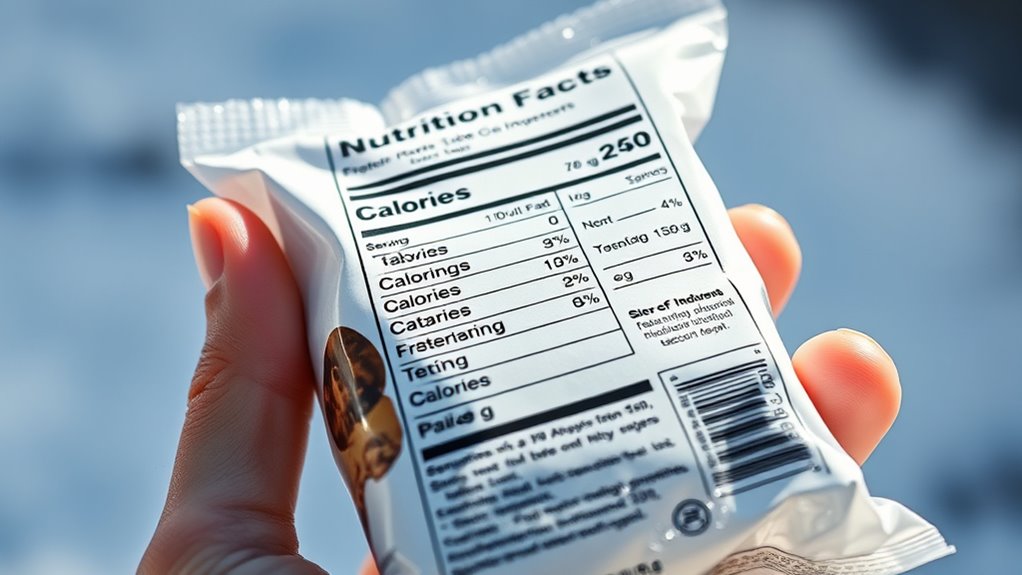
When you pick up a package of frozen dessert, understanding the nutrition panel can help you make healthier choices. It’s your quick guide to what’s inside, revealing key details about ingredients, nutrients, and calories. This is especially useful if you’re trying to limit certain components like sugar or avoid dairy. Many frozen desserts now feature dairy alternatives, such as almond, soy, or coconut milk, which are often listed in the ingredients. Checking the nutrition label helps you compare these options and choose one that fits your dietary needs. For example, some dairy-free options may have different fat profiles or added sugars, so it’s important to pay attention to the nutritional information.
Start by looking at the serving size. This tells you how much of the product the nutrition facts are based on. A common mistake is assuming the numbers reflect the entire package, but often, the serving size is smaller, so you need to multiply the values if you plan to eat more. Next, focus on calories. If you’re watching your weight, keeping an eye on the calorie count per serving is essential. Just because a dessert is labeled as “low-calorie” doesn’t mean it’s free from other nutrients you might want to limit, such as sugar or saturated fat.
Always check the serving size to accurately assess nutritional information and avoid overestimating your intake.
The sugar content is another critical factor, especially if you’re concerned about blood sugar levels or trying to cut back on added sugars. The nutrition panel lists total sugars, which include both naturally occurring sugars (like those in fruit or dairy alternatives) and added sugars. Many frozen desserts contain a significant amount of added sugar to enhance flavor and texture, so check this number carefully. Lower sugar options usually have less than 10 grams per serving, but some can have much more. If you’re seeking healthier choices, look for products with minimal added sugars or consider dairy alternatives that are unsweetened.
Beyond sugar, examine the fats section. Pay attention to total fat, saturated fat, and trans fats. Frozen desserts made with dairy alternatives may have different fat profiles than traditional ice cream—some might be lower in saturated fat but higher in unsaturated fats. The protein content can also vary, especially with dairy-free options enriched with plant proteins or added ingredients for texture. Additionally, ongoing research in AI Security highlights the importance of safety measures and monitoring to prevent vulnerabilities, which is crucial when selecting products with complex ingredient lists or new formulations.
Frequently Asked Questions
How Accurate Are Nutrition Labels on Frozen Desserts?
Nutrition labels on frozen desserts are generally accurate due to strict regulations, but label accuracy can vary because of ingredient transparency issues or manufacturing differences. You should trust the labels as a helpful guide, yet stay aware that small discrepancies may occur. Always check for updated information and look for brands that prioritize ingredient transparency to make better-informed choices about your frozen treats.
What Ingredients Should I Avoid in Frozen Desserts?
You should avoid frozen desserts with artificial additives and preservative ingredients, as these can impact your health negatively. Look out for artificial colors, flavors, and preservatives like BHT or BHA, which may cause allergies or other issues. Instead, opt for products with simple, natural ingredients. Reading labels helps you identify and steer clear of these unwanted ingredients, ensuring you enjoy a healthier treat.
Are Sugar-Free Frozen Desserts Healthier Options?
You might think sugar-free frozen desserts are healthier, but hold on—are they really? These options often contain sugar substitutes, which can trigger cravings or digestive issues in some people. Plus, they might not be lower in calories than you expect. Always check the nutrition label; sometimes, sugar-free versions still pack a significant calorie punch. So, approach them with cautious curiosity rather than assuming they’re your best choice.
How Does Serving Size Affect Nutritional Information?
Your portion size directly impacts the nutritional information you see on the label. Larger portions mean more calories, sugar, and fat, while smaller portions show fewer. Always check the serving size to understand what the label’s numbers truly represent. Keep in mind, label consistency varies; some brands list servings differently. By paying attention to portion size, you get a clearer picture of your frozen dessert’s nutritional value.
Can I Trust Organic Labels on Frozen Desserts?
You can generally trust organic labels on frozen desserts if they have a reliable organic certification, which guarantees the product meets strict standards. However, always consider label authenticity—some brands might use misleading claims. Look for official certification seals from reputable organizations like USDA Organic. Doing so helps confirm the product’s organic status and reduces the risk of being misled by false or exaggerated claims.
Conclusion
Now that you know how to read a nutrition panel, you can make smarter choices when selecting frozen desserts. Keep an eye on added sugars and serving sizes to enjoy treats without overdoing it. Did you know that Americans consume about 23 pounds of ice cream per person annually? Being informed helps you indulge mindfully and maintain a balanced diet. So next time you reach for dessert, read the label and choose wisely!