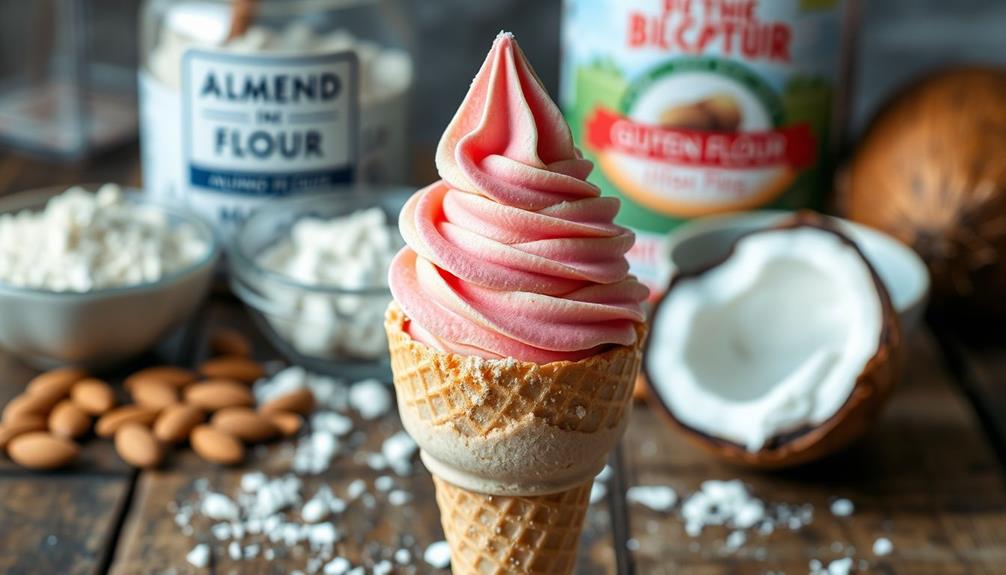
Post-workout ice cream isn’t just a dessert myth—it can actually serve as a recovery fuel if you choose wisely. Opt for options with added protein or lower fat to help repair muscles and replenish glycogen. Keep portions moderate and pair with healthier foods like fruit or nuts for better benefits. When enjoyed thoughtfully, ice cream can be a satisfying treat that supports your recovery goals. Curious how to make it work best? Keep exploring to learn more.
Key Takeaways
- Ice cream provides quick carbs and protein, aiding muscle repair and glycogen replenishment post-workout.
- Nutritional quality varies; lower-fat or protein-enriched options make ice cream a more balanced recovery snack.
- Flavor variety and portion control allow ice cream to function as a satisfying recovery treat without excess calories.
- When paired with nutrient-dense foods, certain ice creams can support recovery, but they should complement a balanced diet.
- Moderation and mindful selection determine whether ice cream serves as a recovery fuel or just a dessert indulgence.

After a tough workout, treating yourself to ice cream might seem like a guilty pleasure, but it can actually be a smart way to replenish your energy and aid recovery. When you finish exercising, your body needs quick-digesting carbs and some protein to restore glycogen stores and repair muscle tissue. Ice cream, especially those with a decent calorie content, can provide that boost, making it a convenient treat. Plus, with a wide flavor variety available—from classic vanilla and chocolate to more adventurous options like cookie dough or fruit swirls—you can satisfy your sweet tooth while supporting your recovery process.
After intense workouts, ice cream offers quick carbs and protein for recovery and energy restoration.
It’s important to contemplate the calorie content of ice cream, though. Some varieties are high in sugar and fats, which might not align with your nutritional goals, especially if you’re trying to manage your weight or macronutrient intake. However, there are options that balance indulgence with nutrition, such as those made with lower-fat ingredients or added protein. These can help you get the benefits of quick energy replenishment without overdoing it on empty calories. Choosing a smaller portion or pairing ice cream with healthier foods, like fruit or nuts, can also help you enjoy it without guilt.
The flavor variety plays a significant role in whether ice cream feels like a reward or a cheat. The broad selection allows you to pick flavors that suit your taste buds and recovery needs. For instance, if you’re seeking something with added protein, some brands now offer protein-enriched ice creams, making them a functional post-workout snack. If you prefer a more traditional treat, classic flavors like chocolate or strawberry can satisfy cravings while still providing the carbs and fats necessary to refuel. The extensive flavor options mean you don’t have to settle for something bland or uninspired—there’s likely a type that fits your recovery plan and personal preferences.
While ice cream can be part of your post-workout routine, it shouldn’t replace more balanced recovery foods, such as smoothies with fruit and protein or yogurt with granola. It’s best seen as an occasional treat that offers quick energy and comfort after a hard session. When you’re mindful of the calorie content and choose flavors that align with your goals, ice cream can indeed be a recovery-friendly option. Also, selecting options with added moisturizing agents can help prevent dryness and support overall skin health. So go ahead, enjoy that scoop or two—just keep it in moderation and pick varieties that support your fitness journey while satisfying your taste buds.
Frequently Asked Questions
Does Ice Cream Help Reduce Muscle Soreness Effectively?
Ice cream can help reduce muscle soreness by providing quick carbohydrates and some protein, which may support protein synthesis and inflammation reduction. The cold temperature also numbs soreness temporarily. However, it’s not a scientifically proven recovery food. To truly aid recovery, focus on balanced nutrition with adequate protein and anti-inflammatory foods. Enjoy ice cream as a treat, but don’t rely on it solely for muscle soreness relief.
Can Dairy in Ice Cream Cause Digestion Issues After Workouts?
You might find that dairy in ice cream can be a bit tricky if you have lactose intolerance or dairy allergies. It could lead to digestion issues like bloating or discomfort after workouts. If you’re sensitive, consider lactose-free options or plant-based alternatives. Listening to your body helps you enjoy your post-workout treat without unwanted stomach troubles, making recovery both delicious and comfortable.
Are There Healthier Ice Cream Alternatives for Recovery?
Yes, you can opt for healthier ice cream alternatives for recovery. Try plant-based options like coconut or almond milk-based ice creams, which are often easier to digest and packed with nutrients. Sugar-free alternatives also help reduce inflammation and support your recovery process. Look for options with natural ingredients, minimal added sugars, and added protein to fuel your muscles and satisfy your sweet tooth without the guilt.
How Does Sugar in Ice Cream Impact Workout Recovery?
The sugar in ice cream can spike your insulin response, leading to rapid energy boosts but potentially causing sugar cravings later. This spike may hinder your recovery by disrupting blood sugar levels and delaying muscle repair. If you’re aiming for ideal recovery, consuming ice cream with high sugar content might less effectively support replenishing glycogen stores, so choosing lower-sugar options or healthier alternatives can help manage insulin response and reduce cravings.
Is Post-Workout Ice Cream Suitable for All Fitness Levels?
Think of post-workout nutrition as a tailored suit—what fits one may not fit another. Post-workout ice cream variety can suit all fitness levels if chosen wisely. For beginners, opt for lower sugar or protein-rich options, while seasoned athletes might indulge occasionally. It’s about moderation and balance, ensuring your recovery aligns with your goals. Ice cream can be part of your plan, but listen to your body’s unique needs.
Conclusion
So, is that scoop of ice cream after your workout truly the ultimate recovery fuel? Or is it just a tasty myth hiding the real science? The truth might surprise you, and it could change how you see your post-workout treat forever. Will you keep indulging in that sweet reward or explore smarter options? The choice is yours—just remember, sometimes the biggest secrets are hidden right in plain sight. What will you discover next?