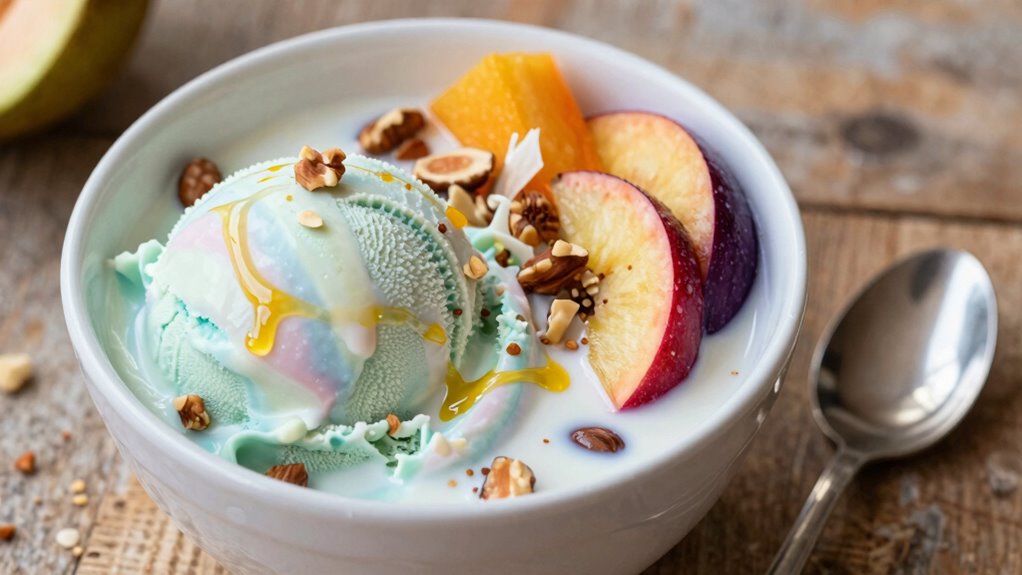

Adding oils to plant-based ice creams improves texture and enhances flavor, making the treat creamier and more satisfying. Common oils like coconut, palm, and shea influence the product’s richness and nutritional profile, increasing calorie and fat content. While oils can boost mouthfeel, they aren’t always necessary, especially if you prefer healthier options with fewer ingredients. To make smarter choices, consider oil types and overall nutrition—keep exploring to find what best suits your health and taste goals.
Key Takeaways
- Added oils increase fat content and calories, impacting the nutritional profile of plant-based ice creams.
- Oils like coconut or palm oil contribute saturated fats, influencing health considerations.
- The type and amount of oil affect texture, creaminess, and flavor, shaping overall product quality.
- Using oils can enhance mouthfeel but may be replaced with fruit purees or nuts for healthier options.
- Reading ingredient labels helps identify added oils and assess the product’s nutritional value.
Why Are Oils Added to Plant-Based Ice Creams?

Oils are added to plant-based ice creams primarily to improve their texture and mouthfeel. By incorporating oils, manufacturers can achieve a creamier, smoother consistency that mimics traditional dairy ice cream. Oils also influence the flavor profile, adding richness and depth that enhance the overall taste experience. Additionally, they contribute to the plant-based fat content, making the product more satisfying and satisfying your desire for richness. Without these oils, plant-based ice creams might feel icy or gritty, diminishing enjoyment. The choice and amount of oil directly impact the product’s texture and flavor balance. Ultimately, oils are essential ingredients that help create a more indulgent, satisfying plant-based ice cream, aligning its sensory qualities closer to conventional dairy options. Considering the environmental regulations can also influence the types of oils used in production, as manufacturers aim to meet sustainability standards while maintaining product quality.
What Types of Oils Are Common in Plant-Based Ice Creams?

To achieve the desired creamy texture, manufacturers commonly use oils like coconut, palm, and shea. Coconut oil is popular because it’s solid at room temperature and adds a rich, smooth consistency. It also provides a natural sweetness and enhances flavor. Palm oil is another common choice; it’s semi-solid and helps give ice cream stability and creaminess. Palm oil is also affordable and widely available, making it a practical option. Shea oil, though less common, is sometimes used for its moisturizing properties and mild flavor. These oils are chosen for their ability to mimic the mouthfeel of traditional dairy ice cream, but they also influence the nutritional profile. Understanding which oils are used helps you better assess the ingredients and health implications of plant-based ice cream.
How Do Added Oils Affect the Nutrition of Plant-Based Ice Creams?

Added oils in plant-based ice creams substantially influence their nutritional profile, often increasing the overall fat content. This is due to oil absorption during processing, which helps create a creamy texture and smooth mouthfeel. The added oils also play a key role in flavor enhancement, enriching the taste and making the ice cream more appealing. However, higher fat levels can impact calorie count and may affect your dietary goals. Different oils contribute varying amounts of saturated and unsaturated fats, influencing the healthiness of the product. While oils can improve texture and flavor, they also alter the nutritional balance, so it’s important to contemplate their presence when choosing plant-based ice creams. Understanding added oils helps you make more informed decisions. Nutritional Impact of added oils can vary based on the types used, affecting overall healthiness. Additionally, the choice of oils can influence saturated vs. unsaturated fat content, which plays a significant role in cardiovascular health.
Are Oils in Plant-Based Ice Creams Beneficial or Unnecessary?

While oils in plant-based ice creams can enhance texture and flavor, their necessity is debatable. Oils and flavor enhancement often improve the overall eating experience, making the ice cream creamier and more appealing. Similarly, oils and texture modification help achieve a smooth, rich consistency that mimics traditional dairy ice cream. However, many plant-based options can achieve desirable textures and flavors without added oils by using alternative ingredients like fruit purees or plant-based thickeners. Adding oils isn’t always essential for quality; it often depends on the formulation and desired mouthfeel. Nutritional considerations also play a role in choosing products with or without added oils. If you’re seeking healthier choices, consider products with little or no added oils, as these might have fewer calories and less saturated fat, aligning better with your nutritional goals. Incorporating alternative ingredients and techniques can also contribute to a more natural and wholesome product.
How Can You Choose Healthier Plant-Based Ice Creams?

Choosing healthier plant-based ice creams involves reading labels carefully and prioritizing options that contain simple, recognizable ingredients. Look for brands that use natural flavorings instead of artificial additives, which can be less healthy. Ingredient transparency is key—trust products that clearly list all components without vague terms or unpronounceable ingredients. Avoid options with added sugars, unhealthy oils, or lengthy ingredient lists. Instead, opt for those made with minimal ingredients, such as nut milks, coconut, or familiar sweeteners. Checking the label helps you identify products that align with your health goals. Additionally, understanding the role of added oils and their impact on nutritional value can guide you toward better choices. Being aware of processing methods can also help you select less processed, more nutritious options. By focusing on natural flavorings and ingredient transparency, you can enjoy plant-based ice cream as a nutritious treat without sacrificing quality or healthfulness. Recognizing hidden additives can further improve your ability to make healthier selections.
What Do You Need to Know About Oils and Calories in Your Frozen Treats?

Understanding the oils and calorie content in your frozen treats is essential for making healthier choices. Oils’ impact on your ice cream affects both flavor and nutritional value, especially since added oils can increase calorie content considerably. Some oils, like coconut or palm oil, are higher in saturated fats, which may influence heart health if consumed excessively. Checking labels helps you identify how much oil is added and its type, allowing you to manage calorie intake better. Additionally, nutritional composition varies depending on the type and amount of oils used, which can influence overall health effects. Recognizing the types of oils used in plant-based ice creams can help you make more informed dietary decisions. Moreover, understanding the industry practices behind oil use can shed light on how formulations are developed for taste and texture. The calorie contribution from added oils can vary widely depending on formulation choices, impacting your overall intake. Keep in mind that higher calorie content doesn’t necessarily mean a less healthy option, but it does mean moderation is key. Being aware of how oils contribute to your frozen treat’s overall calorie count enables you to enjoy plant-based ice cream while maintaining your health goals.
Frequently Asked Questions
Do Added Oils Impact the Allergen Content of Plant-Based Ice Creams?
Adding oils can impact the allergen content of plant-based ice creams by increasing the risk of allergen cross contact and hidden allergen risks. You might not see these allergens listed clearly, so it is crucial to read labels carefully. Oils derived from nuts or soy can introduce new allergen concerns, so if you have allergies, always check for potential cross contact and hidden ingredients to stay safe.
Are There Environmentally Sustainable Oil Options Used in Plant-Based Ice Creams?
You’ll find that many plant-based ice creams use environmentally sustainable oils like ethically sourced coconut, olive, or avocado oil. These oils come from producers committed to sustainable sourcing and eco-friendly production practices, reducing environmental impact. Choosing brands that prioritize these options helps you enjoy delicious ice cream while supporting eco-conscious efforts. Always check labels or brand info to guarantee the oils used align with your sustainability values.
How Do Added Oils Influence the Texture and Mouthfeel of Plant-Based Ice Creams?
Added oils in plant-based ice creams create a creamy texture and enhance mouthfeel, making each bite smooth and satisfying. They help mimic traditional dairy’s richness, giving you that indulgent sensation you crave. By carefully selecting the right oils, manufacturers can improve the overall feel without compromising flavor. So, these oils play a key role in delivering a luxurious, creamy experience that keeps you coming back for more.
Can Consumers Identify Added Oils on Ingredient Labels Easily?
You might find it tricky to identify added oils on labels, as only about 60% of consumers fully understand ingredient transparency. Oil names can be confusing, hiding behind terms like “vegetable oil” or “plant-based fats.” To improve label comprehension, look for specific oils like coconut or palm oil. Staying vigilant helps you make informed choices, ensuring you understand what’s in your ice cream and how it impacts your health.
What Are the Potential Long-Term Health Effects of Consuming Oils in Plant-Based Ice Creams?
Consuming oils in plant-based ice creams over the long term could increase your risk of chronic diseases like heart disease and diabetes. Regular intake of added oils may raise your bad cholesterol levels, contribute to inflammation, and impact your overall health. While occasional treats are fine, frequent consumption might pose long-term health risks, so it’s smart to balance your diet and choose products with healthier fats to minimize the chronic disease impact.
Conclusion
Knowing that some plant-based ice creams can contain up to 20 grams of added fats per serving, it’s clear you should read labels carefully. While oils can enhance texture and flavor, too much saturated or trans fat isn’t great for your heart. Choosing options with healthier oils, like avocado or olive oil, can make your treat better for you. Making informed choices means you can enjoy your frozen favorites without compromising your health.