
Using pasteurized eggs for custards is a smart choice because they’re safer for raw or barely cooked dishes. They eliminate the risk of Salmonella without sacrificing the creamy texture and flavor you want. This allows you to enjoy smooth, luscious custards, hollandaise, or mousse with confidence. If you want to discover more about how pasteurized eggs can enhance your culinary creations safely, keep going for useful tips and insights.
Key Takeaways
- Pasteurized eggs eliminate Salmonella risk, making them ideal for raw or lightly cooked custards.
- They ensure safety without overcooking, preserving the smooth, creamy texture of custards.
- Widely available, they allow home cooks and professionals to prepare safe, raw-style custards easily.
- Using pasteurized eggs reduces food safety concerns, especially for vulnerable populations.
- They enable the preparation of traditional custards with minimal cooking while maintaining safety.
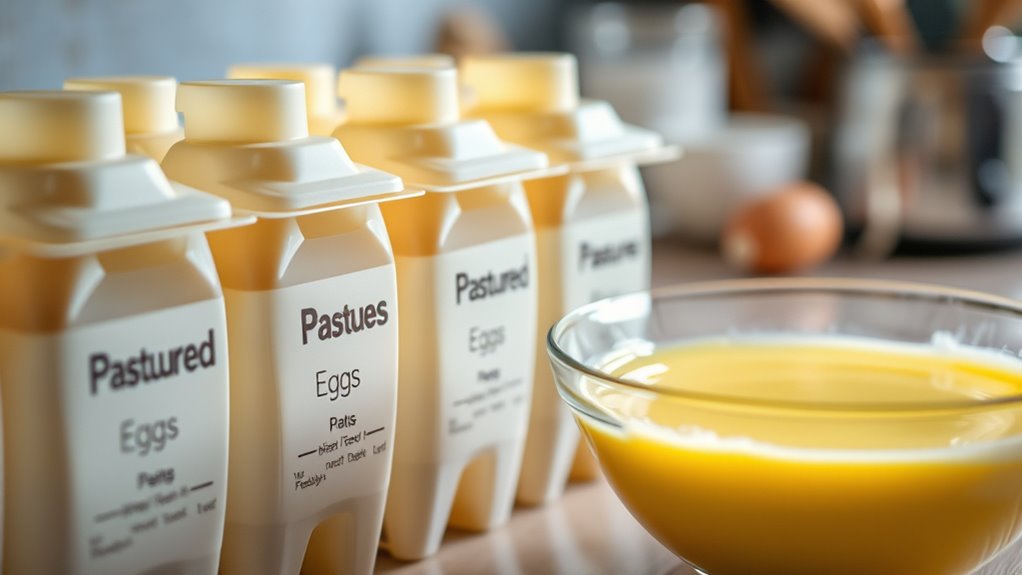
Pasteurized eggs are a safe choice for anyone who wants to enjoy dishes that include raw or lightly cooked eggs without the risk of Salmonella. When it comes to egg safety, using pasteurized eggs provides peace of mind, especially for recipes that don’t involve thorough cooking. These eggs are gently heated just enough to kill harmful bacteria while preserving their raw qualities, making them ideal for culinary uses that require raw or barely cooked eggs, such as custards, hollandaise sauce, and mousse. By choosing pasteurized eggs, you eliminate the worry about bacterial contamination, allowing you to focus on creating delicious, safe dishes.
In the kitchen, understanding the benefits of pasteurized eggs can broaden your culinary options. For custards, where eggs are often only lightly cooked or combined with other ingredients before setting, using pasteurized eggs ensures safety without sacrificing texture or flavor. When preparing delicate desserts, it’s *vital* to minimize the risk of foodborne illness, and pasteurized eggs offer a practical solution. They also help maintain the consistency of your recipes, as you don’t need to worry about overcooking or undercooking that might compromise the final product. This becomes especially important when serving dishes to vulnerable populations like pregnant women, young children, or the elderly, who are more susceptible to foodborne illnesses.
Egg safety is a top priority in any culinary setting, and pasteurized eggs give you a reliable way to incorporate eggs into your recipes confidently. You can whip up homemade mayonnaise, aioli, or creamy dressings without fear. For recipes like soft-boiled or poached eggs, using pasteurized eggs helps you enjoy the perfect runny yolk without risking contamination. *Additionally*, pasteurized eggs are widely available at grocery stores, making them a convenient choice for home cooks and professional chefs alike. They’re also versatile, suitable for baking or any dish where eggs are a key ingredient but don’t undergo extensive cooking.
Frequently Asked Questions
Are Pasteurized Eggs Suitable for All Recipes Requiring Raw Eggs?
Yes, pasteurized eggs are suitable for all recipes requiring raw eggs because they guarantee raw egg safety. You can confidently use them in dishes like homemade mayonnaise, hollandaise, or mousse without risking salmonella. Pasteurized egg uses include any recipe where raw or lightly cooked eggs are needed. They’re a great option if you’re concerned about food safety but still want the rich texture raw eggs provide.
How Long Do Pasteurized Eggs Last Compared to Regular Eggs?
Pasteurized eggs last longer than regular eggs, like a song that keeps playing on. You’ll find their shelf life comparison shows they stay fresh for about 4-5 weeks in your fridge, while regular eggs typically last 3-5 weeks. Follow proper storage guidelines—keep them refrigerated at or below 40°F, in their original carton, to guarantee maximum freshness and safety over time.
Can I Substitute Pasteurized Eggs for Raw Eggs in Baking?
Yes, you can substitute pasteurized eggs for raw eggs in baking. They’re a safe option because pasteurized eggs eliminate the risk of salmonella, making them ideal for recipes like mousse or uncooked batter. Their baking compatibility is high, so your recipes will turn out just as good. Just remember, pasteurized eggs work perfectly in any recipe calling for raw eggs, providing substitute safety without compromising taste or texture.
Are Pasteurized Eggs More Expensive Than Fresh, Unpasteurized Eggs?
Think of pasteurized eggs as a premium paintbrush—more refined and slightly pricier. They usually cost more than fresh, unpasteurized eggs due to processing and safety measures. Your cost difference depends on your purchasing options; grocery stores often offer them at a higher price, but specialty or bulk stores might give you better deals. While they are more expensive, you gain peace of mind and safety for recipes like custards.
Do Pasteurized Eggs Taste Different From Regular Eggs?
You might notice a slight taste difference when using pasteurized eggs, but it’s usually subtle and doesn’t markedly affect flavor. Some people detect a mild, neutral flavor variation compared to regular eggs, which may be due to the pasteurization process. Overall, pasteurized eggs taste very similar to fresh, unpasteurized eggs, so you can use them confidently in recipes without worrying about altering the flavor of your dishes.
Conclusion
Using pasteurized eggs is like locking in safety’s promise, a gentle shield guarding your custard’s delicate heart. With each step, you’re weaving trust into your creation, turning raw potential into a silky, safe delight. Embrace this symbol of care, knowing that every spoonful reflects your commitment to warmth and well-being. In choosing pasteurized eggs, you’re nurturing not just a dessert, but a tradition of love and safety that lingers long after the last bite.