If you’re deciding between lactose-free and dairy-free products, think about your body’s sensitivities. Lactose-free options help those with lactose intolerance digest dairy more comfortably, but still contain milk proteins. Dairy-free alternatives cut out all dairy, suitable if you have a milk allergy or follow a vegan diet. Understanding your specific needs will help you choose what’s best for your health—continue on to discover more helpful details.
Key Takeaways
- Lactose-free products are suitable for those with lactose intolerance, while dairy-free options are necessary for milk allergy or vegan diets.
- Lactose-free retains milk proteins but removes lactose; dairy-free completely eliminates all dairy ingredients.
- For digestive comfort, lactose-free products help reduce symptoms like bloating and gas without avoiding all dairy.
- Dairy-free alternatives often require fortification to match the calcium and protein levels of traditional dairy.
- Choose lactose-free if you tolerate milk proteins; opt for dairy-free if you need to avoid all dairy due to allergies or preferences.
What’s the Difference Between Lactose-Free and Dairy-Free?
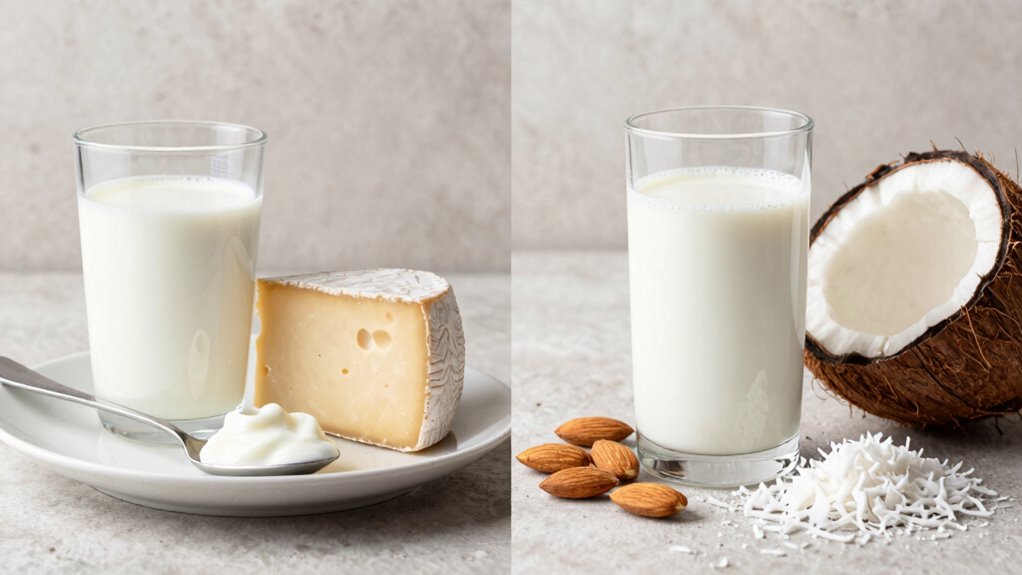
Understanding the difference between lactose-free and dairy-free is important if you’re trying to manage a dairy allergy or lactose intolerance. Lactose-free products contain milk but have the lactose removed or broken down, making them easier to digest for those with lactose intolerance. However, they still contain milk proteins, so they aren’t suitable for milk allergies. On the other hand, dairy-free options eliminate all dairy ingredients, including milk proteins. If you have a milk allergy, you need to avoid dairy entirely, which often means choosing plant-based options like almond, soy, or oat milk. These alternatives are free from milk proteins and lactose, making them safe for both allergies and intolerances. Additionally, dairy alternatives play a crucial role in providing options for those with dietary restrictions. Furthermore, contrast ratio plays a role in how clearly visual information is conveyed, which is important when reading labels or nutritional information. Knowing this difference helps you select the right products for your specific dietary needs, and understanding product labeling can help you make more informed choices.
Who Should Consider Lactose-Free Products?

Lactose-free products are ideal for individuals who experience discomfort after consuming regular dairy but don’t have a milk allergy. If you notice bloating, gas, or stomach cramps after dairy, switching to lactose-free options can help you enjoy dairy without symptoms. People with dairy allergies must avoid all dairy products altogether, but those with lactose intolerance can often tolerate lactose-free versions. Vegans, who avoid all animal products, typically don’t choose lactose-free products unless they contain dairy derivatives, which they avoid. Lactose-free items are a good solution if you want the taste and nutritional benefits of dairy without the digestive issues caused by lactose. Consider lactose-free products if you’re looking for dairy options that align with your digestive comfort but don’t have a dairy allergy or follow a vegan diet. Additionally, choosing energy-efficient cloud servers can support sustainable practices in food production and distribution.
Who Needs Dairy-Free Alternatives?

If you have a milk allergy, dairy-free alternatives are essential because even small amounts of dairy can trigger severe reactions. People with this allergy need to avoid products from dairy farming, which involves raising cows and processing milk. Since lactose fermentation in traditional dairy can sometimes mask traces of milk proteins, avoiding dairy altogether is safest. Additionally, individuals with severe sensitivities or allergies to dairy proteins benefit from dairy-free options to prevent health issues. Choosing alternatives made from plant-based ingredients ensures you steer clear of dairy’s potential allergens. These substitutes are designed to meet dietary needs without risking allergic reactions, making them ideal for those who can’t tolerate dairy from farm sources or who want to avoid the complexities of lactose fermentation in dairy products. Incorporating natural filtration systems in natural pools can help maintain water quality without relying on chemical treatments, which is especially beneficial for those with sensitivities. Furthermore, selecting dairy-free options that are minimally processed can help maintain nutritional value and support overall health. Additionally, understanding the market trends for reconditioned batteries can help consumers make more informed choices when considering sustainable and cost-effective alternatives.
Why Choose Lactose-Free? Benefits and Reasons
Many people who can tolerate dairy still choose lactose-free options to enjoy milk and dairy products without discomfort. Lactose-free products support proper lactose digestion, reducing symptoms like bloating, gas, and stomach cramps. If you have a dairy allergy, however, lactose-free is not enough, since it doesn’t eliminate all allergens. But for those with lactose intolerance, these products allow you to enjoy familiar flavors while avoiding digestive issues. Choosing lactose-free can also be beneficial if you’re looking to reduce your overall dairy intake without giving it up entirely. It’s a simple way to maintain your diet without sacrificing taste or nutrition. Proper lactose digestion is essential for overall digestive health and comfort, helping to prevent future gastrointestinal problems. Additionally, many find that lactose-free options can help improve their nutritional intake by allowing them to consume dairy products they enjoy. Supporting digestion through lactose management is crucial for long-term gastrointestinal well-being. Ultimately, lactose-free options help you enjoy dairy comfortably, making them a popular choice for many seeking digestive relief.
How Do Lactose-Free Products Affect Your Nutrition?
Lactose-free products can change the nutrient profile you get from dairy, often removing sugars but sometimes affecting calcium or vitamin levels. You might notice differences in how well your body absorbs nutrients or how your digestive system reacts. Understanding these effects helps you make better choices for your overall nutrition. Incorporating balanced designs into your dietary choices can also promote better health outcomes.
Nutrient Content Changes
When choosing lactose-free products, it’s important to think about how they might alter your nutrient intake. Many lactose-free dairy options are fortified with calcium supplementation and vitamin D to match regular dairy’s nutritional profile. However, some brands may not include these nutrients, which can impact your bone health if you rely heavily on lactose-free products. You might need to seek alternative sources of calcium and vitamin D, like supplements or fortified foods, to ensure you’re meeting your daily requirements. Keep in mind that while lactose-free products aim to maintain the same nutrient content, variations exist. Always check labels and ingredient lists to confirm the presence of essential nutrients, especially if you’re avoiding dairy for health reasons. Additionally, understanding the affiliate disclosure can help you make informed choices when selecting brands or products.
Absorption and Digestive Impact
Since lactose is the sugar that many people have difficulty digesting, removing it from dairy products can substantially improve your digestive comfort. Lactose-free products are pre-treated with lactase, which breaks down lactose into simpler sugars, making lactose digestion easier for your body. This process also offers fermentation benefits, as it encourages beneficial gut bacteria to ferment these sugars, promoting healthier digestion. When you choose lactose-free options, you often experience less bloating, gas, and discomfort, especially if you’re lactose intolerant. Digestive comfort can be significantly improved by choosing lactose-free options. By improving lactose digestion, these products help maintain your nutrient absorption without causing digestive upset. Overall, lactose-free products support better absorption and less digestive impact, making them a smarter choice if you’re sensitive to lactose but still want the nutritional benefits of dairy.
What Are the Best Dairy-Free Substitutes?
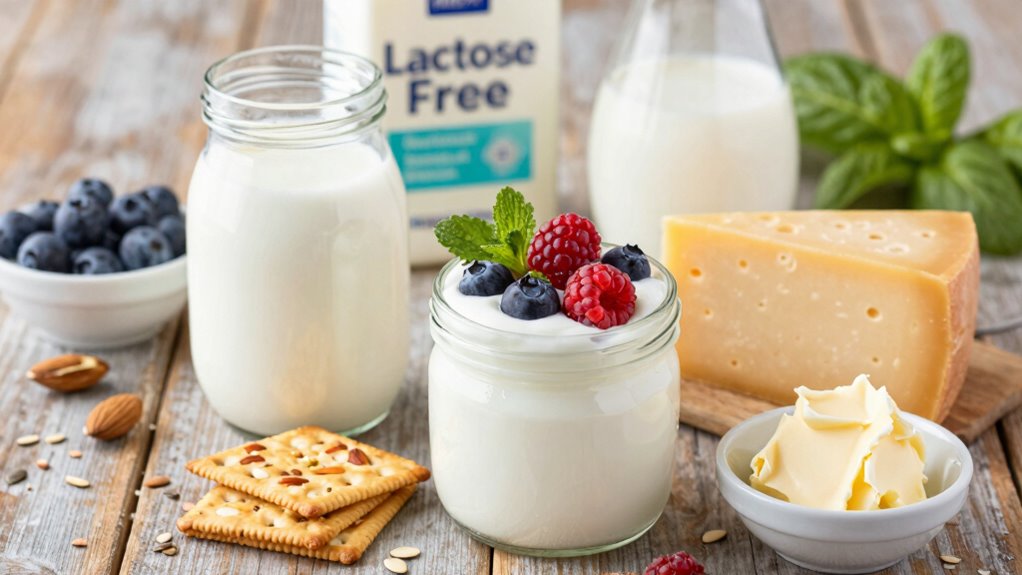
Are you wondering which dairy-free options can effectively replace traditional dairy products? There are several tasty and nutritious choices to contemplate. Plant-based cheeses have improved dramatically, offering flavors and textures similar to dairy cheese. Nut milk varieties, like almond, cashew, and hazelnut milk, are popular dairy substitutes for drinking and cooking. You can also explore other options like coconut milk or soy milk, which work well in recipes. These substitutes are often fortified with vitamins to match dairy’s nutritional profile. Dairy alternatives can be used in a variety of culinary applications, making it easier to adapt your favorite recipes. Additionally, these options are widely available at most grocery stores, increasing their convenience for everyday use. Whether you’re baking, making coffee, or enjoying a snack, these dairy-free options provide versatility without sacrificing taste. By choosing the right substitutes, you can enjoy your favorite dishes while avoiding dairy, supporting your dietary needs and preferences. Embracing these options helps you support your dietary needs and aligns with your health and wellness goals.
Which Is Better for Digestive Health: Lactose-Free or Dairy-Free?
When it comes to digestive health, choosing between lactose-free and dairy-free options can make a difference. Lactose-free products are easier to digest for those with lactose intolerance, but dairy-free alternatives often avoid potential irritants altogether. Consider how each option impacts your digestion and nutrient intake to find what works best for you. Additionally, understanding the ingredients to avoid in some products can help you make safer choices. For example, some dairy-free substitutes may contain non-halal additives, which is important to consider for those adhering to halal dietary guidelines. Being aware of product labels can further ensure you select options that align with your dietary needs. Exploring different brewing methods can also influence the health benefits and digestibility of your coffee choices. Incorporating aquatic exercise or water-based routines can support overall digestive health through stress reduction and improved circulation.
Digestive Impact Differences
Choosing between lactose-free and dairy-free options can considerably impact your digestive health. Lactose-free alternatives support better lactose digestion, reducing gas and bloating caused by enzyme deficiencies. Dairy-free products eliminate all milk proteins, preventing immune responses and inflammation. When it comes to fermentation benefits, lactose-free options often contain live cultures that improve gut health. These cultures aid in breaking down residual sugars and enhance digestion. Additionally, fermentation benefits can vary between products, influencing gut microbiota positively. Dairy-free products, especially fermented ones like coconut yogurt, can also promote healthy gut bacteria without triggering sensitivities. Furthermore, understanding the ear wax odor associated with certain dairy products can help identify sensitivities or reactions.
Nutritional Considerations
Deciding which option is better for your digestive health depends on your specific nutritional needs and sensitivities. Lactose-free products retain most nutrients of dairy, including calcium and protein, making them a good choice if you want to preserve these essentials. Dairy-free alternatives vary and may lack certain nutrients unless fortified. Consider this comparison:
| Nutritional Aspect | Lactose-Free | Dairy-Free Alternatives |
|---|---|---|
| Calcium Preservation | High | Often fortified |
| Protein Intake | Similar to dairy | Usually lower unless fortified |
| Digestive Impact | Easier to digest | Varies; some may cause sensitivities |
| Nutritional Fortification | Not needed | Often added to mimic dairy |
| Suitability | For lactose intolerance | For dairy allergy or vegan diets |
Choosing depends on your dietary goals, sensitivities, and the importance you place on calcium and protein.
How Do You Decide Between Lactose-Free and Dairy-Free for Your Lifestyle?
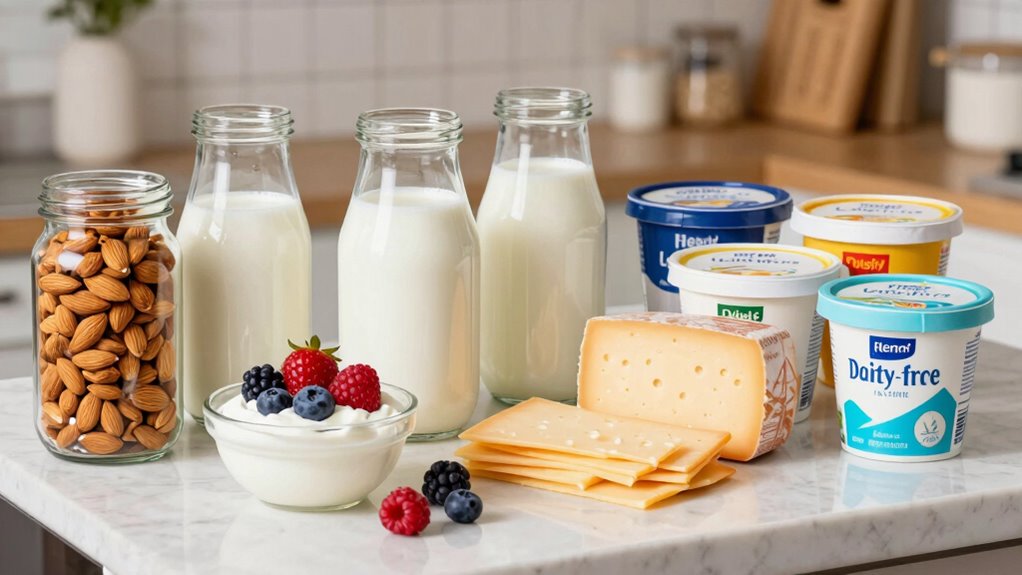
To determine whether lactose-free or dairy-free options suit your lifestyle, consider your specific health needs, dietary preferences, and how strict you want to be with avoiding dairy products. If you’re sensitive to lactose but don’t want to eliminate dairy entirely, lactose-free products might be enough, especially since they come from dairy farming and milk production processes that remove lactose. However, if you have a dairy allergy or want to avoid all dairy components, dairy-free options are better. Think about your comfort level and the impact on your diet. Also, remember that dairy farming influences milk production and availability, affecting your choices.
- Your tolerance for lactose versus complete dairy avoidance
- The source of dairy in your diet and its impact on your health
- How strict your lifestyle is regarding dairy consumption
Tips for Transitioning to Lactose-Free or Dairy-Free Eating

Switching to lactose-free or dairy-free eating can feel challenging at first, but with some simple strategies, you can make the switch smoothly. If you have milk allergies or are avoiding dairy, start by reading labels carefully to identify hidden sources of dairy. Incorporate alternative calcium sources like leafy greens, fortified plant-based milks, and calcium-fortified foods to maintain your calcium intake. Experiment with dairy substitutes such as almond, soy, or oat milk to find what works best for your taste and lifestyle. Gradually replacing dairy items with these alternatives can help your body adjust without feeling deprived. Remember, planning your meals ahead of time ensures you meet your nutritional needs while avoiding dairy or lactose.
Frequently Asked Questions
Can Lactose Intolerance Develop Suddenly or Worsen Over Time?
Yes, lactose intolerance can develop suddenly or worsen over time. You might experience sudden lactose symptoms if your lactose intolerance progresses, meaning your body’s ability to digest lactose decreases. Factors like age, gut health, or changes in diet can trigger this progression. If you notice new or intensified symptoms, it’s a good idea to consult a healthcare professional to determine if your lactose intolerance is advancing and adjust your diet accordingly.
Are There Any Hidden Sources of Dairy in Processed Foods?
Hidden dairy in processed foods can catch you off guard, so always check labels carefully. Ingredients like whey, casein, lactose, and milk solids are common hidden dairy sources. Many processed foods, including baked goods, salad dressings, and processed meats, contain these additives. To avoid dairy surprises, read ingredient lists thoroughly and opt for dairy-free alternatives when possible. Staying vigilant helps you manage your diet effectively and avoid unwanted dairy exposure.
How Do Lactose-Free and Dairy-Free Diets Impact Children’s Growth?
Lactose-free and dairy-free diets can affect your child’s growth development if they don’t get enough essential nutrients like calcium and vitamin D. These diets may impact nutrient absorption, potentially slowing growth. To support healthy development, you should seek fortified plant-based alternatives or supplements. Always consult a healthcare professional to guarantee your child maintains proper nutrient intake and growth milestones while following these diets.
Are Organic Dairy Products Less Likely to Cause Allergies?
Organic dairy products are less likely to cause allergies because they contain fewer additives and synthetic hormones. You can picture organic dairy as a cleaner, more natural option that reduces your allergy risk. While no dairy product is completely allergy-proof, choosing organic dairy may lower your chances of experiencing allergic reactions. Trust organic options for a purer, more wholesome experience, and always listen to your body’s responses.
What Are the Environmental Impacts of Choosing Dairy-Free Alternatives?
Choosing dairy-free alternatives helps reduce your environmental impact by lowering the carbon footprint associated with traditional dairy farming. These alternatives often come from plants grown through sustainable farming practices, which use less water and land. By opting for plant-based products, you support eco-friendly farming methods and help decrease greenhouse gas emissions, making your dietary choice more environmentally responsible and sustainable.
Conclusion
Choosing between lactose-free and dairy-free options can feel overwhelming, but remember, your health journey is uniquely yours. Whether you’re easing digestion or avoiding allergens, the right choice can transform your well-being. Embrace the options available—your body’s happiness depends on it. With the right knowledge, you’ll navigate this dairy dilemma like a pro, turning your diet into a powerhouse of energy. Trust yourself—you’re capable of mastering this dairy revolution!