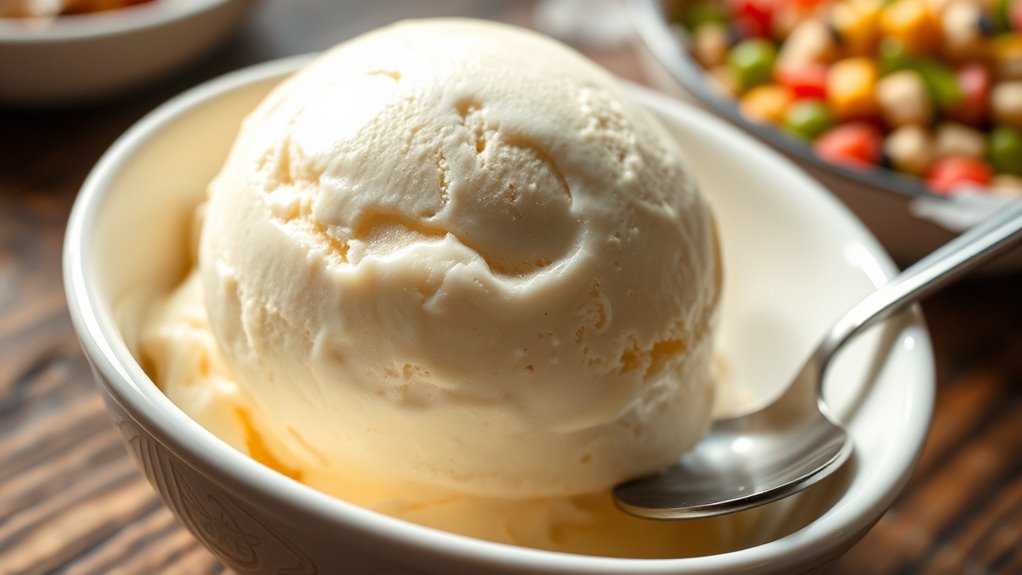

To understand the nutritional breakdown of ice cream, consider the type you choose. Traditional options often have around 200 calories per half-cup, mainly from fat and sugar, with higher saturated fat levels. Dairy alternatives tend to be lower in calories, with almond or soy-based versions offering less fat and sugar, while coconut-based types can be richer. Knowing these differences can help you pick options that fit your dietary goals, and exploring further reveals how to enjoy ice cream mindfully.
Key Takeaways
- Traditional ice cream typically contains around 200 calories, with significant saturated fat and sugar per half-cup serving.
- Dairy alternatives generally have fewer calories and less saturated fat than traditional ice cream, depending on the type.
- Coconut-based ice creams tend to be higher in calories due to their fat content, while almond and soy options are leaner.
- Portion size significantly impacts calorie, fat, and sugar intake, supporting healthier consumption choices.
- Comparing nutritional profiles helps choose options aligned with dietary goals, balancing taste and health considerations.

Ice cream is a popular treat enjoyed worldwide, but understanding its nutritional content can help you make informed choices. Whether you prefer classic dairy-based options or are exploring dairy alternatives, knowing what’s inside your favorite scoop is key. Traditional ice cream is made from dairy milk and cream, which contribute to its creamy texture and rich flavor. However, if you’re lactose intolerant, vegan, or simply want to try something different, dairy alternatives like almond, coconut, soy, or cashew-based ice creams are available. These alternatives often have varying nutritional profiles, typically containing fewer saturated fats and calories, and they come in a wide range of flavor variations. From chocolate and vanilla to more exotic options like matcha or salted caramel, these flavor variations allow you to enjoy ice cream without sacrificing variety or taste.
When considering the calories in ice cream, you’ll find that they can vary considerably depending on the ingredients and portion size. A typical half-cup serving of traditional ice cream contains around 200 calories, mostly from fat and sugar. Dairy alternatives sometimes have fewer calories, especially those made with water or plant-based milks that are lower in fat. For instance, a half-cup of coconut-based ice cream might pack more calories due to its higher fat content, while almond milk-based options could be leaner. If you’re watching your calorie intake, opting for smaller portions or choosing dairy alternatives with lower fat content can be helpful. Additionally, understanding the nutritional breakdown of different ice cream types can assist you in making healthier choices aligned with your dietary goals.
Frequently Asked Questions
How Does Ice Cream Impact Blood Sugar Levels?
Eating ice cream can cause a sugar spike in your blood, especially if you indulge in a large portion. The high sugar content prompts your body to release insulin quickly to manage the surge. This insulin response helps regulate blood sugar levels, but too much ice cream too often can lead to fluctuations and insulin resistance over time. Be mindful of portion sizes to keep your blood sugar stable.
Are Dairy-Free Ice Creams Healthier Than Traditional Ones?
Dairy-free ice creams can be healthier, especially if you have lactose intolerance or dairy allergies. They often offer benefits like fewer saturated fats and added vitamins from plant-based ingredients. However, ingredient comparisons show some may contain added sugars or processed stabilizers. It is crucial to check labels, as not all dairy-free options are lower in calories or sugar. Choose wisely based on your nutritional needs and ingredient quality.
What Are the Best Low-Calorie Ice Cream Options?
Imagine a scoop of frozen dessert that fits your goals—light, revitalizing, and low in calories. You’ll find plenty of options like sorbets, frozen yogurt, or reduced-fat ice creams that have lower calorie counts. These choices often use fruit purees or artificial sweeteners, giving you satisfaction without the guilt. Keep an eye on labels, and you’ll enjoy delicious, guilt-free treats that match your desire for a lower-calorie indulgence.
How Does Ice Cream Affect Dental Health?
Ice cream can impact your dental health by increasing the risk of tooth decay if you don’t practice good oral hygiene. The sugar in ice cream feeds bacteria that produce acids, eroding your enamel. To protect your teeth, brush regularly, floss, and limit your ice cream intake, especially before bed. Staying mindful of your oral hygiene keeps your smile healthy while enjoying your favorite frozen treat responsibly.
Can Ice Cream Be Part of a Balanced Diet?
Yes, you can include ice cream in a balanced diet, but it’s important to practice dietary moderation. Enjoying it occasionally helps you maintain a nutritional balance while satisfying your sweet cravings. To keep your diet healthy, limit portion sizes and pair ice cream with nutrient-rich foods like fruits or nuts. This way, you indulge without compromising your overall health goals.
Conclusion
Now that you know the nutritional secrets behind ice cream, remember it’s like a sweet symphony—delicious notes with hidden echoes of calories, fat, and sugar. Enjoy your treat mindfully, savoring each bite as if you’re tasting a fleeting rainbow. Balance is your palette’s true masterpiece; indulge without losing sight of the bigger picture. After all, life’s richest flavors come from harmony—just like your well-rounded treats.