
Your gut microbiome plays a crucial role in how you digest dairy. It breaks down lactose, the sugar in dairy products, making digestion smoother. Fermentation of dairy enhances digestibility and boosts nutrients like calcium and B vitamins. A diverse microbiome helps reduce symptoms of lactose intolerance, and regular fermented dairy intake can improve your tolerance over time. Want to discover how supporting your gut bacteria can make dairy easier to digest? Keep exploring for more insights.
Key Takeaways
- The gut microbiome breaks down lactose in dairy, aiding digestion and nutrient absorption.
- Fermented dairy products enhance probiotic diversity, supporting a balanced and resilient gut ecosystem.
- Consumption of fermented dairy reduces lactose content, easing symptoms for lactose-intolerant individuals.
- A diverse microbiome improves enzyme production for better lactose digestion and overall gut health.
- Regular intake of probiotic-rich dairy fosters beneficial bacteria growth, strengthening digestive resilience.
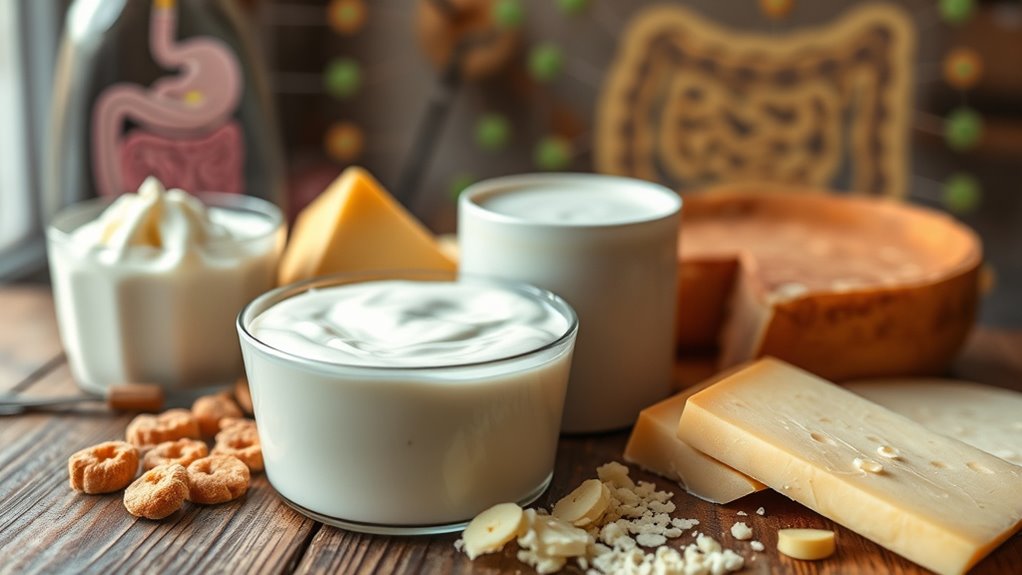
Your gut microbiome plays an essential role in how you digest dairy products. When you consume items like yogurt, cheese, or milk, your intestinal bacteria work behind the scenes to break down lactose—the sugar found in dairy. This process is largely driven by fermentation benefits, which involve beneficial bacteria converting lactose into lactic acid. Not only does this make dairy easier to digest, but it also enhances the nutritional profile of the foods you eat. Fermentation increases the bioavailability of certain nutrients, such as calcium and B vitamins, making them more accessible for your body to absorb. Additionally, fermented dairy products are often easier on those with lactose intolerance because the fermentation process reduces the amount of lactose present.
The diversity of your probiotic bacteria is key here. A diverse microbiome means a broader range of bacteria capable of efficiently breaking down dairy components. Different strains of bacteria possess unique enzymatic powers, so a higher probiotic diversity allows your gut to adapt better to various dairy foods. When your microbiome is rich and balanced, it can handle dairy intake more effectively, reducing symptoms like bloating, gas, or discomfort. Consuming fermented dairy products regularly can help maintain or boost this probiotic diversity, further supporting your digestive health. The more varied your bacterial community, the better your gut can respond to different types of dairy and other foods, strengthening your overall digestive resilience.
Furthermore, a diverse microbiome fosters resilience against digestive disturbances. When you include fermented dairy in your diet, you’re not just consuming probiotics; you’re also promoting a healthy environment for your existing bacteria to thrive. This symbiotic relationship helps maintain a balanced gut ecosystem, which is essential for efficient digestion and immune function. Regular intake of probiotic-rich dairy can also encourage the growth of beneficial bacteria that produce enzymes aiding in lactose breakdown, making dairy less problematic over time. Over time, this can lead to fewer digestive issues, even if your initial tolerance was limited.
In addition, ongoing research indicates that automation technology in the medical field could soon support personalized microbiome-based therapies, further enhancing digestive health.
Frequently Asked Questions
Can Dairy Allergies Impact Gut Microbiome Diversity?
Yes, a dairy allergy can impact your microbiome diversity. When you avoid dairy due to allergies, you may reduce certain beneficial bacteria that thrive on dairy products, leading to decreased microbiome diversity. This change can affect your digestion and overall gut health. To maintain a healthy microbiome, consider incorporating alternative nutrient sources and consulting with a healthcare professional to support your digestive system.
How Quickly Does Dairy Affect Gut Bacteria?
Dairy can affect your gut bacteria within a few days to a week, especially if you consume fermented dairy like yogurt or kefir. Fermentation introduces beneficial bacteria that quickly influence your gut microbiome, promoting diversity. However, if you’re lactose intolerant or sensitive, dairy might cause imbalances or discomfort sooner. Your gut responds dynamically, so changes in diet, including dairy intake, can rapidly alter your gut bacteria composition.
Are Fermented Dairy Products Better for Gut Health?
Fermented dairy products are truly a game-changer for your gut health! They’re packed with fermented probiotics from dairy fermentation, making them far better than regular dairy. These probiotics boost your gut microbiome, improve digestion, and support immune function. So, if you want to harness the power of dairy for *peak* gut health, choosing fermented options like yogurt or kefir is your best bet—they’re nature’s gut superheroes!
Does Lactose Intolerance Influence Microbiome Composition?
Lactose intolerance can change your microbiome composition by reducing microbiome resilience, making your gut less adaptable to dietary changes. When you lack lactase, your gut bacteria struggle to digest lactose, potentially decreasing beneficial bacteria. To support your microbiome, include dietary fiber-rich foods, which promote healthy bacteria growth. Over time, this helps improve microbiome resilience, making your gut better equipped to handle various foods and maintain overall digestive health.
Can Probiotics Enhance Dairy Digestion?
Think of probiotics as your digestive allies, boosting your ability to enjoy dairy without discomfort. Yes, specific probiotic strains can enhance dairy fermentation in your gut, breaking down lactose more efficiently. By introducing these beneficial microbes, you support your microbiome’s harmony, making dairy digestion smoother and more comfortable. So, incorporating probiotics into your routine can turn dairy from a challenge into a delight, proving that sometimes, the right microbes make all the difference.
Conclusion
As you embrace dairy in your diet, remember your gut microbiome is like a delicate garden tending to its blooms. When nourished properly, it transforms each dairy experience into a symphony of digestion and wellness. Your gut is the silent steward, guiding your health journey like a lighthouse illuminating the path through foggy waters. Trust in this relationship, and let your microbiome flourish—because within it lies the true harmony of your well-being.