
You can often eat ice cream past its date if it looks, smells, and tastes normal, and has been stored properly in a consistent, cold freezer. Signs of spoilage like freezer burn, off smells, discoloration, or texture changes are clues it’s no longer safe. Freezing slows bacteria growth but doesn’t stop it entirely, so keeping an eye on storage and spoilage indicators is key. Exploring more will help you know when it’s best to toss it out.
Key Takeaways
- Ice cream can be safe to eat past its date if it shows no signs of spoilage and has been stored properly.
- Signs of spoiled ice cream include freezer burn, off smell, discoloration, and unusual textures.
- Freezing inhibits bacterial growth, but prolonged storage may still cause quality loss and flavor degradation.
- Always check sensory cues before consuming expired ice cream to prevent health risks from mold or bacteria.
- Proper storage at consistent cold temperatures and airtight packaging extend safe consumption beyond the date.
Is It Safe to Eat Ice Cream Past Its Expiration Date?
Many people wonder if it’s safe to eat ice cream after its expiration date, but the answer depends on several factors. One common concern involves ice cream molds, which can harbor bacteria if left too long. However, expiration myths often exaggerate the risks; most ice cream remains safe for a short period past the date if it’s stored properly. Look out for signs of spoilage, like freezer burn or off smells, rather than relying solely on the date. Proper storage in a consistently cold freezer slows bacterial growth and keeps your ice cream safe. Remember, the date is more about quality than safety. If your ice cream looks and smells fine, it’s likely still good to enjoy, but always trust your senses. Additionally, maintaining the ideal freezer temperature (at or below 0°F) is crucial for preventing bacterial growth and ensuring your ice cream stays safe. Ensuring proper storage conditions can also help maintain color and texture, making your ice cream more enjoyable even past the expiration date. Regularly checking your freezer temperature can help you avoid temperature fluctuations that may compromise food safety. Proper freezer organization can also reduce the risk of cross-contamination and help you spot any potential spoilage early.
How Can You Tell If Your Ice Cream Is Still Good?
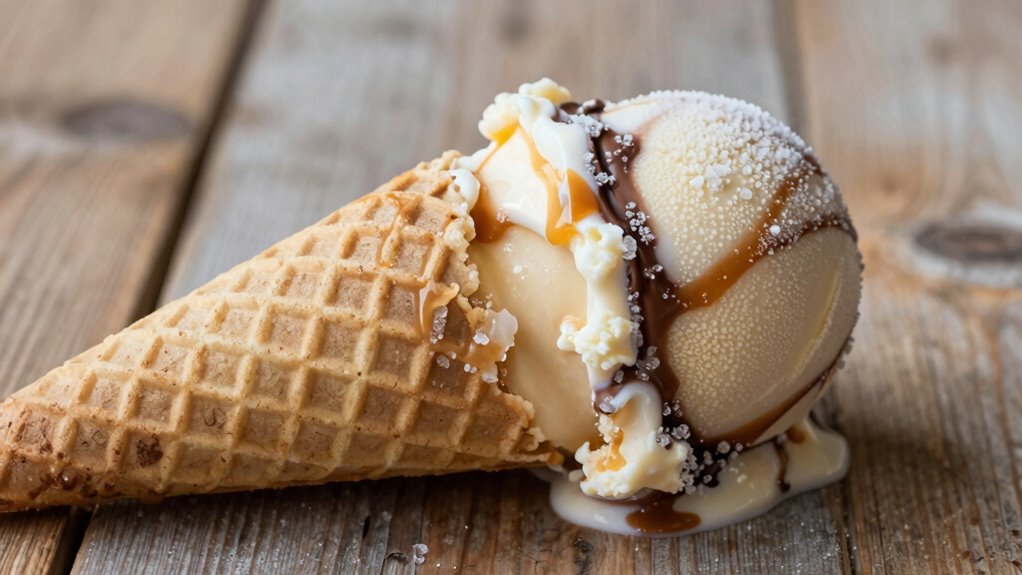
You can often tell if your ice cream is still good by examining its appearance and smell. If it looks icy, has ice crystals, or develops a sour or off smell, it’s best to discard it. Changes in ice cream texture, such as becoming grainy or icy, indicate flavor deterioration and spoilage. Use this table as a guide:
| Indicator | What to Look For | Action |
|---|---|---|
| Appearance | Ice crystals, discoloration | Discard if present |
| Smell | Sour or rancid odor | Discard immediately |
| Texture | Grainy, icy, or slimy | Avoid consuming |
| Flavor | Off or sour taste | Do not eat |
| Overall Impression | Unusual or off-putting | When in doubt, throw it out |
Trust your senses—if anything seems off, it’s safer to avoid eating it. Additionally, understanding food spoilage indicators can help you make safer choices about consuming dairy products.
What Do Date Labels on Ice Cream Mean?
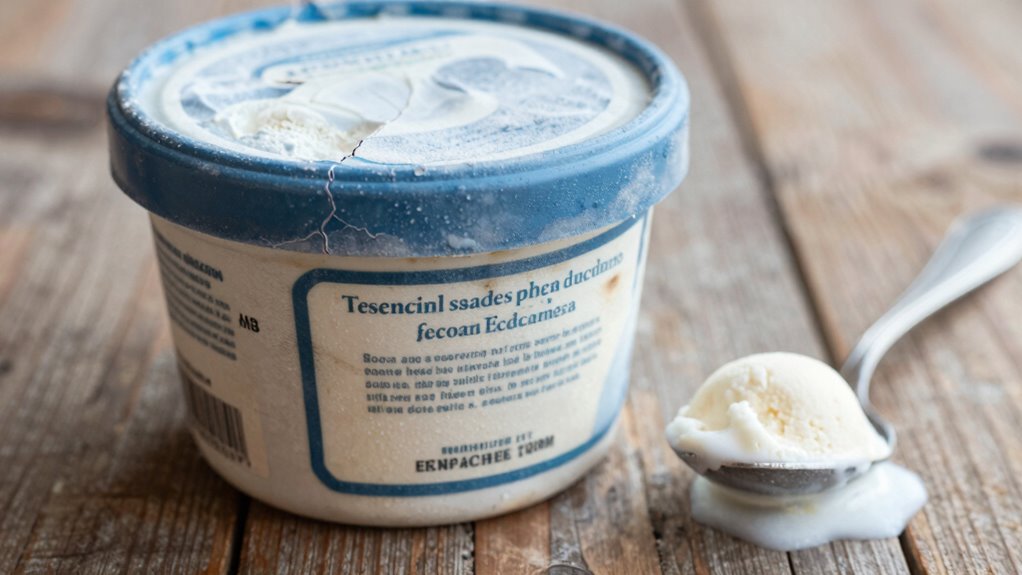
Ever wonder what those date labels on your ice cream truly indicate? They usually come from ingredient labels or packaging dates, not necessarily a safety deadline. The “sell-by” or “use-by” date on the package shows when the manufacturer recommends consuming the product for peak quality. These dates don’t guarantee safety but suggest the best flavor and texture if eaten sooner. Keep in mind, ice cream can be safe beyond these dates if it’s been stored properly, but quality may decline. Understanding what these labels mean helps you decide whether to enjoy your ice cream or toss it. Remember, labels are guidelines, not strict rules, so use your senses and judgment along with these dates.
Are There Health Risks in Eating Expired Ice Cream?
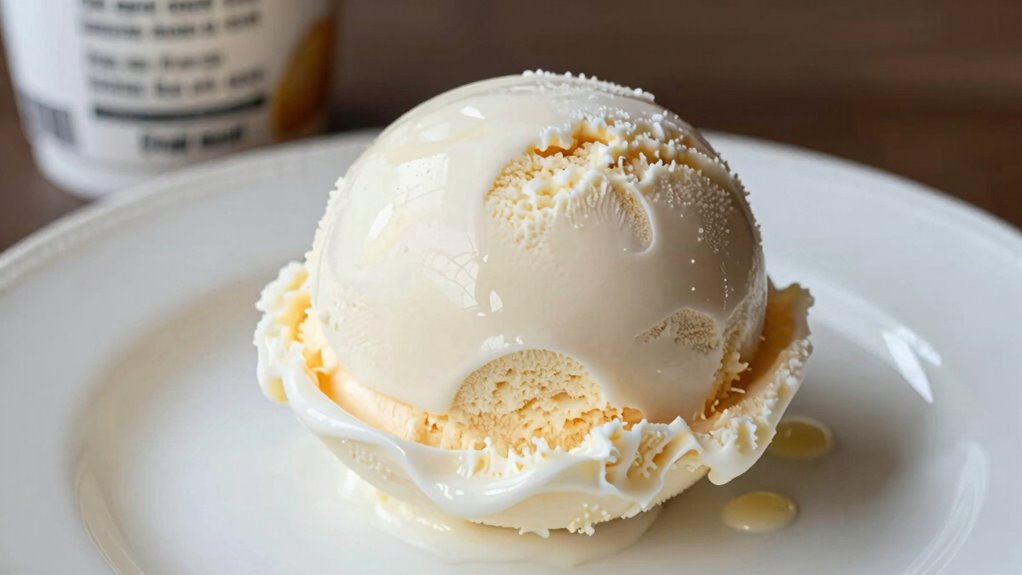
While the date labels on ice cream often guide you on when to consume it for the best quality, they don’t necessarily indicate safety. Eating expired ice cream can pose health risks, especially if it’s been contaminated with bacteria or mold. If you have ice cream allergies, consuming spoiled ice cream could trigger allergic reactions or worsen symptoms. Dairy contamination is a real concern; bacteria like Listeria or Salmonella can grow if the ice cream has been improperly stored or kept too long. These pathogens can cause food poisoning, leading to nausea, vomiting, or more severe health issues. Proper storage temperature control is essential to prevent bacterial growth, and understanding food safety guidelines can help you determine when ice cream is no longer safe to eat. For example, freezing temperatures inhibit bacterial growth, but once thawed or stored improperly, the risk increases. Additionally, signs of spoilage such as an off smell, discoloration, or ice crystals can indicate that the ice cream should be discarded. Regularly checking storage conditions can help prevent these issues and keep your ice cream safe. When in doubt, it’s safer to discard expired ice cream to prevent potential health risks.
How Does Freezing Affect Ice Cream’s Safety and Quality?

Freezing slows down the growth of bacteria and mold, helping ice cream stay safe longer. It also preserves the texture and flavor, preventing rapid spoilage. However, it doesn’t completely stop quality changes over time. Additionally, storage duration can impact the overall quality and safety of the ice cream. Proper storage conditions and understanding shelf life are essential for maintaining optimal quality and safety.
Freezing Slows Spoilage
Freezing any food, including ice cream, considerably slows down the growth of bacteria and molds that cause spoilage. This preserves the ice cream’s safety and extends its shelf life. When you store ice cream properly in your freezer, it maintains its quality longer than at room temperature. Freezing also helps keep the flavors intact, so your favorite ice cream flavors stay vibrant and enjoyable. Keep in mind, though, that prolonged freezing can impact texture and taste, so it’s best to consume within recommended periods. To prevent freezer burn and maintain optimal quality, proper storage techniques are essential. For serving suggestions, thaw only what you plan to eat to avoid unnecessary spoilage. Proper storage guarantees your ice cream remains safe to eat past the date, giving you more flexibility while still enjoying your favorite treats. Additionally, understanding freezer storage times can help you determine the optimal period for keeping ice cream safe and delicious. Maintaining proper freezer temperature further ensures that your ice cream stays safe and retains its quality over time. Staying aware of storage guidelines can help prevent quality loss and ensure your treats remain enjoyable. Regularly checking your freezer for temperature consistency can also prevent unexpected spoilage and preserve the best quality of your ice cream.
Texture and Flavor Changes
When ice cream is stored in the freezer for an extended period, its texture and flavor can change noticeably. You might notice texture deterioration, where it becomes icy or grainy, and flavor loss, making it less enjoyable. Here are four key effects:
- Ice Crystals Formation: Large crystals create a gritty, icy texture, which can be exacerbated by temperature fluctuations or improper storage techniques. proper storage techniques can help prevent these issues and preserve quality longer. Maintaining consistent freezer temperature is essential for preventing crystal growth. Additionally, proper airtight packaging minimizes moisture exposure that can promote crystal formation.
- Flavor Fade: Over time, flavors diminish, resulting in blandness, especially if exposed to air or temperature changes. Proper packaging can help slow this process and keep flavors vibrant.
- Creaminess Breakdown: The smooth, creamy mouthfeel deteriorates as fats and proteins degrade or separate. Additionally, emulsion stability plays a role in maintaining texture during freezing. When emulsions break down, ice cream can become watery or separated.
- Freezer Burn: Dry spots develop, impacting taste and texture, often caused by inadequate packaging or prolonged storage. Regularly checking packaging integrity can help prevent freezer burn and preserve quality.
How to Store Ice Cream to Keep It Fresh?
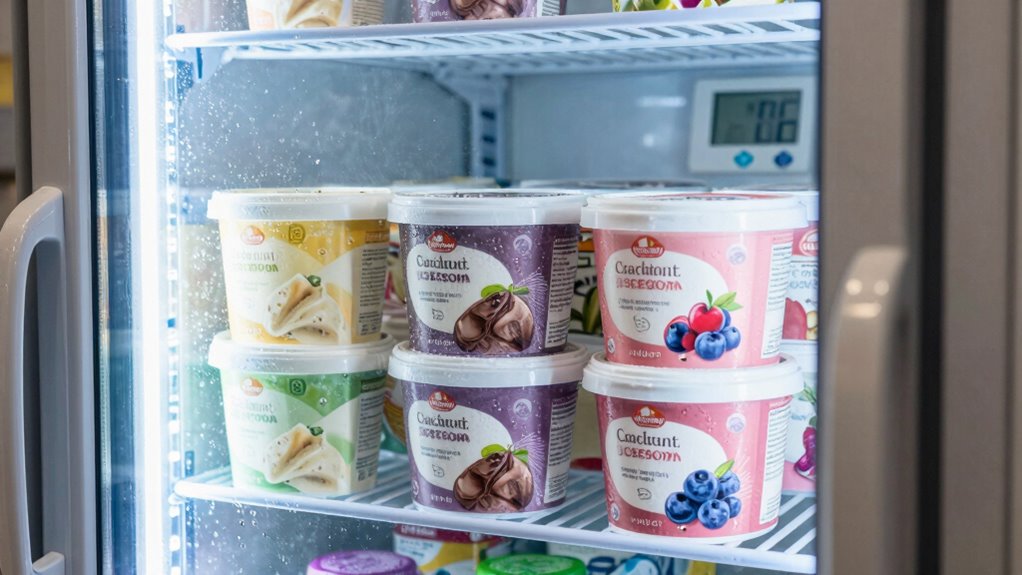
To keep your ice cream fresh and prevent freezer burn, it’s essential to store it properly. Always keep the lid tightly sealed after each use to minimize exposure to air, which can lead to flavor degradation and freezer burn. Store your ice cream in the coldest part of your freezer, ideally at 0°F (-18°C), to maintain its quality. Avoid frequent temperature fluctuations by keeping the freezer door closed as much as possible. Using an airtight container or wrapping the original package with plastic wrap adds extra protection. Proper storage helps preserve flavor and texture, preventing ice crystals and freezer burn. Additionally, understanding freezer temperature management can help you keep your ice cream in optimal condition. Ensuring your freezer maintains a consistent temperature can also prevent temperature fluctuations, which are detrimental to ice cream quality. By following these steps, you ensure your ice cream stays delicious longer and retains its peak taste and consistency.
When Should You Throw Out Ice Cream to Stay Safe?
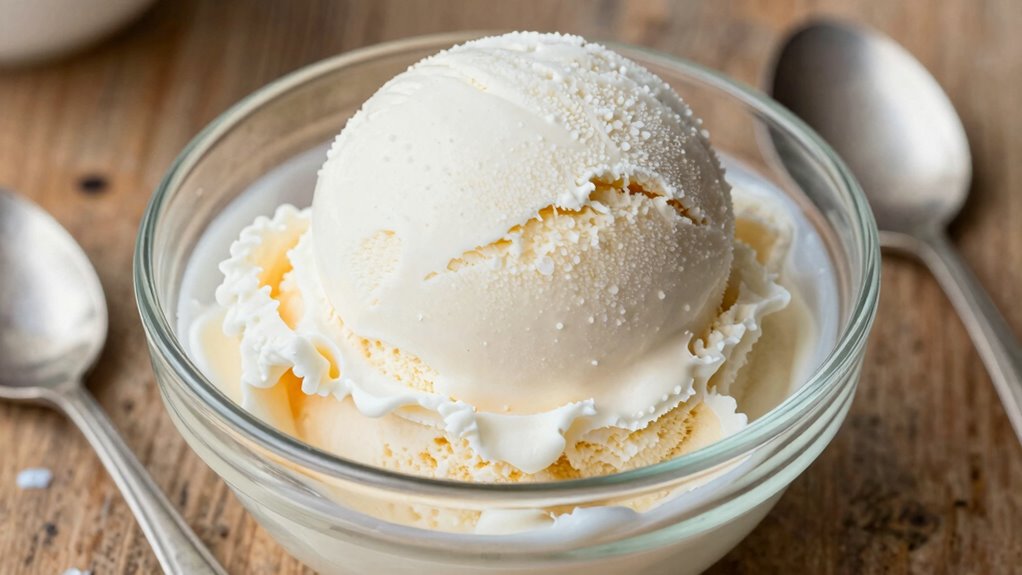
You should throw out ice cream if you notice ice crystals, freezer burn, or an off smell, as these are signs of spoilage. Proper storage, like keeping it at the right temperature and sealing it tightly, helps avert these issues. Knowing when to discard ice cream keeps you safe and ensures you enjoy only fresh, quality treats.
Visual Signs of Spoilage
Ever wonder how to tell if your ice cream has gone bad just by looking at it? Visual signs are your first clue. Check for:
- Discoloration – Unusual spots or a dull, off-color appearance.
- Ice Crystals – Excessive or large ice crystals indicate freezer temperature issues or spoilage.
- Freezer Burn – Dry, leathery patches on the surface suggest exposure to air.
- Texture Changes – A grainy or icy texture instead of smooth, creamy consistency.
Proper Storage Guidelines
Proper storage is essential to keep ice cream safe and maintain its quality. To preserve flavor and prevent spoilage, always keep it at a consistent -20°F (-29°C). Confirm the packaging remains sealed to protect against freezer burn and contamination, which can compromise packaging integrity. Avoid leaving ice cream out at room temperature for extended periods, as this accelerates spoilage and increases health risks. Use airtight containers if transferring ice cream from its original packaging, and label them with dates to track freshness. Regularly check your freezer’s temperature and avoid overfilling, which can cause temperature fluctuations. By following these storage guidelines, you’ll help preserve flavor, prevent freezer burn, and know exactly when it’s time to toss out your ice cream for safety.
Frequently Asked Questions
Can Bacteria Grow in Frozen Ice Cream?
Bacteria can’t grow in frozen ice cream because the cold temperature halts microbial growth. However, if the ice cream experiences freezer burn or temperature fluctuations, bacteria and mold could develop once it thaws. Always check for signs like ice crystals or off smells. While bacteria won’t grow in the freezer, consuming ice cream with freezer burn might affect texture and taste, so it’s best to enjoy it before quality declines.
Does Ice Cream Lose Flavor After Expiration?
Yes, ice cream can lose flavor after expiration. Over time, you might notice flavor deterioration, which makes it less sweet or creamy. Texture changes can also occur, turning the smoothness into ice crystals or a grainy feel. While it might still be safe to eat, these sensory changes make it less enjoyable. So, it’s best to consume ice cream before it reaches its expiration date for the best flavor and texture.
How Long Is Ice Cream Safe to Eat After Opening?
You can typically enjoy ice cream for about 1 to 2 months after opening if you keep it at a consistent storage temperature below 0°F (-18°C). Make certain your packaging integrity stays intact; any cracks or leaks can introduce bacteria. Properly sealing and storing your ice cream minimizes freezer burn and spoilage, so check for off smells or ice crystals before serving. When in doubt, trust your senses to determine safety.
Are Homemade Ice Creams More Prone to Spoilage?
Homemade ice creams are more prone to spoilage because they often lack the preservatives found in store-bought versions. Their freezer stability can vary, making them susceptible to freezer burn and bacterial growth if not properly preserved. If you don’t store them correctly, you risk ruining their texture and safety. Always make certain your homemade ice cream is sealed tightly and consumed within a reasonable timeframe to avoid unexpected spoilage.
What Are Common Signs of Ice Cream Contamination?
You’ll notice contamination signs in ice cream through freezer burn, which causes a dry, icy texture, and texture changes like clumping or ice crystals. If it develops an off smell, strange flavor, or visible mold, discard it right away. These signs indicate the ice cream is no longer safe to eat, and consuming contaminated ice cream can lead to foodborne illnesses. Always check for these indicators before enjoying your treat.
Conclusion
Think of your ice cream like a trusted friend on a journey. If it’s still icy and sweet, it’s probably good to go. But if it’s lost its sparkle or shows signs of wear, it’s time to part ways. Trust your senses and best judgment, just like guiding a friend safely home. When in doubt, toss it out—your health is the true treasure in this chilly adventure.