Enjoying alcohol-infused ice cream means you’re consuming extra calories and residual alcohol, which can cause a slight buzz or impact your health if eaten in large amounts. The alcohol slows down your body’s nutrient processing and adds about 7 calories per gram, making the treat more calorie-dense than regular ice cream. Moderation is key to avoid unwanted effects and support your health goals. If you’re curious, you’ll find more important tips on how to indulge responsibly below.
Key Takeaways
- Alcohol-infused ice cream contains residual alcohol, which can cause slight intoxication, especially with multiple servings.
- The added alcohol significantly increases calorie content without essential nutrients, impacting weight management.
- Alcohol metabolism in the body slows down processing of other nutrients, influencing overall health and dietary goals.
- Moderation is essential to prevent unintended intoxication and excessive calorie intake from alcohol treats.
- Being aware of alcohol’s effects helps in making informed choices for health, wellness, and enjoying treats responsibly.
Imagine enjoying a scoop of ice cream that’s been infused with your favorite adult beverage—it’s a delightful twist on a classic treat that combines the creaminess of ice cream with a subtle kick of alcohol. This indulgence might seem harmless, but understanding how alcohol affects your body is vital, especially when it comes to alcohol metabolism and calorie content. When you consume alcohol-infused ice cream, your body processes alcohol differently than other nutrients. Alcohol metabolism primarily occurs in your liver, where enzymes break down ethanol into acetaldehyde, then into acetate, which your body can use for energy. Because alcohol isn’t stored like fat or carbs, your body prioritizes its metabolism, often slowing down the breakdown of other nutrients. This means that even small amounts of alcohol in ice cream can impact your body’s ability to process fats and sugars, potentially leading to weight gain if consumed excessively. Additionally, residual alcohol in frozen treats may cause unintended effects, especially in sensitive individuals. The calorie content of alcohol-infused ice cream varies widely depending on the type of alcohol used and the amount infused into each serving. Alcohol itself contains about 7 calories per gram—more than carbs or protein but fewer than fat. However, because alcohol adds calories without providing essential nutrients, it can considerably increase the overall calorie count of your dessert. For instance, a standard scoop of vanilla ice cream might have around 200 calories, but adding alcohol like bourbon, rum, or liqueurs can raise that number by another 50 to 150 calories per serving. If you’re watching your caloric intake, it’s vital to recognize that alcohol-infused varieties tend to be more calorie-dense, making moderation key to avoid unwanted weight gain.
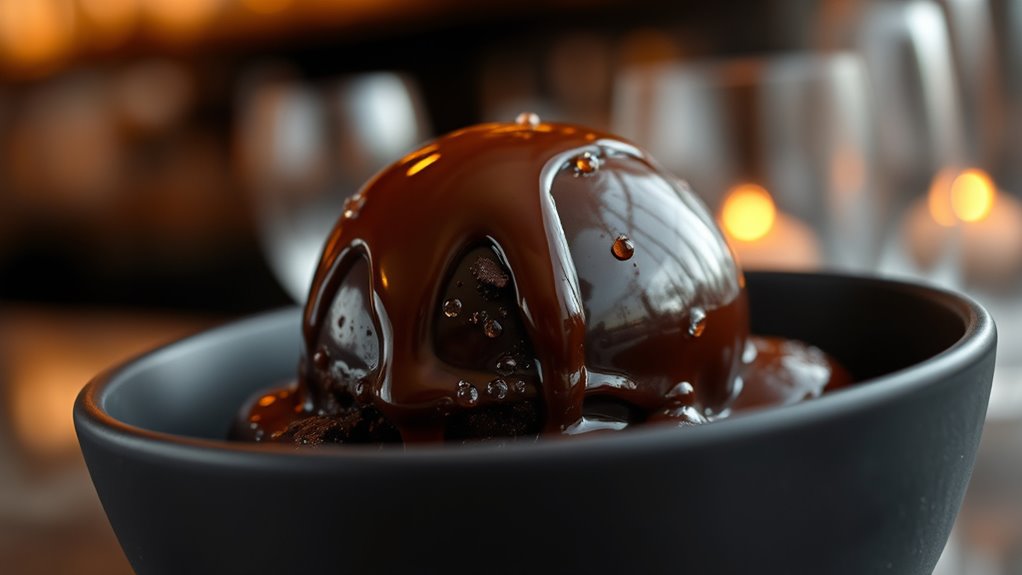
Alcohol in ice cream is processed in the liver, affecting fat and sugar metabolism.
Moreover, alcohol-infused ice cream can contain residual alcohol even after freezing, which means you might experience a slight alcohol buzz if you consume multiple servings. This underscores the importance of moderation, especially if you’re sensitive to alcohol or need to avoid it for health reasons. While the alcohol content in these treats might be low compared to a shot of liquor, it still contributes to your overall alcohol consumption. If you’re mindful of your calorie intake or trying to limit alcohol, it’s wise to consider these factors before indulging in alcohol-infused ice cream regularly. Being aware of the effects on alcohol metabolism can help you make more informed dietary choices.
In essence, enjoying alcohol-infused ice cream is possible in moderation, but you should be aware of how it affects alcohol metabolism and calorie content. Being informed helps you make better choices, ensuring you satisfy your sweet tooth without compromising your health or dietary goals.
Frequently Asked Questions
Can Alcohol-Infused Ice Cream Cause Intoxication?
Yes, alcohol-infused ice cream can cause intoxication. When you consume it, your body absorbs alcohol from the ice cream, which can lead to intoxication if you eat enough. The risk depends on factors like the alcohol content, portion size, and your body weight. Even small amounts can add up, so it’s important to be cautious and aware of how alcohol absorption from such treats might affect you.
Are There Any Age Restrictions for Consuming Alcohol Ice Cream?
Are you aware that consuming alcohol-infused ice cream is typically restricted to those of legal age? Yes, most places enforce sales restrictions based on the legal drinking age, which varies by region. You must be of legal age to buy or consume these treats legally. Why take the risk of underage drinking or breaking local laws? Always check local regulations to make sure you’re complying with age restrictions.
How Does Alcohol Affect Ice Cream’s Texture and Flavor?
Alcohol affects ice cream’s texture and flavor by adding a rich alcohol aroma that enhances its overall profile. The alcohol can make the ice cream slightly softer and creamier, offering a smooth texture. It also balances sweetness with a subtle warmth, creating a more complex flavor. Just keep in mind, too much alcohol can prevent proper freezing, so moderation is key for ideal texture and flavor.
Is Alcohol Content in Ice Cream Affected by Storage?
If you store alcohol-infused ice cream improperly, its alcohol content can decrease over time due to evaporation, especially with temperature fluctuations. For example, a case study showed that after two weeks in a warm freezer, alcohol levels dropped by 15%. Proper storage stability, like keeping it at consistent freezing temperatures and airtight containers, helps maintain its original alcohol content, ensuring flavor and potency remain intact.
Can Alcohol-Infused Ice Cream Be Safe During Pregnancy?
During pregnancy, alcohol-infused ice cream isn’t safe because it can lead to alcohol absorption that affects fetal development. Even small amounts pose risks, so it’s best to avoid it entirely. You might think moderation helps, but the alcohol content in these treats can still be harmful. Always choose pregnancy-safe options and consult your healthcare provider for personalized advice to guarantee pregnancy safety.
Conclusion
So, next time you indulge in alcohol-infused ice cream, remember moderation is key. Some say the alcohol burns off during freezing, making it harmless, but that’s not entirely true—small amounts can still affect you. While enjoying these treats can be fun, always be aware of your limits and choose wisely. After all, enjoying a little sweetness responsibly lets you savor both flavor and health without regrets.