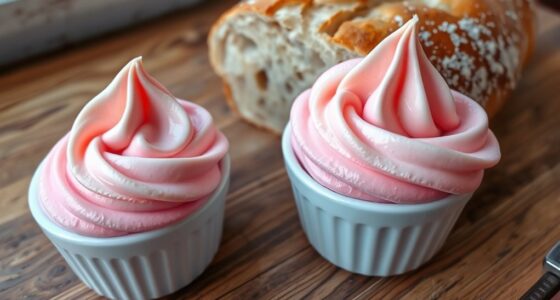
For crunch and swirl mix-ins, you should add them at just the right moment to keep their texture and flavor intact. Usually, fold in crunchy ingredients like nuts or cookies during the final stages of mixing or right before freezing. For swirls, it’s best to add them after pouring the main batter or base, gently swirling to create defined layers. Keep these tips in mind to guarantee your desserts turn out perfectly—there’s more to discover about timing techniques.
Key Takeaways
- Add mix-ins like crunch or swirl during the final stages of churning or just before the last freeze.
- Incorporate swirls after pouring the main batter or ice cream base to create distinct layers.
- Fold crunchy mix-ins into batter or base after initial mixing to prevent sinking or breaking down.
- For baked goods, add crunch ingredients after batter is combined, folding gently to distribute evenly.
- Introduce flavor swirls or crunchy elements just before the final set or bake to preserve texture and visual appeal.

Knowing the right moment to add mix-ins can make all the difference in achieving the perfect texture and flavor. When you’re making ice cream, cake, or even a layered dessert, timing your additions carefully guarantees that each element complements the others rather than competing. If you add mix-ins too early, they might melt into the base, losing their distinct texture and flavor. Conversely, waiting too long might mean missing out on the chance to create a harmonious blend of ingredients. Striking the right balance allows you to craft desserts with a satisfying texture contrast and seamless flavor integration.
Timing your mix-ins right ensures perfect texture and flavor harmony in your desserts.
For items like ice cream, the ideal moment to add mix-ins such as chocolate chips, nuts, or fruit chunks is usually during the churning or just before the final freeze. This way, they’re suspended evenly throughout the creamy base, providing a delightful crunch or burst of flavor when you take a bite. Adding them too early during the freezing process can cause them to sink, melt, or become soggy, diminishing their contribution to texture contrast. On the other hand, waiting until the very end might result in uneven distribution or missing the chance to meld flavors properly. When you add mix-ins at just the right moment—typically during the last few minutes of churning—you give them enough time to distribute evenly while maintaining their individual textures.
In baked goods like cakes or muffins, timing is equally critical. Mix-ins such as berries, chocolate chunks, or nuts are best folded into the batter after it’s been combined and just before baking. Incorporating them too early can cause them to sink or break down, which compromises both texture contrast and flavor integration. Adding them too late, after the batter is poured into the pan, can lead to uneven distribution, so you might end up with pockets of flavor or missing crunch altogether. The key is to gently fold the mix-ins into the batter at the right stage, ensuring they’re evenly dispersed without disrupting the batter’s consistency. Understanding proper timing helps achieve the desired balance of textures and flavors in the final dessert.
Swirling or layering desserts also depends heavily on timing. If you’re making a layered parfait or a marble cake, you want to add flavor swirls or layers at specific points during assembly. For example, adding a swirl of caramel or fruit compote after pouring the main batter helps create distinct visual layers and flavor profiles, rather than mixing everything into a homogenous mass. Timing these additions just before the final set or bake preserves their integrity, allowing their texture and flavor to stand out. Overall, whether you’re mixing, layering, or folding, understanding when to add your mix-ins ensures you achieve a dessert that’s both visually appealing and delightfully textured, with flavors that are well-balanced and integrated.
Frequently Asked Questions
How Do Mix-Ins Affect the Overall Texture of My Dessert?
Mix-ins enhance your dessert’s texture by adding delightful crunch or smooth swirls, creating a more interesting experience. They also promote flavor integration, making each bite richer and more balanced. When you add them at the right time, you guarantee they distribute evenly, boosting texture enhancement without overwhelming the base flavor. This balance keeps your dessert exciting and satisfying, inviting you to enjoy each contrasting or complementary element.
Can I Add Mix-Ins After the Dessert Is Fully Frozen?
You can add fruit or other mix-ins after your dessert is fully frozen, but it’s tricky. Frozen treats resist mixing thoroughly, so you might end up with uneven textures or icy pockets. To get the best results, gently fold in your mix-ins just before the final freeze or during soft-serve phase. This way, you avoid compromising the smoothness and guarantee your mix-ins stay flavorful and well-distributed.
What Are the Best Types of Mix-Ins for Different Desserts?
You should choose mix-ins based on flavor pairings and seasonal ingredients to enhance your desserts. For fruity desserts, add fresh berries or citrus zest; for rich chocolates, consider nuts or caramel swirls. Incorporate seasonal ingredients like pumpkin or apple during fall, or fresh mint and berries in summer. These choices boost flavor complexity and texture, making your desserts more enjoyable and tailored to the occasion.
How Do I Prevent Mix-Ins From Sinking to the Bottom?
To prevent mix-ins from sinking, consider gentle surface integration and strategic mix-in distribution. Lightly coat your mix-ins with flour or a similar dry ingredient before adding, which helps them stay suspended. Add them gradually and fold carefully, ensuring even distribution without overwhelming the mixture. Also, incorporate mix-ins at the right moment, so they blend seamlessly, avoiding the temptation to push them too deep, which can cause sinking.
Should I Adjust the Recipe When Adding Multiple Types of Mix-Ins?
Yes, you should consider recipe adjustments when adding multiple types of mix-ins to maintain flavor balance. Start by adding smaller amounts of each mix-in and taste as you go, ensuring no single flavor overwhelms the others. You might also need to tweak the base recipe slightly, like reducing sugar or adjusting the liquid content, to keep everything well-balanced and prevent overpowering your overall dessert.
Conclusion
Now that you know when to add your mix-ins, think of your ice cream as a blank canvas waiting for its colorful splash. Timing is the brushstroke that creates the perfect masterpiece of crunch and swirl. Add too early, and the magic melts away; too late, and the texture might get lost. So, embrace the dance of timing, and craft a scoop that’s as delightful and layered as a well-told story—sweet, satisfying, and just right.