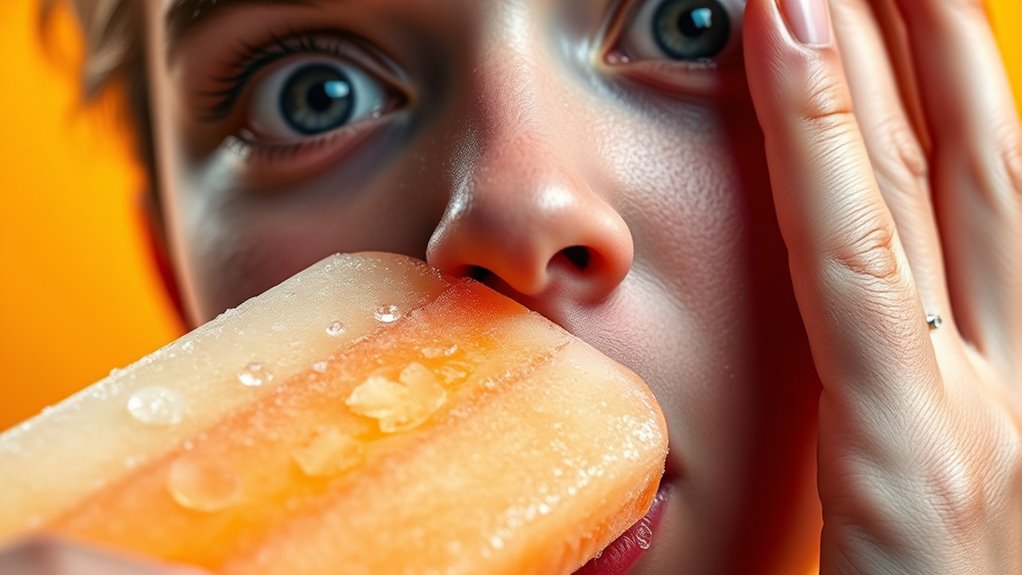

When a brain freeze hits, you can stop the pain within seconds by pressing your tongue firmly against the roof of your mouth or tilting your head back slightly to change the cold stimulus. Sipping warm water slowly or taking deep breaths can also help relax nerves and restore temperature. Using these simple tricks quickly relieves discomfort—keep going and discover more effective ways to prevent future brain freezes.
Key Takeaways
- Press your tongue firmly against the roof of your mouth to warm the area and reduce pain.
- Tilt your head back slightly to shift the cold stimulus away from the palate.
- Sip warm water slowly to raise mouth temperature and ease nerve sensations.
- Take deep, slow breaths to relax nerves and diminish pain signals.
- Pause cold consumption immediately when feeling brain freeze to prevent worsening symptoms.

Have you ever experienced that sudden, sharp pain in your head after eating something cold? It’s that uncomfortable jolt that hits your temples or forehead, often catching you off guard. You might be enjoying a cold beverage on a hot day or savoring a scoop of ice cream, only to be met with this icy discomfort. That’s what’s commonly called brain freeze, and it happens when the cold contacts the roof of your mouth or the back of your throat. The good news is, you can stop brain freeze in seconds with a few simple tricks.
First, try pressing your tongue firmly against the roof of your mouth. Your warm tongue can help warm that cold spot, reducing the sudden temperature difference that triggers the pain. Keep your tongue there for about 10 to 20 seconds. Alternatively, sip warm water slowly or take a small, warm breath through your nose. This helps to quickly raise the temperature inside your mouth, alleviating the sharp pain. When you’re enjoying that cold beverage or ice cream, be mindful of how fast you’re consuming it. Taking smaller bites or sips allows your mouth to warm gradually, preventing the rapid cooling that causes brain freeze.
Press your tongue against the roof of your mouth or sip warm water to ease brain freeze quickly.
Another effective trick is to tilt your head back slightly. By doing so, you change the position of the cold stimulus away from the roof of your mouth, giving your nerves a break. It’s a quick change that can diminish the intensity of the pain almost instantly. If you’re eating ice cream or drinking a cold drink, pause for a moment and then try pressing your tongue to the roof of your mouth or sipping warm liquid. These actions work together to restore normal temperature faster and cut off the nerve signals causing the pain. Additionally, understanding how to protect your savings from cold-related discomforts can be useful if you’re trying to avoid sudden stress or discomfort that might interfere with your day.
If you want to go a step further, try breathing in deeply through your nose and out through your mouth. Deep, controlled breaths can help relax your nervous system and reduce the sensation of pain. Remember to be gentle and deliberate—panicking or rushing might make the discomfort worse. And if you’re outdoors in the heat, don’t forget to let the cold foods and drinks sit for a moment before consuming. Slowing down your ice cream consumption or sipping slowly from a cold beverage prevents the sudden temperature drop that triggers brain freeze.
Frequently Asked Questions
Can Brain Freeze Cause Any Long-Term Health Issues?
Brain freeze doesn’t cause long-term health issues, so you don’t need to worry about lasting effects. It’s a temporary pain caused by rapid cooling of the palate. To prevent future episodes, use preventive strategies like eating slowly and warming your mouth. While long-term effects are unlikely, understanding these tricks helps you avoid discomfort. So, enjoy your cold treats without concern, knowing that brain freeze is just a fleeting, harmless sensation.
Does Eating Slowly Prevent Brain Freeze?
Sure, eating slowly might seem like a hassle, but it’s actually a clever way to prevent brain freeze. By practicing mindful eating and employing proper chewing techniques, you give your mouth time to warm up the cold food or drink. This slows down the sudden temperature change that triggers brain freeze, making your experience more enjoyable. Ironically, taking your time helps you avoid the very rush that causes that icy headache.
Are There Specific Foods That Trigger Brain Freeze More Often?
Certain foods, like frozen desserts and cold beverages, tend to trigger brain freeze more often because of their extreme cold temperature. When you eat these quickly or let them touch the roof of your mouth, the rapid cold sensation causes blood vessels to constrict and then quickly dilate, leading to the sharp headache. To avoid this, try warming the food slightly or sipping slowly to reduce the risk of brain freeze.
How Does Temperature Affect the Severity of Brain Freeze?
Temperature affects the severity of brain freeze because your temperature sensitivity increases with cold exposure. When you consume very cold foods or drinks, the rapid temperature change triggers nerve responses that cause pain. The colder the item, the more intense the brain freeze feels, especially if you’re highly sensitive to cold. To minimize pain, avoid extreme cold exposure or limit how quickly you eat or drink cold items.
Can Drinking Warm Liquids Cure Brain Freeze Instantly?
Drinking warm liquids might provide quick relief from brain freeze, but it doesn’t cure it instantly. When you experience a brain freeze after consuming cold drinks, the quick remedies focus on warming the palate or stimulating blood flow. Sipping warm liquids can help ease the discomfort by raising the temperature in your mouth, but it may take a few seconds for the sensation to subside. Be patient; your body’s natural response will take over.
Conclusion
Now you know how to beat brain freeze quickly with simple tricks like pressing your tongue to the roof of your mouth or sipping warm water. Did you know that around 60% of people experience brain freeze at least once a year? With these quick remedies, you can enjoy your favorite cold treats without the pain. Next time you get that icy shock, try these tips and keep enjoying your treats pain-free!