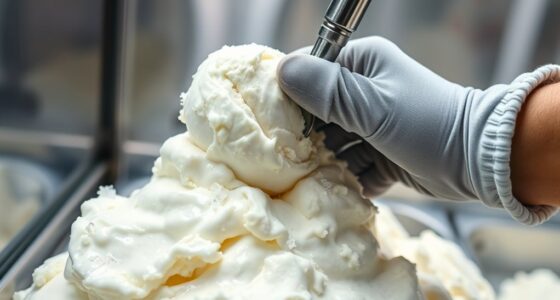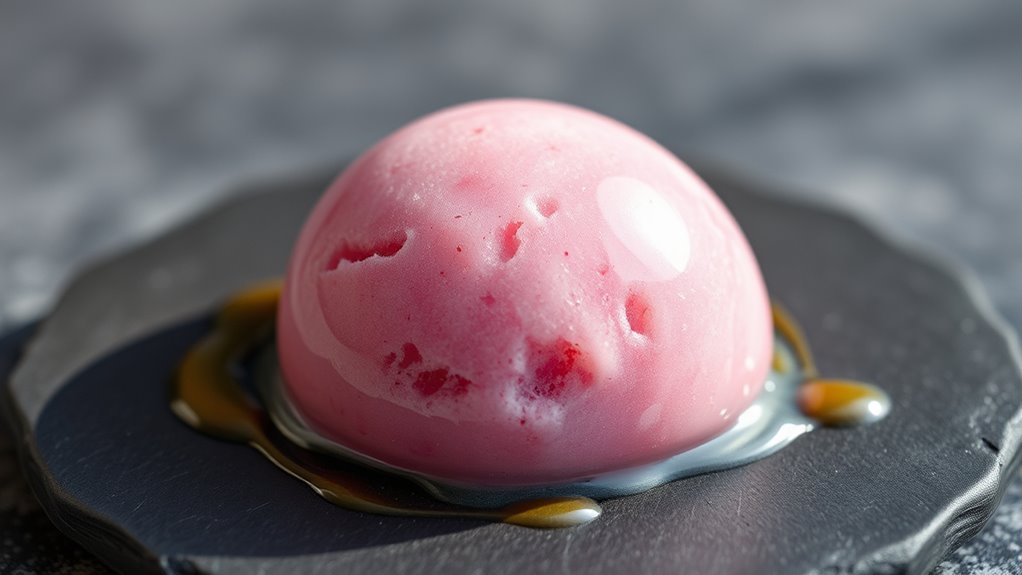

To make a sorbet that isn’t icy, you can incorporate ingredients like pectin, fiber, and alcohol to improve texture and flavor. Pectin helps stabilize the mixture and reduce icy mouthfeel, while soluble fiber adds creaminess and prevents large ice crystals. Alcohol lowers the freezing point, keeping the sorbet soft and scoopable straight from the freezer. Combining these ingredients creates a velvety, vibrant dessert—keep exploring to discover how each element works together perfectly.
Key Takeaways
- Incorporating pectin thickens the fruit puree, reducing ice crystal formation for a smoother, less icy sorbet texture.
- Adding soluble fiber enhances creaminess and stability, preventing large ice crystals and improving mouthfeel.
- Including alcohol lowers the freezing point, keeping the sorbet soft and scoopable without becoming icy.
- The combined use of pectin, fiber, and alcohol facilitates vibrant flavors and velvety consistency.
- These ingredients work together to create a refreshing, decadently smooth sorbet that breaks traditional icy limitations.

While traditional sorbet is known for its icy texture, innovative recipes and techniques can produce a version that’s smooth and creamy instead. If you’re looking to elevate your sorbet game, consider experimenting with ingredients like pectin, fiber, and alcohol—each can help you achieve that luscious, scoopable consistency without relying on gelatin alternatives. These ingredients not only improve texture but also open up new avenues for flavor infusion, making your sorbet more vibrant and satisfying.
Pectin, a natural gelling agent derived from fruits, is a game-changer for creating a creamy texture. Unlike gelatin, pectin is plant-based, making it suitable for vegetarians and vegans. When you add pectin to your fruit puree, it helps thicken the mixture and stabilize the final product, giving your sorbet a smoother, less icy mouthfeel. To maximize its benefits, you should carefully control the cooking process—usually by heating the fruit with pectin and sugar—so the pectin activates properly, thickening the mixture without becoming rubbery. This approach allows for better flavor infusion since the pectin helps trap more of the fruit’s essence, resulting in a richer taste profile.
Fiber, especially soluble types like inulin or dietary fiber powders, also plays a crucial role. When incorporated into your sorbet base, fiber not only adds a subtle creaminess but also improves mouthfeel by preventing large ice crystals from forming. This means your sorbet stays smooth even after multiple servings. Plus, fiber can act as a natural thickener, reducing the need for additional stabilizers. As you blend your fruit flavors, adding fiber ensures the texture remains consistent while allowing you to infuse your sorbet with bold, layered flavors—be it citrus zest, herbs, or spices—without the risk of icy crunchiness.
Alcohol is a surprisingly effective ingredient here. A splash of alcohol, such as vodka or fruit liqueurs, lowers the freezing point of your mixture, making it less prone to becoming overly hard or icy. This means you can enjoy a sorbet that’s soft and scoopable straight from the freezer. When integrating alcohol, be mindful of its strength; too much can prevent the mixture from freezing properly. Instead, add just enough to enhance flavor infusion and improve texture. The alcohol also carries aromatic notes and complements the fruit flavors, creating a more complex and indulgent palate experience.
Together, these ingredients—pectin, fiber, and alcohol—allow you to craft sorbets that break free from traditional icy confines. They enable flavor infusion at every stage, ensuring each spoonful delivers a burst of fruitiness with a smooth, creamy consistency. You get the satisfaction of a dessert that’s both invigorating and decadently velvety, perfect for impressing guests or simply treating yourself to something extraordinary.
Frequently Asked Questions
Can Pectin Be Used to Improve Sorbet Texture With Any Fruit?
Yes, you can use pectin to improve sorbet texture with various fruits. Pectin reacts with fruit acidity to form a gel, helping to create a smoother, less icy consistency. To do this, add pectin early in the mixing process and adjust the acidity if needed. This technique works well with fruits like berries or apples that naturally contain pectin, ensuring your sorbet stays creamy and enjoyable.
How Does Fiber Affect the Flavor of Sorbet?
Fiber can subtly influence your sorbet flavor by adding a mild, earthy taste that might complement or slightly alter the sorbet’s natural fruit flavors. It can also enhance the sorbet’s texture, making it creamier and less icy. Keep in mind, too much fiber might mute the sorbet taste or introduce a gritty texture, so balance is key. Adjusting fiber levels allows you to craft a more satisfying and unique flavor experience.
What Types of Alcohol Are Best for Sorbet Recipes?
For sorbet recipes, you should choose alcohols like vodka, rum, or liqueurs such as Grand Marnier or Cointreau. These options offer neutral or complementary flavors that enhance the sorbet’s taste without overpowering it. They also help prevent icy texture, improving mouthfeel. Alcohol pairing is essential for flavor enhancement, so pick drinks that match your fruit or flavor theme, creating a richer, more balanced dessert.
Does Alcohol Prevent Sorbet From Freezing Solid?
Yes, alcohol can prevent sorbet from freezing solid. It lowers alcohol’s freezing point, which keeps the sorbet softer and more scoopable. When you add alcohol, it disrupts the formation of ice crystals, resulting in a creamier, less icy sorbet. Just remember, too much alcohol can make it too soft or slushy. Adjust the amount carefully to achieve the perfect sorbet consistency.
Are There Health Benefits to Adding Fiber and Alcohol to Sorbet?
Adding fiber and alcohol to sorbet offers health benefits, like promoting fiber digestion and supporting alcohol metabolism. For example, a person consuming sorbet with added fiber may experience improved gut health, while the alcohol can boost mood and relaxation. Including fiber slows sugar absorption, aiding blood sugar regulation, and alcohol can enhance social enjoyment. Just remember, moderation is key to maximizing benefits without adverse effects.
Conclusion
By incorporating pectin, fiber, and alcohol, you transform your sorbet from a frozen iceberg into a silky, restaurant-quality dessert. Think of it as giving your treat a secret recipe that whispers elegance with every spoonful. With these simple tweaks, you’ll impress guests and satisfy your cravings without the dreaded icy crunch. So, next time you make sorbet, remember: it’s not just about freezing fruit, but about crafting a masterpiece that melts smoothly on your palate.