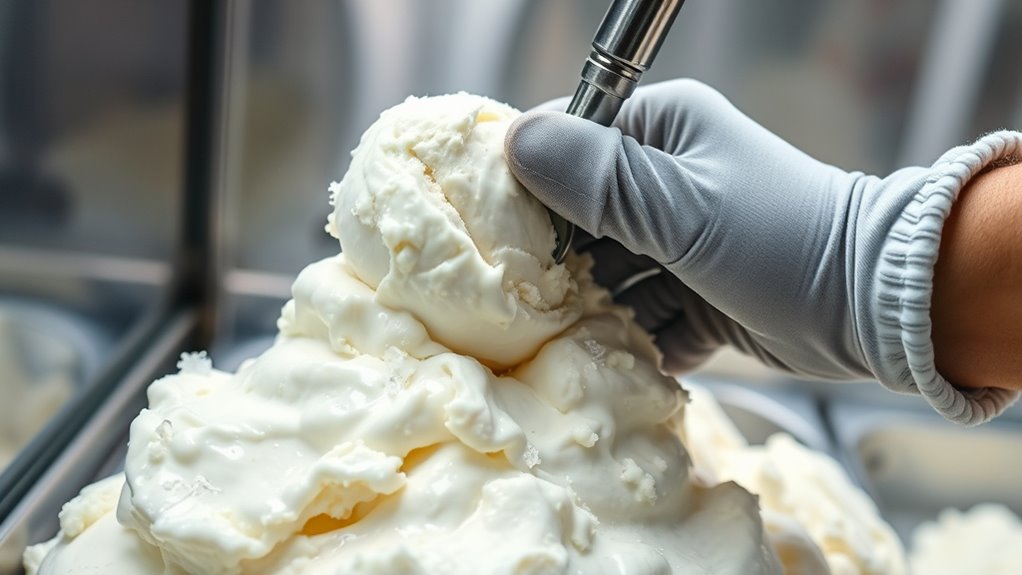

The secret to perfectly scooping rock-hard ice cream is managing freezer and scooping techniques. Keep your freezer at around 0°F for ideal firmness, and let the container sit at room temperature for 1-2 minutes before scooping. Use a warm, properly warmed scoop—run it under warm water and dry it thoroughly—to glide through the ice cream effortlessly. Want to discover more tips? Keep exploring for the best strategies to master this tricky task.
Key Takeaways
- Allow the ice cream to sit at room temperature for 1-2 minutes before scooping.
- Warm the scoop under hot water and dry it thoroughly for smoother operation.
- Use a high-quality, metal scoop designed for hard ice cream with a comfortable handle.
- Maintain a consistent freezer temperature around 0°F (-18°C) to prevent excessive hardening.
- Avoid frequent door openings and fluctuations to keep ice cream at optimal softness for scooping.
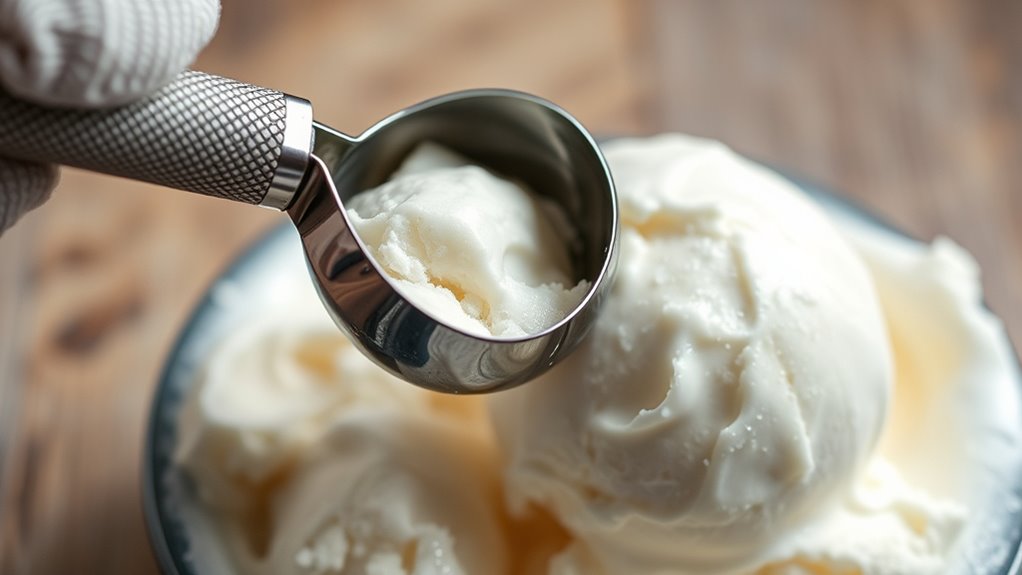
If you’ve ever struggled to scoop rock-hard ice cream, you’re not alone. It’s frustrating when your favorite treat refuses to budge from the container, leaving you with a sore arm and a half-melted mess. The key to overcoming this challenge lies in understanding the importance of ice cream texture and freezer temperature. When ice cream is too cold, its texture becomes excessively firm, making it nearly impossible to scoop without applying excessive force. This is because low temperatures cause the fats and ice crystals to harden, transforming the ice cream into a solid block that resists your efforts.
To make scooping easier, you need to pay attention to the freezer temperature. Ideally, your freezer should be set at around 0°F (-18°C). If it’s colder, the ice cream’s texture becomes even more rigid, increasing the difficulty of scooping. On the other hand, if it’s warmer, the ice cream softens just enough to scoop smoothly without melting too quickly. Keep your freezer consistently at this ideal temperature, and avoid frequent door openings, which can cause temperature fluctuations that make the ice cream even harder.
Set your freezer at 0°F (-18°C) for easy, scoopable ice cream every time.
Before you try to scoop, take the container out of the freezer and let it sit at room temperature for a minute or two. This brief wait allows the ice cream to soften slightly at the surface, making it easier to get a clean scoop. If you’re still struggling, run your scooper under warm water beforehand. The heat from the water helps the scoop glide through the ice cream more smoothly, reducing resistance caused by the cold. Be sure to dry the scoop thoroughly before using it; excess water can cause the ice cream to freeze onto the scoop, creating more difficulty instead of less.
Another tip is to choose the right scoop. A well-designed ice cream scoop with a comfortable handle and a heat-conductive metal bowl can make all the difference. The metal heats up quickly from contact with your hand, helping to melt the ice cream just enough for a clean, easy scoop. If you frequently encounter difficult ice cream, consider investing in a scoop specifically made for hard ice cream. These tools are built to withstand and cut through the firmness, saving you time and effort.
Frequently Asked Questions
Can Warm Water Really Make Ice Cream Easier to Scoop?
Yes, warm water can help with temperature control when scooping ice cream. By dipping your scoop in warm water briefly, you soften the ice cream’s surface, making it easier to cut through the hard texture. This trick doesn’t melt the ice cream too much but improves your scooping experience. Just make sure to dry the scoop before diving in again, so you maintain the ice cream’s ideal texture and avoid unnecessary melting.
Does the Type of Ice Cream Affect Scooping Difficulty?
You might wonder if the ice cream flavor or container affects how hard it is to scoop. It’s true—some flavors, especially those with higher butterfat or mix-ins, can be firmer and more challenging. The type of ice cream container also matters; thicker or colder containers can keep ice cream harder. So, depending on your flavor choice and container, you may need to adjust your scooping technique for easier serving.
How Long Should I Let Ice Cream Soften Before Scooping?
You should let your ice cream soften for about 5 to 10 minutes before scooping, depending on its temperature. This softening time allows the ice cream to reach a more manageable consistency, making it easier to scoop without cracking or breaking. Keep an eye on the ice cream’s temperature; if it’s too cold, it’s harder to serve, so softening it slightly improves your experience and gets you a perfect scoop every time.
Are There Specific Tools Best for Scooping Rock-Hard Ice Cream?
You’ll find that using specialized tools with innovative scoop designs makes a big difference when tackling rock-hard ice cream. Look for scoops with ergonomic handle options that provide extra leverage and comfort. These features help you cut through frozen ice cream more easily, reducing strain on your hand. Investing in a sturdy, well-designed scoop guarantees you can serve perfect portions effortlessly, even when the ice cream is extra firm.
Is It Better to Store Ice Cream Upside Down or Right Side Up?
You might wonder whether storage orientation matters. Storing your ice cream upside down can help prevent air pockets and keep the surface fresh, but it’s not essential. Focus on the container material—airtight, sturdy containers like plastic or metal help maintain ideal temperature and prevent freezer burn. Ultimately, choose whichever orientation works best for your space and preferences, ensuring the lid seals tightly for the best preservation.
Conclusion
So, next time your ice cream feels like a brick, try letting it sit for a few minutes at room temperature. This simple step softens it just enough to make scooping easier. Some say that ice cream’s crystalline structure hardens over time, making it tougher to serve. By understanding this, you can confidently tackle even the hardest scoops, turning a frustrating moment into a quick, satisfying treat. Who knew patience and a little science could make all the difference?