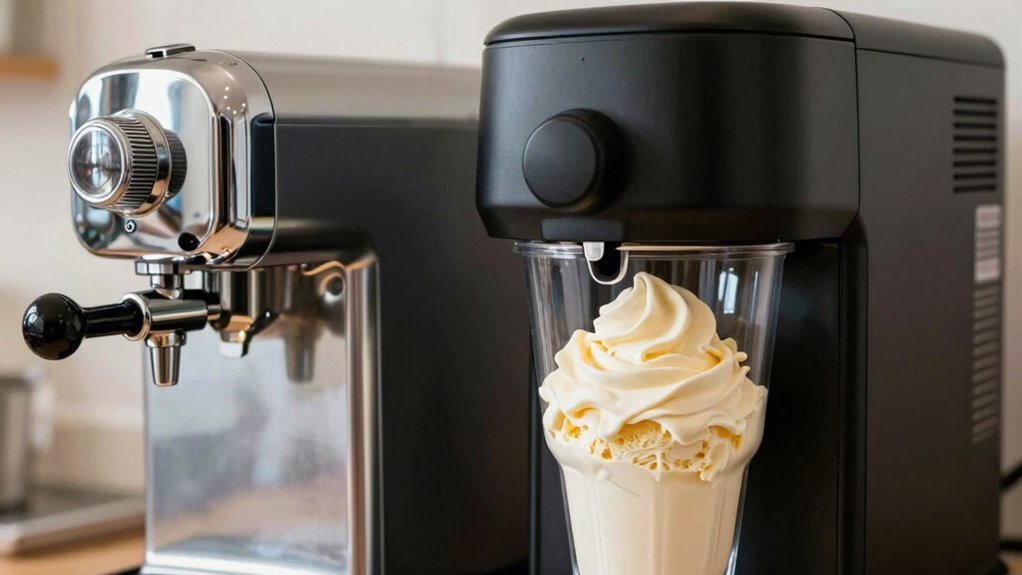

When choosing between air-pump and gravity-feed soft serve machines, consider how each impacts flavor and maintenance. Air-pump models use compressed air for a smooth, consistent texture but require regular servicing of the compressor and seals. Gravity-feed machines are simpler, with fewer parts, resulting in lower maintenance costs and denser product. Your decision depends on your priorities—if you want consistent flavor, an air-pump system may suit you best; for simplicity and cost-effectiveness, go gravity. Keep exploring to find out more about which option fits your needs.
Key Takeaways
- Air-pump machines deliver more consistent flavor and texture but require regular maintenance of compressors and seals.
- Gravity-feed models are simpler, with fewer moving parts, reducing repair needs and long-term maintenance costs.
- Air-pump systems are better for high-volume operations needing uniform product quality; gravity-feed suits smaller setups.
- Air-pump machines tend to be more expensive initially and in upkeep, while gravity-feed models are more budget-friendly over time.
- Your choice depends on balancing flavor consistency, maintenance effort, operational size, and budget considerations.
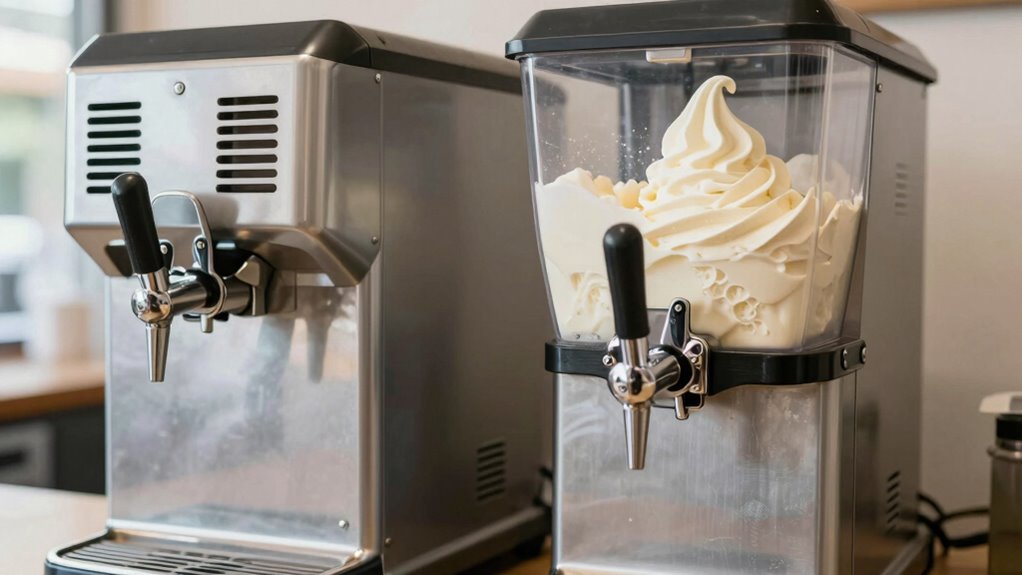
Choosing the right soft serve machine depends on understanding the differences between air-pump and gravity-feed models. When evaluating these options, consider how maintenance costs and flavor consistency will impact your operation. Air-pump machines use a compressed air system to push the product through the dispenser, which often means they require more maintenance. The air compressor needs regular inspection and servicing to prevent breakdowns, and the seals or gaskets can wear out faster due to the pressure involved. This ongoing upkeep can lead to higher maintenance costs over time, especially if you’re running the machine daily. On the other hand, gravity-feed models operate by relying on gravity to dispense the product, typically resulting in fewer moving parts and less frequent repairs. This translates to lower maintenance costs, making gravity-feed machines more budget-friendly in the long run, especially for smaller operations or those just starting out.
Flavor consistency is another critical factor to think about. Air-pump machines tend to deliver a more uniform texture and flavor because the air system helps maintain steady pressure and prevents product separation. This consistency is key if you want your customers to enjoy the same great taste every time. However, if not maintained properly, air-pump systems can introduce air bubbles into the product, which might alter the texture and make it appear less smooth. Proper cleaning and regular servicing are essential to keep flavor consistent. Conversely, gravity-feed machines often produce a slightly denser product because they dispense without added pressure. While this might result in a different mouthfeel, it doesn’t necessarily mean inferior flavor quality. If your focus is on simplicity and reliability, gravity-feed machines can reliably deliver a consistent product with less fuss, provided they are kept clean and well-maintained.
Ultimately, the choice hinges on your specific needs and budget. If you prioritize superior flavor consistency and don’t mind the extra maintenance, an air-pump machine could be the right fit. But if you want a straightforward, low-maintenance option that still delivers quality soft serve, a gravity-feed model may serve you better. Keep in mind that the initial purchase price, ongoing service costs, and the importance of flavor fidelity all play a role in your decision. With a clear understanding of these differences, you’ll be better equipped to choose a machine that aligns with your goals, ensuring smooth operation and satisfied customers over the long run.
Frequently Asked Questions
Which Machine Type Is More Energy-Efficient for Large-Scale Operations?
You’ll find gravity-feed machines are generally more energy-efficient for large-scale operations. They consume less energy because they rely on gravity rather than an air pump to dispense ice cream, reducing overall energy consumption. This boosts operational efficiency, helping you save on electricity costs. While air-pump machines might offer faster output, their higher energy consumption makes them less ideal if efficiency and cost savings are your main priorities.
How Does Maintenance Differ Between Air-Pump and Gravity-Feed Machines?
You’ll find maintenance differs mainly in cleaning procedures and part replacement. Air-pump machines often require more frequent cleaning of the pump and air system to prevent clogs and guarantee smooth operation. Gravity-feed models are simpler, needing less frequent cleaning. For both, you’ll need to replace worn parts like seals or O-rings periodically. Regular maintenance keeps your machine running efficiently, reduces breakdowns, and extends its lifespan.
Can Both Machines Handle Dairy-Free or Alternative Ice Cream Mixes?
A stitch in time saves nine, and when it comes to dairy-free compatibility, both machines can handle alternative mix handling. You just need to make sure the machine’s components are compatible with the ingredients and that you adjust settings accordingly. Air-pump and gravity-feed models can produce dairy-free or alternative ice cream, but verifying the manufacturer’s guidelines for each specific mix is essential to avoid issues and achieve the best results.
What Is the Typical Lifespan of Each Machine Type?
You can expect both air-pump and gravity-feed soft serve machines to last around 5 to 10 years with proper maintenance. Their durability depends on usage and care, so regular cleaning extends their lifespan. You might need replacements or repairs sooner if you don’t maintain them well. Investing in quality models and routine upkeep reduces replacement frequency, ensuring your machine stays operational longer and provides consistent service.
Are There Significant Differences in Initial Purchase Costs?
Think of your soft serve machine purchase like buying a car: the upfront investment varies. Air-pump machines generally cost more initially due to their complex components, while gravity-feed models are more budget-friendly. A cost comparison shows that gravity-feed machines might save you money upfront, but consider long-term maintenance. Your choice depends on your budget and how much you’re willing to invest at the start for durability and performance.
Conclusion
Ultimately, choosing between an air-pump and gravity-feed soft serve machine is like selecting the perfect canvas for your dessert dreams. Picture creamy swirls cascading into cones, each one a moment of joy you’ve crafted. Whether you prefer the steady whisper of gravity or the powerful push of air, your choice shapes not just your equipment, but the smiles and memories you create. Make your decision, and let your soft serve dreams come to life with every delicious scoop.