When you use cold desserts, the alcohol in sauces tastes stronger because lower temperatures keep the aromatic compounds from evaporating, making flavors more concentrated. Cooler temperatures also prevent the alcohol’s volatile compounds from dispersing, which enhances the overall intensity. This concentration amplifies bold flavors and keeps the alcohol’s character more prominent. If you want to discover how temperature precisely influences each flavor nuance, keep exploring this fascinating topic.

Get baking supplies delivered free with Prime
- Fast, free delivery on millions of items
- Prime Video, Amazon Music and more included
- Member-only deals all year
Key Takeaways
- Cold temperatures slow evaporation, keeping aromatic compounds concentrated near the surface of the sauce.
- Chilling preserves volatile compounds, intensifying the aroma and flavor perception.
- Cooler temperatures suppress subtle alcohol notes, making the bold flavors more prominent.
- Cold desserts prevent the sauce from dispersing, maintaining localized, intense flavor.
- The perceived strength of alcohol increases because cold preserves and concentrates its aromatic compounds.

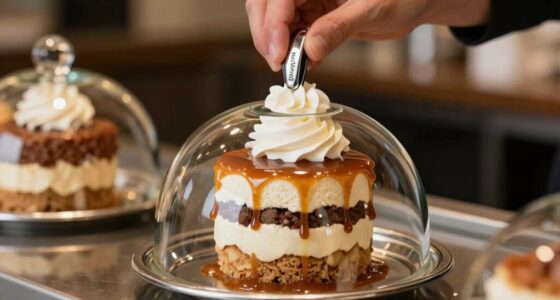
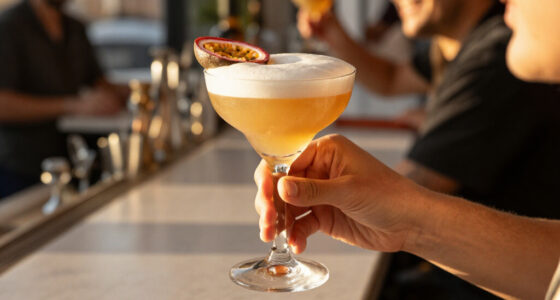
When you pour an alcoholic sauce over a cold dessert, you might notice it tastes more intense than when served warm or at room temperature. This difference is primarily due to how temperature effects influence flavor perception. Cold temperatures slow down the evaporation of aromatic compounds in the alcohol, which might seem counterintuitive but actually enhances the overall flavor experience. When the sauce is cold, your taste buds are less sensitive to certain flavors, but the aroma remains more concentrated because the alcohol’s volatile compounds stay closer to the surface. This concentration of aroma intensifies the flavor, making it seem stronger and more pronounced.
Cold desserts intensify alcoholic sauces by preserving aromatic compounds and amplifying bold flavors for a richer taste experience.
Flavor enhancement plays a significant role here. On cold desserts, the chilling effect suppresses some of the sweeter, more subtle notes of the alcohol, allowing the more potent, bold flavors to stand out. The cool temperature also reduces the perception of heat or burn from the alcohol, which can sometimes obscure flavor when the sauce is warm. As a result, the alcohol’s true character shines through more clearly on a cold dessert, giving you a richer, more vibrant taste experience. You might find that a splash of brandy or liqueur feels more potent on a chilled mousse or ice cream than it does on a warm cake or pastry, simply because the cold amplifies the perceived strength of the alcohol. Additionally, the physical state of the dessert influences how the sauce interacts with it, affecting the overall flavor profile. A consistent temperature helps maintain the integrity of the sauce’s flavor and prevents it from melting or dispersing too quickly. The temperature control of the dessert can also impact how the flavors develop as you savor each bite. Moreover, the heat transfer between the sauce and the dessert also impacts how quickly the flavors meld and dissipate.
Cold desserts tend to be firm or semi-frozen, which means the alcohol-based sauce remains more localized rather than quickly dispersing or melting into the dessert. This localized concentration helps keep the flavor profile sharp and intense. When you serve a warm dessert, the heat causes the sauce to spread out more rapidly, diluting the alcohol’s concentration and softening its impact. The warmth also accelerates the evaporation of volatile compounds, muting some of the aroma and reducing the overall impression of strength. Furthermore, the temperature of the dessert influences the viscosity and texture of the sauce, affecting how flavors are perceived with each bite. In essence, the interplay between temperature effects and flavor enhancement explains why alcoholic sauces taste stronger on cold desserts. The cold temperature preserves and concentrates aromatic compounds, enhances bold flavors, and limits the dispersion of the alcohol, all of which work together to heighten your sensory experience. So, next time you want to bring out the full potential of your favorite alcoholic sauce, consider serving it on a chilled dessert — you’ll notice the difference in flavor intensity immediately.
Products Worth Considering

Ninja CREAMi 7-in-1 Ice Cream Maker, NC301

Le Creuset Essential Non-Stick Ceramic Shallow Frying Pan, 12-Inch

Cuisinart MultiClad Pro 16-Inch Stainless Steel Roasting Pan with Rack
As an affiliate, we earn on qualifying purchases.
Frequently Asked Questions
Does Alcohol Content Affect Flavor Intensity on Cold Desserts?
Yes, alcohol content impacts flavor intensity on cold desserts. Higher alcohol levels can enhance flavor masking, making the alcohol taste more prominent, especially in cold temperatures. Cold desserts reduce sensory perception, so the alcohol’s sharpness isn’t fully masked, resulting in a stronger flavor. As you enjoy, keep in mind that lower alcohol content might blend better, allowing other flavors to shine without overpowering your taste buds.
Can Freezing Alter the Chemical Composition of Alcoholic Sauces?
Ever wondered if freezing changes your alcoholic sauces? Freezing can alter flavor stability by causing some ingredients to separate or change in concentration, impacting taste. While most alcohol retains its potency, freezing effects may diminish certain volatile flavors, making the sauce seem less intense. So, yes, freezing can slightly alter the chemical composition, but the overall alcohol content usually stays stable. Would you prefer to serve it chilled or at room temperature?
How Does Temperature Influence Alcohol Evaporation During Dessert Preparation?
Temperature control plays a key role in alcohol evaporation during dessert prep. When you keep the sauce cold, alcohol evaporates more slowly, preserving its flavor retention. If you heat the sauce, alcohol evaporates faster, reducing its strength and flavor. So, to maintain a rich, boozy taste in your dessert, manage the temperature carefully, avoiding high heat to prevent rapid alcohol loss and enhance overall flavor.
Are Certain Types of Alcohol More Potent on Cold Desserts?
Imagine a vintage jukebox, where certain spirits hit differently—some more potent on cold desserts. Yes, some alcohols like spirits with higher proof or more robust flavors, such as whiskey or brandy, taste stronger because their intense flavor profiles enhance sensory perception. These types of alcohols often provide bolder flavor pairing, making their impact more noticeable on cold desserts. So, choose your booze wisely for a more striking sensory experience.
How Does Serving Time Impact the Flavor Strength of Alcoholic Sauces?
Serving time directly impacts the flavor strength of alcoholic sauces due to temperature effects and flavor retention. When you serve sauces immediately, their alcohol content and sharp flavors are more pronounced, especially on cold desserts, because colder temperatures slow down evaporation, preserving the alcohol’s potency. As the sauce sits longer, warmth and time reduce alcohol strength through evaporation, leading to milder flavors and altered taste profiles.
Conclusion
So, next time you drizzle that boozy sauce onto your icy treat, remember: the cold keeps the alcohol’s fiery spirit bottled up, making it hit harder. It’s like locking a wild lion in a tiny cage—once set free, it’s all roar and no restraint. Your cold dessert becomes the stage for this unrestrained alcohol show, turning every bite into a mini rollercoaster. Cheers to the icy thrill—where strength is just a sip away!