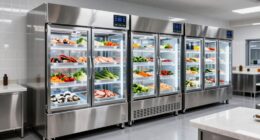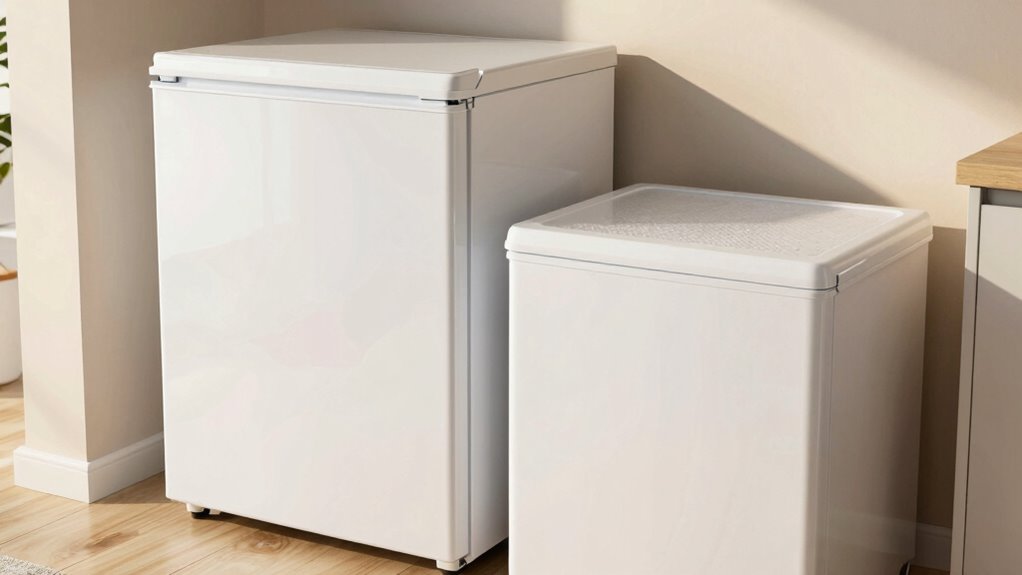
In summer, chest freezers usually keep their temperature more stable than upright models. Their design with thicker insulation and no frequent door openings helps reduce cold air loss and temperature swings. This means your frozen items stay consistently cold even during heatwaves. Upright freezers, with shelves and frequent door openings, are more susceptible to temperature fluctuations in hot weather. To learn more about how each option performs, continue exploring the details.
Key Takeaways
- Chest freezers maintain more consistent temperatures during hot weather due to superior insulation and less frequent door opening.
- Upright freezers are more prone to temperature fluctuations caused by frequent door openings, especially in high outdoor temperatures.
- Chest freezers’ design minimizes cold air loss, helping them stay colder and more stable in summer conditions.
- Insulation quality and door design in chest freezers enhance their ability to resist temperature swings during heatwaves.
- Upright freezers are less effective in hot weather because they experience greater temperature variability from frequent access.
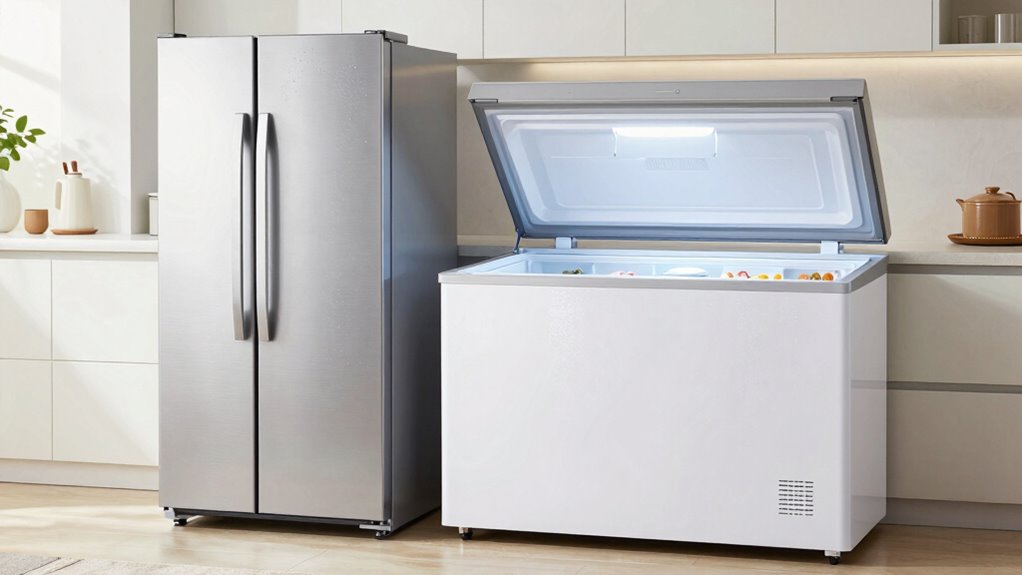
When choosing between an upright and a chest freezer, understanding their differences can help you make the best decision for your storage needs. One of the key factors to think about is how each type handles temperature stability during hot summer months. Chest freezers tend to hold temperature better in warmer weather because of their design. They are typically more energy-efficient, partly because their lid doesn’t need to be opened as often, and their insulation is usually thicker. This means they lose less cold air when you access your stored items, helping maintain a consistent temperature even during heatwaves. If you’re worried about energy consumption, a chest freezer could be a smarter choice, especially since they use less electricity to keep your food frozen. Additionally, chest freezers generally offer more storage capacity for the same amount of space, making them ideal if you plan to store large quantities of frozen goods or bulk items. Their deep, open interior allows for easier organization and stacking, which is a significant advantage if you need to maximize storage. Moreover, thermal insulation plays a crucial role in maintaining consistent temperatures, especially in fluctuating outdoor conditions. On the other hand, upright freezers are often more convenient in terms of accessibility. Their vertical design with shelves and compartments makes it easier to locate specific items quickly, reducing the amount of time the lid stays open. However, because of their design, they can be less efficient at maintaining a consistent temperature in hot conditions. The frequent opening and closing of the door can cause temperature fluctuations, which might be problematic in the summer when ambient temperatures are higher. These fluctuations can lead to increased energy use and potentially compromise the quality of your stored food. While upright freezers usually have less storage capacity than chest freezers of the same footprint, they can be a better option if you have limited space or prefer easier organization. Ultimately, if your priority is energy efficiency and maintaining a steady temperature during summer heat, a chest freezer is likely the better choice. Its superior insulation and larger storage capacity make it more resilient against temperature swings and more economical to operate. If convenience and quick access are more important to you, and you’re willing to accept potentially higher energy costs and some temperature fluctuations, then an upright freezer could suit your needs better. Knowing how each type handles temperature stability in hot weather will help you choose the right freezer for summer, ensuring your frozen goods stay fresh and safe year-round.
Frequently Asked Questions
How Does Insulation Affect Freezer Temperature Stability?
Insulation quality directly impacts freezer temperature stability by reducing heat transfer, which helps maintain a consistent internal temperature. With good insulation, your freezer experiences fewer temperature fluctuations, especially during summer heat waves. You’ll notice your freezer works more efficiently, saving energy and preventing food spoilage. Poor insulation allows external heat to seep in, making it harder to keep your freezer cold and stable. Investing in a well-insulated freezer guarantees reliable temperature control year-round.
Are There Energy Efficiency Differences Between Upright and Chest Freezers?
You might be surprised, but chest freezers often use less energy than uprights, making them more efficient and environmentally friendly. Their design minimizes temperature fluctuations, reducing energy consumption over time. If you want to cut costs and lessen your environmental impact, a chest freezer could be the smarter choice. Don’t overlook how these subtle differences in efficiency can add up, impacting both your wallet and the planet in the long run.
Which Freezer Type Is Better for Long-Term Storage?
You’ll find a chest freezer better for long-term storage because it offers superior frozen food preservation, maintaining consistent temperatures that prevent freezer burn. Its larger freezer capacity allows you to store more items efficiently. Plus, its design minimizes temperature fluctuations, which helps keep your food fresh longer. If you’re planning to store large quantities or bulk items for extended periods, a chest freezer is your best choice for reliable, long-term preservation.
How Do Different Climates Impact Freezer Performance?
Climate profoundly impacts freezer performance; higher humidity effects can cause frost buildup, making your unit work harder. In humid environments, your compressor efficiency drops, leading to increased energy use and temperature fluctuations. Conversely, in dry climates, freezers maintain consistent temperatures more easily. To optimize performance, make certain proper ventilation and consider a model with advanced insulation. Adjust your settings accordingly to compensate for climate-related changes, keeping your food safe and preserved.
Can Accessories Improve Temperature Regulation in These Freezers?
Yes, accessories like insulation upgrades and temperature monitoring can improve temperature regulation in your freezer. Adding insulation helps maintain a consistent internal temperature by reducing heat transfer, especially during hot summer months. Meanwhile, temperature monitoring devices give you real-time data, so you can quickly adjust settings or troubleshoot issues. Together, these accessories guarantee your freezer stays cold and energy-efficient, regardless of external temperature fluctuations.
Conclusion
Choosing between an upright and a chest freezer is like picking between a trusty backpack and a spacious trunk—you want what suits your needs. I once stored summer berries in my chest freezer, and they stayed frozen even during a heatwave, proving its superior temperature retention. Remember, the right freezer keeps your food safe and ready, just like a dependable friend who’s always there when you need them. So, pick the one that best fits your summer storage needs!