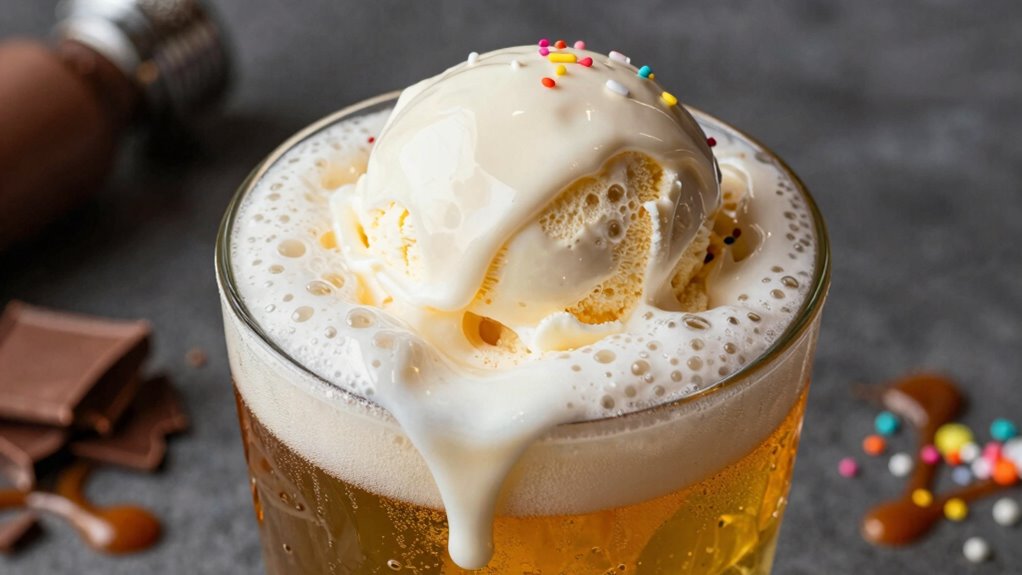
To craft successful beer floats and dessert beer pairings, focus on balancing rich, creamy gelato with bolder craft beers like stout or porter. Opt for flavors that complement or contrast—such as vanilla or chocolate gelato with chocolate or coffee stouts—while keeping the combination harmonious. Pour slowly to avoid overflow and enjoy the layered textures. If you want to explore more tips and flavor matchings, keep exploring ahead to elevate your dessert experience.
Key Takeaways
- Match rich, creamy gelato with robust, moderate-bitterness desserts beers like stouts for balanced flavor enhancement.
- Pair vanilla or fruit-flavored gelato with sweeter or milk stouts to create a smooth, dessert-like float experience.
- Consider contrasting flavors, such as berry gelato with a tart sour beer, for a bright, refreshing contrast.
- Pour beer slowly over gelato to manage foam and carbonation, ensuring a harmonious blend of textures.
- Balance the intensity of beer and gelato to prevent overpowering either component, emphasizing complementary or contrasting profiles.

Beer floats and dessert beers are a fun and inventive way to enjoy your favorite brews in a new, sweeter form. When you’re exploring these treats, understanding how to pair flavors can elevate your experience. One classic combo is pairing a rich, creamy gelato with a robust chocolate stout. The idea is to find balance—so the beer enhances the dessert, and vice versa. A chocolate stout’s deep cocoa notes complement the sweetness and smooth texture of gelato, creating a decadent harmony that delights your palate. For the best results, choose a stout with moderate bitterness; too bitter, and it might overpower the delicate sweetness of the gelato. Conversely, a sweeter or milk stout can add a creamy, dessert-like quality that pairs beautifully with vanilla, chocolate, or even fruit-flavored gelatos.
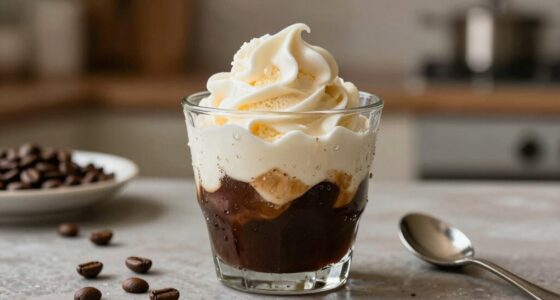
When creating a beer float, consider the flavor profiles of both components. If you’re using a chocolate stout, opt for a gelato that either echoes or contrasts its flavors. Vanilla gelato offers a classic pairing, providing a neutral base that lets the stout’s chocolate notes shine. Chocolate gelato intensifies the cocoa richness, making the dessert more indulgent. Fruit-flavored gelatos, like raspberry or cherry, can add a bright, tangy contrast that cuts through the richness of the stout, balancing sweetness with acidity. The key is to assure the gelato isn’t too icy or hard—soft, freshly scooped gelato or ice cream works best because it melds seamlessly with the beer, creating a smooth, cohesive float.
When you’re mixing your beer float, pour the beer slowly over the gelato to prevent overflowing or excessive foam. Start with a small amount, then add more to taste. The carbonation and foam can enhance the sensory experience, adding a bubbly, creamy texture. This process allows you to customize the sweetness and intensity, making each float unique. Remember, the goal is to highlight the beer’s flavors without overwhelming the dessert. Experiment with different combinations—perhaps a stout with hints of coffee or roasted malt paired with coffee or caramel gelato for an even richer treat.
To ensure your pairing is perfect, consider the flavor profile of the beer and gelato, matching those that complement or contrast effectively. Ultimately, the art of pairing gelato and chocolate stout or other dessert beers hinges on balancing flavors. Keep in mind that the beer shouldn’t drown the dessert, nor should the gelato mute the beer’s character. When you master this balance, you create a delightful, layered tasting experience that’s both fun and sophisticated. So, next time you’re craving something sweet and spirited, try crafting a beer float with a carefully selected gelato pairing—you might discover a new favorite dessert.
Frequently Asked Questions
What Are the Best Non-Traditional Beer Float Combinations?
You should try non-traditional beer float combinations like adding fruit infusions such as raspberry or mango to complement the beer’s flavor. Spice enhancements like cinnamon or ginger can add a surprising kick. Consider experimenting with tropical fruit sorbets or spicy ginger root beer for unique twists. These combinations bring out exciting flavors, making your beer float experience more creative and enjoyable. Don’t be afraid to mix and match to find your perfect combo.
How Do Alcohol Levels Affect Pairing Choices?
Think of alcohol levels as the volume knob on your flavor playlist. Higher alcohol content is like a bold drumbeat—overpowering delicate notes—so pair it with equally intense flavors. Lower alcohol levels are softer melodies, blending smoothly with subtle tastes. Adjust your pairing based on flavor intensity, ensuring the alcohol content complements rather than clashes, creating harmony that delights your palate like a perfectly tuned symphony.
Can Gluten-Free Beers Be Used in Dessert Pairings?
Yes, you can definitely use gluten-free beers in dessert pairings. Thanks to gluten-free brewing, you now have a variety of flavorful options that complement sweet treats beautifully. When selecting gluten-free beers for dessert pairings, look for those with rich, fruity, or malty notes that enhance the dessert’s flavors. Experimenting with gluten-free beers adds diversity to your pairing choices and guarantees everyone can enjoy a delicious, inclusive dessert experience.
Are There Specific Glassware Recommendations for Beer Floats?
You should opt for tall, sturdy glasses like a hurricane or pilsner glass for beer floats. These glassware suggestions help showcase the layers and enhance presentation tips, making your float visually appealing. Choose clear glass to highlight the contrast between beer and ice cream. Make sure the glass is chilled beforehand to keep the float cold longer. Proper presentation elevates the experience, so take your time to serve it attractively.
How Do Seasonal Beers Influence Dessert Pairing Options?
You should consider seasonal beer trends when pairing desserts, as they influence flavor profiles and availability. For example, spring beers might feature floral or citrus notes, perfect for fruit-based desserts, while winter stouts offer rich, roasted flavors that complement chocolate or caramel treats. By aligning your dessert choices with seasonal beer flavor harmony, you create more balanced and enjoyable pairings that highlight both the beer and the dessert.
Conclusion
So, next time you indulge in a beer float or a dessert beer, remember that even in sweetness, there’s a rule to follow. Ironically, the more you try to break the flavor pairing rules, the more you might find yourself unexpectedly delighted. Sometimes, the perfect pairing isn’t about tradition but about daring to defy it. After all, isn’t life a little sweeter when you break the rules—and maybe, just maybe, enjoy the unexpected?