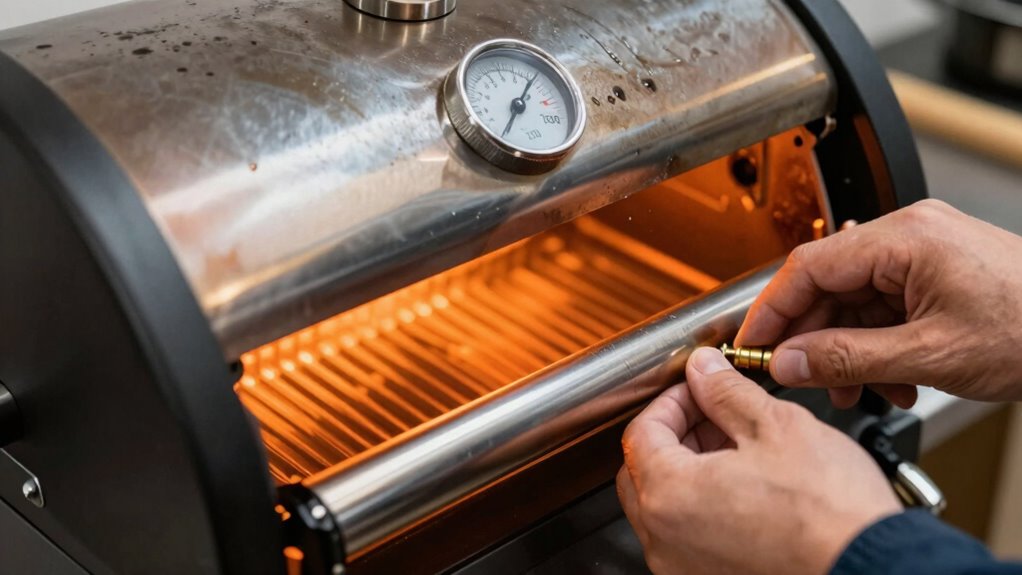
To fix pellet grill temperature swings, make sure to regularly calibrate your grill’s temperature sensor against an accurate thermometer, adjusting settings as needed to guarantee precise heat control. Also, use high-quality hardwood pellets stored in a dry place to prevent moisture and feeding issues. These simple checks can make your cooking more consistent and reliable. Keep going, and you’ll discover more tips to keep your grill performing at its best.
Key Takeaways
- Regularly calibrate your grill’s temperature sensor to ensure accurate readings.
- Use high-quality, dry hardwood pellets to promote consistent and stable combustion.
- Avoid overfilling the hopper to prevent pellet jams and uneven feeding.
- Store pellets properly in a dry environment to maintain their quality.
- Perform routine maintenance and calibration to minimize temperature fluctuations during cooking.
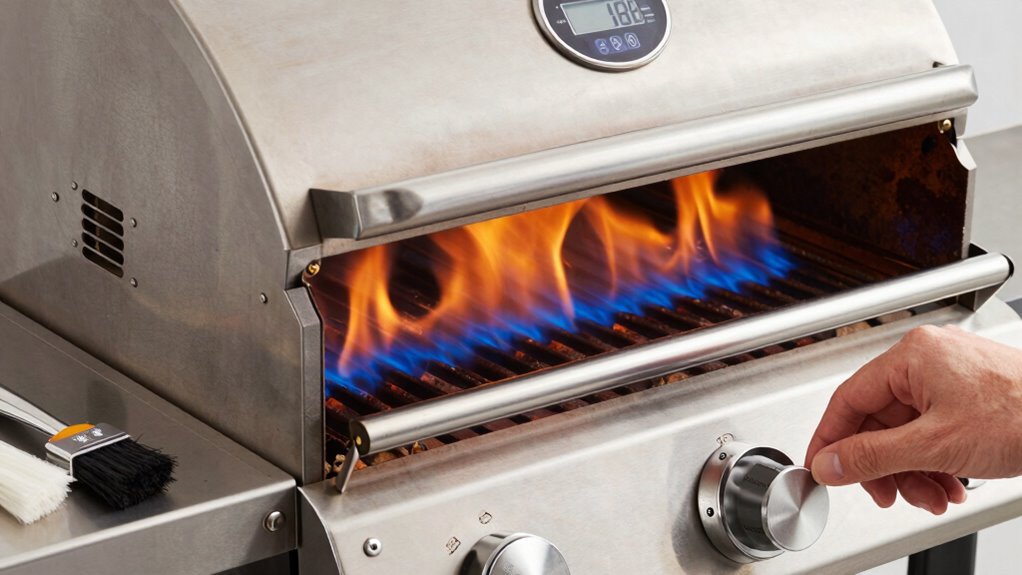
Pellet grill temperature swings can be frustrating, especially when you’re aiming for perfectly cooked meat. Fluctuations in temperature can throw off your cooking schedule, leaving you with overdone or undercooked dishes. The good news is that many of these issues stem from simple maintenance tasks you can perform yourself. Two key fixes often resolve temperature inconsistencies: proper pellet grill calibration and ensuring pellet quality.
First, addressing pellet grill calibration is essential. Over time, your grill’s temperature sensor can drift out of alignment, causing inaccurate readings and inconsistent heat. Regular calibration helps the grill’s thermostat stay true to the actual temperature inside. This process usually involves using an accurate meat or oven thermometer placed in the grill to compare the displayed temperature with the actual heat. If discrepancies are found, you can adjust your grill’s settings or reprogram its control system according to the manufacturer’s instructions. Proper calibration ensures your grill responds accurately to your temperature settings, considerably reducing swings. Keep in mind, calibration isn’t a one-time fix; it’s a routine maintenance step that keeps your grill performing at its best.
Regularly calibrate your pellet grill to ensure accurate temperature readings and consistent cooking results.
Pellet quality plays a vital role in maintaining steady temperatures. Low-quality pellets often have inconsistent moisture content, uneven sizes, or impurities that can clog the auger or cause uneven burning. When pellets burn irregularly, your grill’s temperature fluctuates because the fire isn’t stable. To combat this, always use high-quality pellets from reputable brands. Look for pellets that are 100% hardwood, free from additives or binders, and stored in a dry environment. Good pellet quality ensures a consistent burn, which stabilizes the heat inside your grill. Additionally, avoid overfilling the hopper, as this can lead to pellet jams or uneven feeding, further contributing to temperature swings. Using suprem fabric with its durability and consistency can be an additional advantage if incorporated into your grill accessories or coverings, as it helps maintain equipment longevity and performance.
Combining these two fixes—regular calibration and using quality pellets—can dramatically improve your grilling experience. You’ll notice fewer temperature swings, more predictable results, and better-tasting meat. Regular maintenance might seem like a hassle, but it’s a small investment that pays off with more consistent cooking. Remember to check your calibration periodically and keep your pellets stored properly to preserve their quality. These simple steps will help you master your pellet grill, making your outdoor cooking more enjoyable and your dishes more delicious. With just a little attention to calibration and pellet quality, you’ll be well on your way to achieving steady, reliable heat every time.
Frequently Asked Questions
How Often Should I Perform Maintenance on My Pellet Grill?
You should perform maintenance on your pellet grill weekly, especially during heavy use. Follow a cleaning schedule to remove ash and grease buildup, and inspect components like the auger, firepot, and fans for wear or damage. Regular maintenance guarantees consistent temperature control and prolongs your grill’s lifespan. By staying on top of cleaning and inspections, you’ll prevent temperature swings and enjoy perfectly cooked meals every time.
Can I Use Any Brand of Pellets for Consistent Temperature?
Using any brand of pellets for consistent temperature is like trying to fit a square peg in a round hole—you’ll face uneven heat and frustration. Stick to quality pellets from trusted brands that match your grill’s compatibility, as poor pellet quality can cause temperature swings. I once experimented with off-brand pellets, and my grill’s temperature fluctuated wildly; now, I only use recommended brands for steady, reliable heat every time.
What Are Signs My Pellet Grill Needs Repair?
If your pellet grill’s temperature is fluctuating or inconsistent, it’s a sign it needs repair. You might notice uneven cooking, difficulty maintaining set temperatures, or the grill shutting off unexpectedly. Poor pellet quality can cause these issues, so always use high-quality pellets. Regular maintenance, like cleaning the fire pot and checking the auger, helps keep the grill running smoothly and maintains consistent grill temperature.
How Does Ambient Weather Affect Grill Temperature?
Ambient temperature and wind effects profoundly influence your pellet grill’s temperature. When it’s cold outside, your grill needs more energy to maintain heat, causing fluctuations. Wind can also blow hot or cold air, disrupting airflow and temperature stability. To keep consistent temps, position your grill in a sheltered spot, insulate it if needed, and monitor weather conditions. These steps help your grill perform reliably regardless of outdoor weather.
Is It Normal for Pellet Grills to Have Minor Temperature Fluctuations?
Think of your pellet grill as a lively dance partner, sometimes stepping out of sync. Minor temperature fluctuations are normal, caused by fluctuation causes like pellet feed rate and ambient weather. While the dance stays mostly in rhythm, small dips and rises add character. For better temperature stability, keep your grill clean, check the auger, and make certain proper airflow. These tweaks help maintain a steady rhythm, making your cooking more predictable.
Conclusion
By mastering these two simple maintenance fixes, you’ll tame your pellet grill’s wild temperature swings like a seasoned conductor guiding an unruly orchestra. Regular cleaning and ensuring proper auger function act as the steady baton, bringing harmony and precision back to your cooking symphony. With a little attention, your grill transforms into a loyal partner, turning unpredictable beats into a smooth, melodic rhythm—making every meal a masterpiece worth waiting for.