If your dehydrator is causing uneven drying, the main mistake often involves blocking airflow. Overloading trays, stacking fruit, or covering vents can restrict air circulation, leading to inconsistent moisture removal. Make certain you space out food evenly, avoid obstructing vents and fans, and use uniform-sized pieces for better airflow. Proper tray alignment and avoiding overfilling are key. Keep an eye on airflow pathways to troubleshoot these issues; more tips are just a step away.
Key Takeaways
- Overloading trays blocks airflow, leading to uneven drying and moisture retention in some pieces.
- Improper fruit placement or stacking restricts air circulation, causing hot spots and inconsistent dehydration.
- Obstructions near vents or fans, like debris or covering, reduce airflow efficiency.
- Cutting food unevenly or thickly hampers uniform drying; rotate trays for better airflow exposure.
- Misaligned or warped trays disrupt airflow paths, resulting in uneven moisture removal.
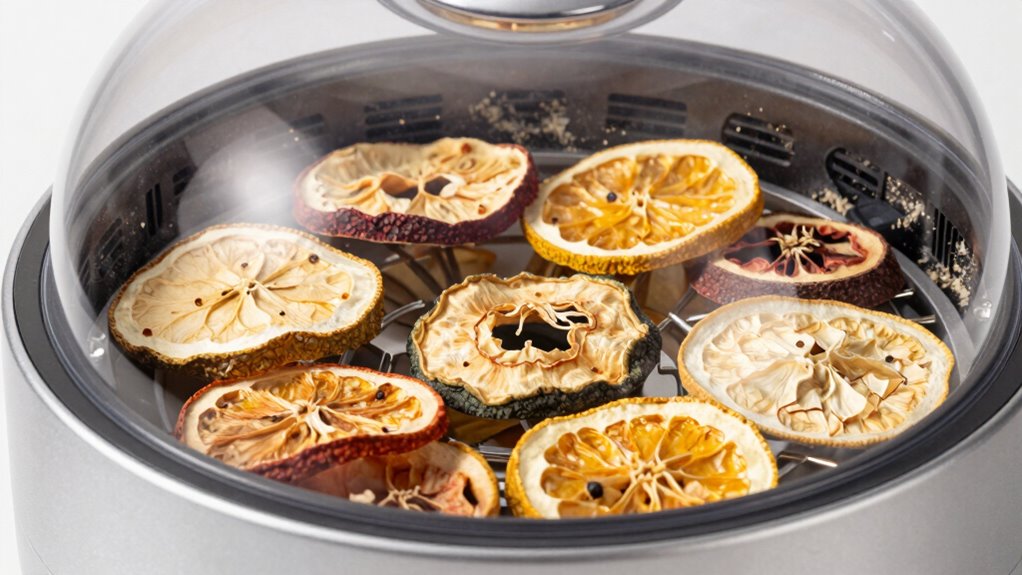
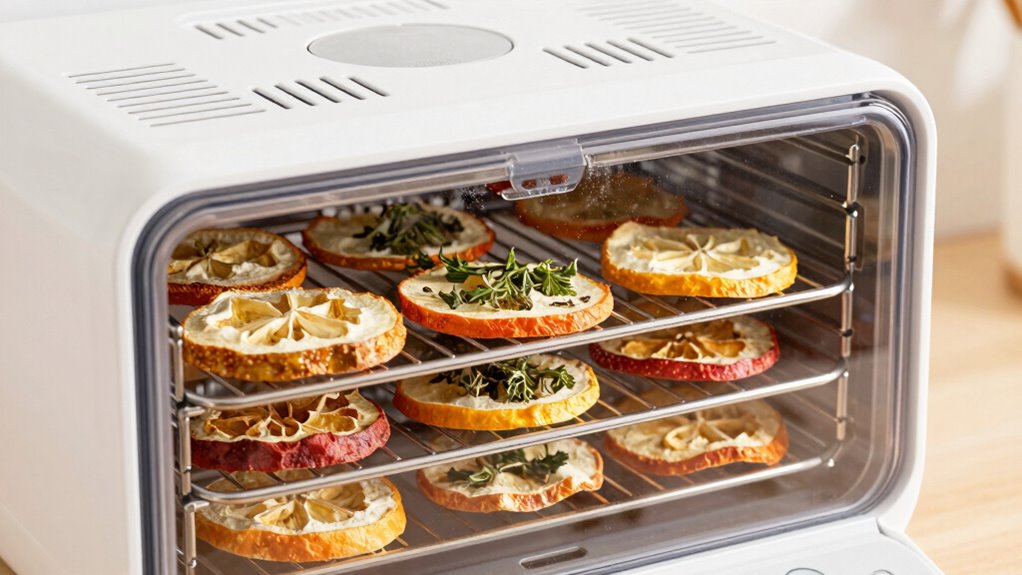
If your dehydrator isn’t drying food evenly, airflow problems could be the culprit. One common mistake that leads to uneven drying is poor fruit placement on the trays. When you load your dehydrator, it’s tempting to cram as much fruit as possible, but overloading the trays can cause airflow blockage. If the air can’t circulate freely around the food, some pieces end up drying faster than others, resulting in uneven textures and moisture levels. To prevent this, make sure you space out the fruit evenly, giving each piece enough room for air to move around. Don’t stack or pile fruit on top of each other, as this restricts airflow and creates hot spots.
Overloading trays blocks airflow, causing uneven drying—space out fruit for best results.
Another key factor is guaranteeing that the airflow isn’t obstructed by the placement of your food. Fruit placement matters a lot because if you block the vents or cover the fan openings with fruit or tray contents, airflow gets restricted. Check your dehydrator’s manual to understand the essential way to arrange your food, and keep the vents clear. It’s vital that the air enters and exits smoothly, carrying moisture away from the food efficiently. If you notice any buildup of fruit or debris near the vents, clean those areas thoroughly before starting a new batch. Dust, pulp, or sticky residue can all contribute to airflow blockage, leading to uneven drying.
Be mindful of the size and thickness of the fruit pieces as well. Thicker or unevenly cut pieces take longer to dry, which can cause moisture to remain in some parts while others are already dry. When placing these on the trays, position them so that the airflow can reach all sides. Rotating trays during the drying process can also help mitigate uneven drying caused by minor airflow inconsistencies. This practice ensures that all pieces are exposed to similar airflow conditions, promoting uniform dehydration.
Lastly, avoid blocking the dehydrator’s fan or vents with excess food or tray covers. Sometimes, the design of the dehydrator includes specific areas for airflow; covering these can greatly reduce efficiency. Regularly inspecting your dehydrator and making sure that nothing obstructs the fan or air intake points can help maintain consistent airflow. Keep the trays aligned properly and ensure they aren’t warped or misaligned, which could interfere with airflow patterns. By paying attention to fruit placement and preventing airflow blockage, you’ll achieve more evenly dried results and get the most out of your dehydrator’s capabilities.
Frequently Asked Questions
How Does Ambient Room Temperature Affect Dehydrator Airflow?
Ambient room temperature impacts dehydrator airflow by affecting air circulation and temperature regulation. If the room is too warm, it can cause the dehydrator’s fan to work harder, leading to uneven drying. Conversely, a cooler room helps maintain consistent airflow and temperature, ensuring your food dries evenly. To optimize results, keep the dehydrator in a well-ventilated space with stable temperature, preventing airflow issues that cause uneven drying.
Can Using Specific Trays Cause Uneven Drying?
Using specific trays can cause uneven drying if you don’t pay attention to tray stacking and positioning. When trays are stacked improperly or placed unevenly, airflow gets obstructed or directed unevenly, leading to inconsistent drying results. Always make certain trays are aligned correctly and spaced properly to promote even airflow. Adjust tray positioning if you notice uneven drying, and avoid overcrowding, which can hinder airflow and cause moisture retention in some areas.
Do Different Foods Impact Airflow Consistency?
Imagine your dehydrator as a busy highway, where each food item is a vehicle. Different foods, like thick slices versus thin herbs, impact airflow consistency, just as large trucks slow traffic. Proper food placement and tray arrangement make certain of even airflow, preventing bottlenecks. When you group similar foods and distribute them evenly, you’re optimizing the airflow, resulting in uniformly dried snacks and preserves.
How Often Should I Clean My Dehydrator’s Fan?
You should clean your dehydrator’s fan at least once every 3 to 6 months, depending on how often you use it. Follow a regular cleaning schedule to prevent dust and debris buildup, which can hamper airflow and cause uneven drying. Turn off and unplug your dehydrator before cleaning, then carefully remove and wipe down the dehydrator fan with a damp cloth. Regular maintenance keeps airflow consistent and extends your dehydrator’s lifespan.
Are There Airflow Issues in Commercial Dehydration Units?
Think of commercial dehydration units as the lungs of your operation; airflow blockages or a fan malfunction can choke them, causing uneven drying. Yes, airflow issues can occur in these units, leading to inconsistent results. Regularly inspecting and maintaining fans and vents guarantees smooth airflow, preventing blockages. When airflow is clear and fans function properly, your dehydration process runs like a well-oiled machine, delivering uniformly dried products every time.
Conclusion
If you ignore airflow issues in your dehydrator, you’re risking a drying disaster of epic proportions. Uneven drying isn’t just annoying; it’s like releasing a mini tornado of spoiled snacks and wasted time right in your kitchen. Fix those airflow mistakes now, or you might end up with a mountain of ruined food and a kitchen chaos so bad, even the most experienced chefs would run for cover. Don’t let your dehydration dreams turn into a drying nightmare!