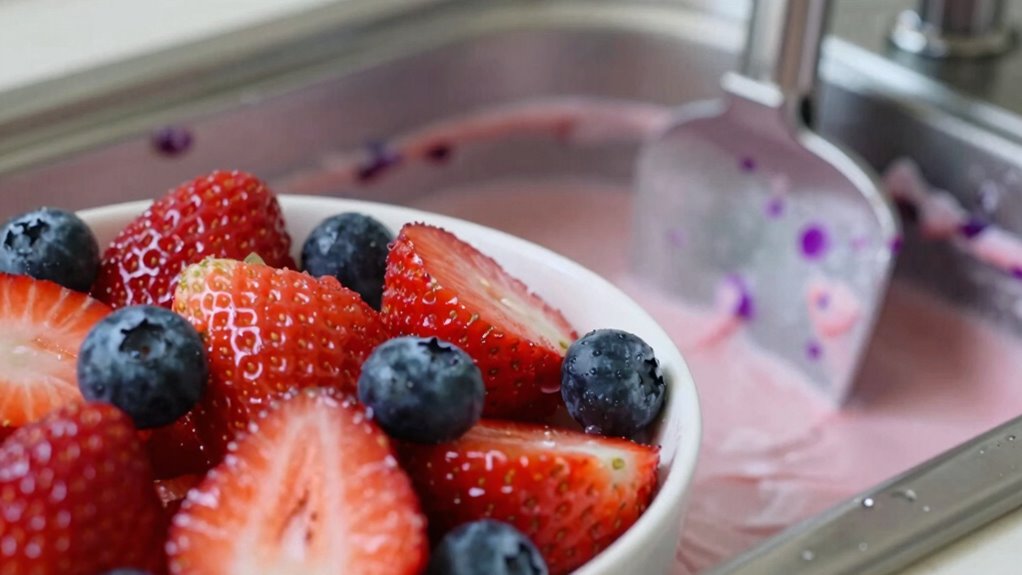

Your struggle with fruit in ice cream often comes down to its high water content, which can cause icy, grainy textures and uneven freezing. As the water freezes, it forms large ice crystals that ruin smoothness. Using stabilizers like pectin and pre-treating fruit helps control moisture, leading to a better texture. If you want to find out more about managing water and improving your fruit ice cream, stay with us.
Key Takeaways
- Excess water from fruit causes large ice crystals, resulting in grainy, icy ice cream textures.
- Uncontrolled water content overwhelms stabilizers like pectin, leading to uneven freezing.
- Proper pre-treatment with pectin reduces fruit water, improving texture and scoopability.
- Balancing water and stabilizers ensures smooth freezing and prevents undesirable ice formation.
- Techniques like cooking or macerating fruit help control moisture, enhancing overall ice cream quality.
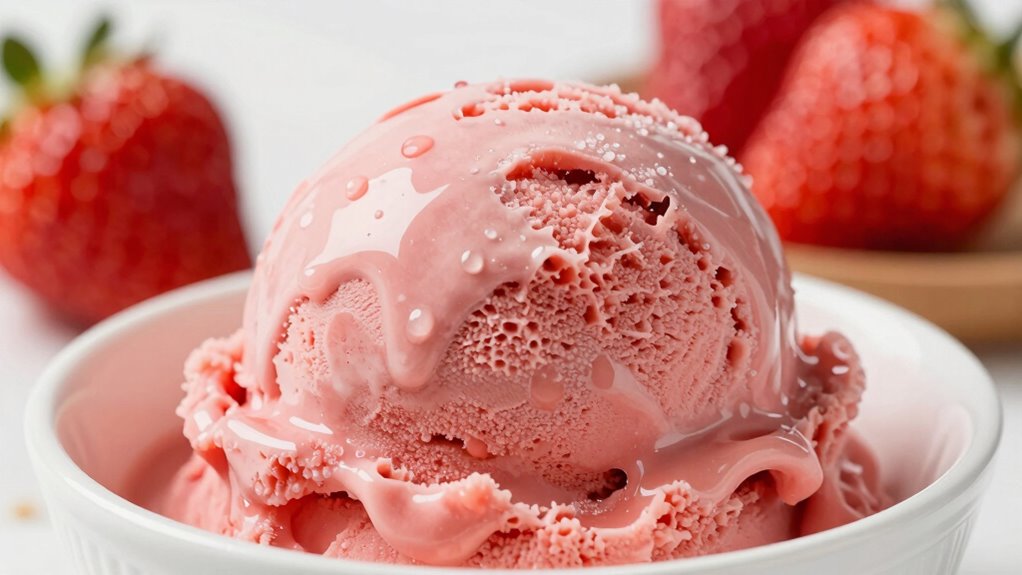
Have you ever wondered how to create delicious, fruit-filled ice cream at home? The secret often lies in understanding how fruit interacts with your ice cream maker, particularly when it comes to water content and how it affects the freezing process. When you’re mixing fruit into your ice cream, the key challenge is balancing the fruit’s natural water content. Too much water, and you risk the mixture not freezing properly or ending up with a grainy, icy texture. That’s where ingredients like fruit pectin come into play. Fruit pectin acts as a natural thickener and stabilizer, helping to manage the water content and improve the overall texture of your ice cream. By adding pectin, you can help lower the freezing point of the mixture, making it easier to freeze smoothly without large ice crystals forming.
The freezing point is fundamental here. Pure water freezes at 32°F (0°C), but when you incorporate fruit, sugar, and pectin, the freezing point drops. This process is called freezing point depression. The more solutes you add—like sugar and pectin—the lower the freezing point becomes. This means your mixture can stay softer longer, which is perfect for creating creamy, scoopable fruit ice cream. However, if there’s too much water from the fruit, it can overwhelm the stabilizers and cause the mixture to freeze unevenly. You might notice icy pockets or a chalky texture, which isn’t desirable. To prevent this, you should consider pre-treating your fruit with pectin or cooking it down slightly to reduce excess water before mixing.
Another trick is to limit the moisture in your fruit before adding it to your ice cream base. You can do this by macerating or lightly cooking the fruit with pectin, which helps to bind the water and reduce ice crystal formation during freezing. Using fruit pectin allows you to retain the fresh flavor and vibrant texture of the fruit while ensuring that the ice cream remains smooth. It also helps in controlling the consistency, so your ice cream isn’t overly soft or too hard. Remember, the goal is to create a harmonious balance: enough water content for flavor but controlled enough to prevent problems during freezing.

Hoosier Hill Farm Fruit Pectin, 2LB (Pack of 1)
- Product Type: Dry fruit pectin for thickening
- Uses: Thickening jams, jellies, and fillings
- Application: Ideal for canning and preserving
As an affiliate, we earn on qualifying purchases.
As an affiliate, we earn on qualifying purchases.
Frequently Asked Questions
How Does Fruit Ripeness Affect Ice Cream Texture?
Ripeness greatly impacts your ice cream’s texture because overripe fruit has higher acidity and water content, which can make your ice cream icy or grainy. When you use perfectly ripe fruit, it helps preserve the texture, keeping it smooth and creamy. Less ripe fruit may be firmer, but too ripe fruit releases excess water, causing texture issues. To get the best results, choose fruit at prime ripeness for flavor and consistency.
Can Freezing Fruit Improve Its Suitability for Ice Cream?
Freezing fruit can improve its suitability for ice cream by reducing water content through fruit dehydration, which minimizes ice crystal formation. To enhance flavor and texture, you might also infuse the fruit with sugar before freezing, making it sweeter and more stable. This process helps prevent a watery, icy texture, ensuring your ice cream remains creamy and delicious. So yes, freezing with sugar infusion can make your fruit more ice cream-friendly.
Are There Specific Fruits Best for Homemade Ice Cream?
Think of fruit selection as your ice cream’s treasure map—some fruits, like berries and peaches, naturally harmonize with creamy sweetness, making them ideal choices. You’ll want fruits with vibrant flavor pairing potential that hold their shape and flavor after freezing. Strawberries, blueberries, and mangoes are excellent options, bringing bright, bold notes. Avoid overly watery fruits; instead, opt for those that add depth without turning your ice cream into a soggy mess.
How Do Additives Influence Fruit’s Water Content?
Additives like sugars and preservatives influence fruit’s water content by reducing free water, which helps prevent ice crystal formation. Sugar absorption draws moisture from the fruit, concentrating flavors and maintaining texture. Preservatives can stabilize cell structures, limiting water release during freezing. By controlling water content, these additives improve the fruit’s firmness and consistency in your homemade ice cream, making it easier to achieve smooth, creamy results without excess ice crystals.
What Are Non-Water-Based Alternatives for Fruit Flavoring?
Imagine your ice cream as a canvas, and non-water-based alternatives like fruit extract and flavor concentrates are vibrant paints. You can infuse intense fruit flavor without adding water, helping your ice cream stay creamy. These extracts provide pure, concentrated taste, making them perfect for flavoring. Using flavor concentrates allows you to craft rich, fruit-forward ice creams without the risk of water causing ice crystallization or texture issues.
Conclusion
So, while fresh fruit promises vibrant flavor, its high water content can sabotage your ice cream’s texture. You might crave the juicy burst of summer berries, yet end up with a frozen, icy mess instead of silky sweetness. The contrast reminds you: passion for fresh fruit must be balanced with clever techniques. Embrace the challenge, and you’ll create frozen delights that honor both nature’s bounty and your craftsmanship—sweetness, without the icy compromise.