
To keep ice cream at the perfect temperature at home, set your freezer to 0°F (-18°C) and use a reliable thermometer to monitor it regularly. Store the ice cream in the coldest part of the freezer, away from the door, and in airtight containers to prevent freezer burn. Avoid frequent door openings, which can cause temperature fluctuations. Staying consistent with these practices helps preserve your ice cream’s texture and flavor—learn more to keep it tasting great every time.
Key Takeaways
- Set your freezer temperature to 0°F (-18°C) and use a thermometer to monitor it regularly.
- Store ice cream in the coldest part of the freezer, away from the door to avoid temperature fluctuations.
- Keep the container tightly sealed in airtight, moisture-proof containers to prevent freezer burn.
- Minimize door openings and serve ice cream quickly to prevent melting and temperature drops.
- Return leftovers to the freezer promptly and maintain consistent temperature for optimal quality.
Have you ever wondered why your ice cream melts too quickly or becomes icy and hard? The answer often comes down to how you’re storing it and the freezer temperature you maintain. Proper ice cream storage is essential for keeping it at the ideal consistency, and that starts with understanding how freezer temperature plays a vital role. When ice cream isn’t stored correctly or if your freezer isn’t set to the right temperature, it won’t stay fresh or taste as good as it should.
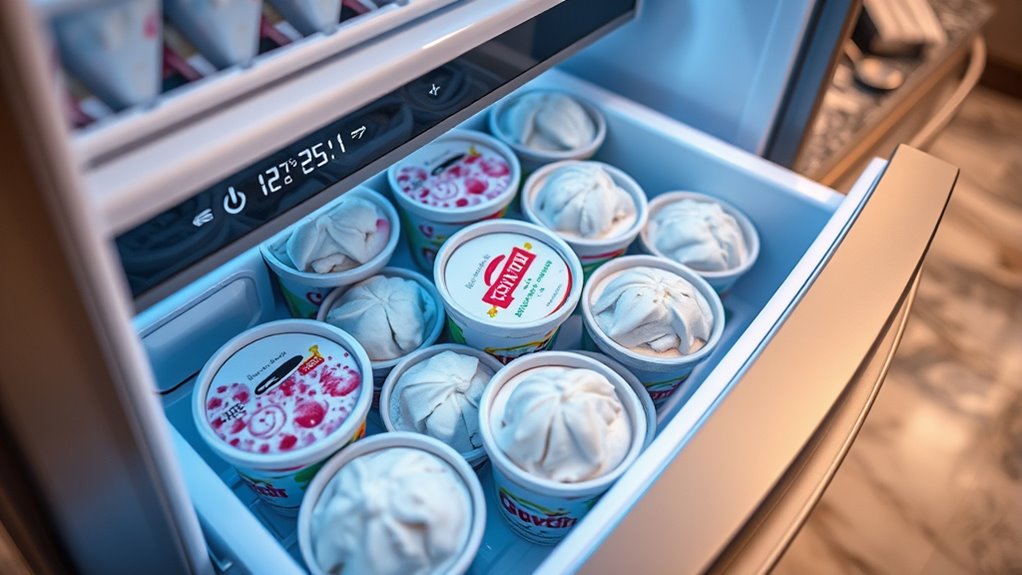
First, you need to make sure your freezer temperature is set correctly. The ideal freezer temperature for ice cream is around 0°F (-18°C). If your freezer is too warm, ice cream will start to melt, becoming soupy and losing its texture. On the other hand, if it’s too cold, the ice cream can become icy and hard, making it difficult to scoop and enjoy. Many freezers tend to fluctuate in temperature, especially if they’re frequently opened and closed. To prevent this, invest in a freezer thermometer so you can monitor the temperature accurately. Keeping it steady at 0°F ensures your ice cream remains in that perfect middle ground—firm enough to scoop but not so frozen that it’s impossible to serve.
Set your freezer to 0°F (-18°C) for optimal ice cream storage and texture.
Next, how you store your ice cream matters just as much as the temperature setting. Always keep your ice cream in the coldest part of the freezer, usually at the back. Avoid leaving it near the door, where temperature fluctuations occur every time you open it. When storing, make sure the lid is tightly sealed to prevent air from entering, which can cause ice crystals to form and affect texture. Using a proper container, preferably one that’s airtight and moisture-proof, helps maintain the quality. If you notice ice crystals forming or the ice cream developing freezer burn, it’s a sign that the storage conditions aren’t ideal. Proper ice cream storage combined with a consistent freezer temperature prevents these issues and ensures your ice cream remains creamy and delicious.
Additionally, understanding how automation in business impacts supply chains can help you anticipate seasonal availability and storage tips, ensuring your ice cream stays at its best longer. Also, avoid leaving your ice cream out at room temperature for too long. Even if it’s stored correctly, exposure to warm air causes rapid melting and refreezing, which compromises texture. When you’re ready to enjoy it, scoop it straight from the freezer, and try to serve it quickly to prevent melting. If you have leftovers, return them to the freezer promptly and check that the temperature remains steady. Maintaining a consistent freezer temperature, along with proper storage, helps keep your ice cream at the perfect temperature so you can enjoy every scoop just as it should be—rich, creamy, and satisfying.

TempPro TempAir Refrigerator Thermometer 2 Pack, Large Backlit LCD Display
- Large Backlit LCD Display: Clear visibility in dark conditions
- Easy Battery Replacement: Twist open with a coin, no tools needed
- Wide Temperature Range: -4℉ to 122℉ with ±1.8℉ accuracy
As an affiliate, we earn on qualifying purchases.
As an affiliate, we earn on qualifying purchases.
Frequently Asked Questions
How Can I Prevent Ice Cream From Developing Ice Crystals?
To prevent ice crystal formation, you should focus on proper freezing techniques. Make sure to store your ice cream in an airtight container, minimizing air exposure and moisture. Regularly smoothing the surface before sealing helps, and avoid frequent thawing and refreezing. Using a layer of plastic wrap directly on the ice cream before sealing can also help with ice crystal prevention. These steps keep your ice cream smooth and delicious.
What Is the Ideal Temperature for Storing Homemade Ice Cream?
Perfectly preserve your homemade ice cream by setting your freezer to a temperature around -20°F (-29°C). This temperature keeps your treat at the ideal freezing point, ensuring temperature stability and preventing ice crystals from forming. Consistently maintaining this cold condition helps keep the cream creamy and delicious, preventing unwanted melting or crystallization. So, keep your freezer frozen, and your ice cream will stay smooth, sumptuous, and sensational.
How Often Should I Check My Freezer’s Temperature?
You should check your freezer’s temperature at least once a month to guarantee proper freezer maintenance. Keep an eye on the thermometer, especially if you notice ice cream dips or changes in texture. Maintaining a consistent temperature of around 0°F (-18°C) helps keep your homemade ice cream at its best. Regular checks prevent spoilage and ensure your ice cream stays delicious, so don’t skip this simple but essential step.
Can Temperature Fluctuations Affect Ice Cream Texture?
Absolutely, temperature fluctuations can really throw a wrench in your ice cream’s quality. When temps rise and fall, ice crystal formation speeds up, leading to texture deterioration and making your ice cream less creamy and more grainy. Think of it like chasing a wild goose—constant shifts keep your dessert from staying perfect. To avoid this, keep your freezer at a consistent temperature, ideally around 0°F, to preserve that smooth, delicious texture you love.
What Storage Container Best Preserves Ice Cream Quality?
You should store ice cream in airtight containers with silicone lids to preserve its quality. These containers prevent air exposure, which can cause freezer burn and ice crystals, ruining texture. Silicone lids create a tight seal, keeping the cold in and odors out. Always guarantee the container is sturdy and leak-proof, and store it at a consistent, cold temperature to maintain the ice cream’s smoothness and flavor.
Conclusion
So, after all that effort, you might think keeping ice cream perfect is impossible. Ironically, the secret is simple—just keep it cold! But here’s the twist: you’ll probably forget and let it soften, only to realize too late that the real challenge isn’t the freezer, it’s resisting that tempting spoon. So, enjoy your ice cream, but don’t be surprised when it melts faster than you can say “perfect temperature.”