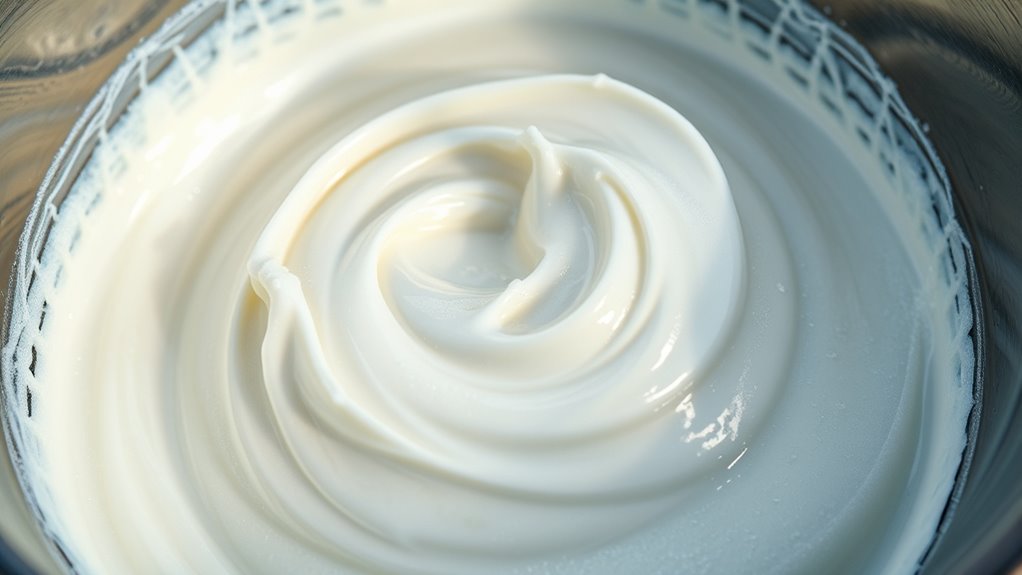

Controlling churning temperature during freezing and hardening is key to maintaining quality. When you keep the temperature low and consistent, you create small, uniform ice crystals that preserve texture and prevent damage to cell structures. If it’s too warm or fluctuates, larger crystals form, making your product grainy or watery. Staying precise with temperature helps keep flavors intact and ensures a smooth, firm final result—continue to explore how fine-tuning this step can elevate your process.
Key Takeaways
- Lower churning temperatures promote rapid freezing, resulting in smaller, uniform ice crystals that maintain product texture.
- Higher churning temperatures slow down freezing, allowing larger crystals to form and damaging delicate structures.
- Consistent low temperatures during churning help preserve freshness and prevent structural breakdown.
- Improper temperature control can lead to ice crystal growth, causing a grainy or icy texture in the final product.
- Optimal churning temperature balances freezing speed and product quality, ensuring smoothness and structural integrity.
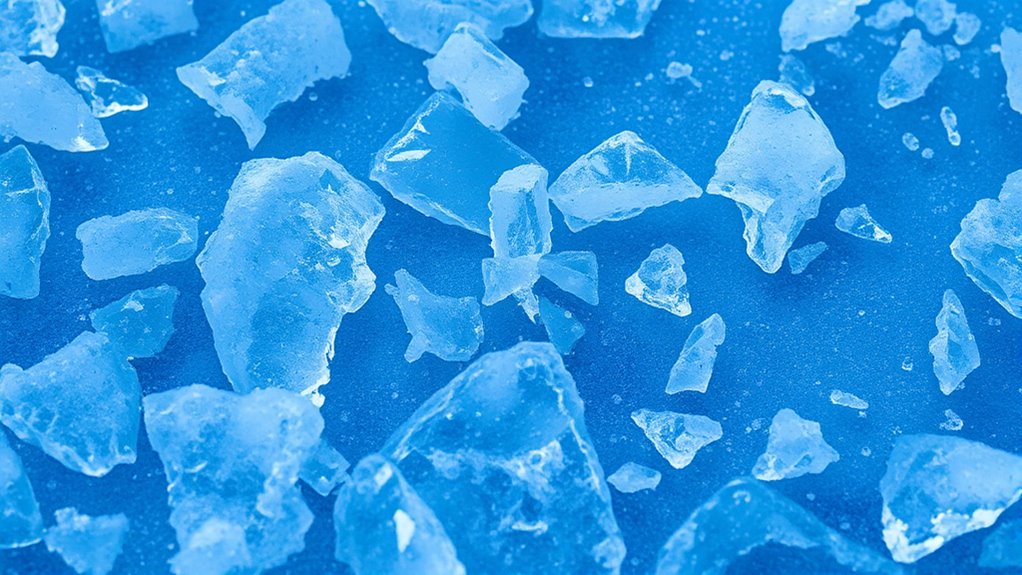
Freezing and hardening are vital processes that transform liquids and soft materials into solid, durable forms. When you freeze something, you’re fundamentally stopping its natural movement, locking in its structure and qualities. But how you control the freezing process makes all the difference in the final product’s quality. One critical factor is the formation of ice crystals during freezing, which directly impacts texture preservation. If ice crystals form too slowly or grow too large, they can damage the delicate structure of your food or material, leading to a grainy or icy texture that’s less appealing.
Rapid freezing is your best ally for maintaining quality. When you lower the temperature quickly, ice crystals form as tiny, uniform structures. These small crystals cause less mechanical damage to the cells or fibers in your product, helping to preserve its original texture. Think of fresh fruit or creamy desserts—frozen rapidly, they retain their smoothness and mouthfeel because the ice crystals are tiny and evenly dispersed. Conversely, slow freezing allows larger ice crystals to develop, which can puncture cell walls and disrupt the internal structure. This results in a product that, once thawed, is mushy or watery, losing its initial firmness and appeal.
Rapid freezing creates tiny, uniform ice crystals that preserve texture and prevent damage.
Temperature management isn’t just about how cold you get but also about how fast you reach that temperature. The quicker you can decrease the temperature, the better your chances of achieving fine ice crystal formation. Using blast freezers or cryogenic methods accelerates this process, ensuring that texture preservation remains intact. On the other hand, if freezing occurs gradually—due to inadequate equipment or improper timing—you risk compromising the product’s quality. Large ice crystals not only ruin texture but can also cause structural breakdown, making the product less stable or more prone to spoilage.
Understanding the relationship between churning temperature and ice crystal development allows you to optimize freezing techniques for maximum quality. Whether you’re freezing ice cream, seafood, or other perishables, controlling how quickly and at what temperature you freeze directly influences the final texture and overall integrity. This is why quick freezing is often preferred in commercial settings—it’s a proven way to preserve delicate textures and keep ice crystal formation at a microscopic level. When you master this process, you ensure that your frozen products remain true to their original form, flavor, and feel, offering a superior experience to anyone who enjoys them.
Frequently Asked Questions
How Does Churning Temperature Influence Nutrient Retention?
You’ll find that churning temperature directly impacts nutrient retention by influencing nutrient degradation rates. If you churn at too high a temperature, nutrients like vitamins can break down faster, reducing overall quality. Conversely, maintaining an ideal, colder churning temperature enhances freezing efficiency, preserving nutrients better. So, controlling this temperature is essential for minimizing nutrient loss, ensuring your product retains maximum health benefits and quality throughout the process.
What Equipment Best Maintains Consistent Freezing Temperatures?
Did you know that cryogenic methods can freeze products at temperatures as low as -196°C? To maintain consistent freezing temperatures, you should choose equipment with advanced insulation techniques, such as vacuum insulation or multi-layered panels, which reduce heat transfer. Cryogenic freezers are highly effective, offering rapid and uniform freezing, ensuring product quality. Regular calibration and monitoring of temperature sensors also help keep temperatures steady, preventing quality loss.
How Does Temperature Variation Affect Texture Over Time?
You’ll notice that temperature variation causes ice crystal growth, which leads to texture degradation over time. Fluctuating temperatures allow larger ice crystals to form, making your product grainy or icy instead of smooth. To maintain quality, keep the temperature consistent, as stable conditions prevent ice crystal growth and preserve the desired texture. When temperatures vary, you risk compromising your product’s mouthfeel and overall quality.
Can Improper Freezing Cause Food to Become Unsafe?
Yes, improper freezing can make food unsafe. If you don’t freeze food at the right temperature, bacteria can still grow, risking food safety. Bacterial growth slows down at proper freezing temperatures but doesn’t stop entirely if the temperature is too high. Always guarantee your freezer stays at 0°F (-18°C) or lower to prevent bacteria from multiplying, keeping your food safe to eat over time.
What Are the Economic Impacts of Improper Churning Temperatures?
Improper churning temperatures can cost you up to 20% in lost revenue due to decreased product quality. When ice cream doesn’t reach the right temperature, it affects consumer satisfaction and leads to higher returns and waste. These cost implications hit your bottom line, damage your brand reputation, and reduce customer loyalty. Ensuring precise churning temperatures is essential for maintaining quality, satisfying customers, and protecting your profits.
Conclusion
Understanding how churning temperature impacts freezing and hardening helps you preserve quality better. Did you know that freezing foods at the ideal temperature can extend their shelf life by up to 50%? By paying attention to these temperatures, you’re not just maintaining flavor and texture—you’re also saving money and reducing waste. So, next time you freeze something, remember that a few degrees can make all the difference in keeping your food fresh and delicious longer.