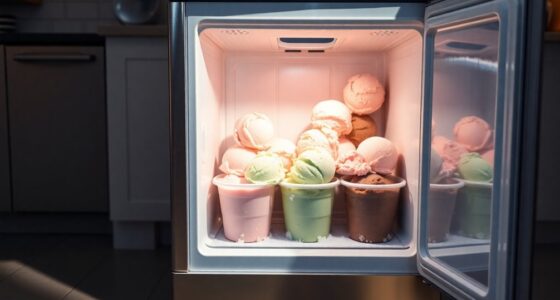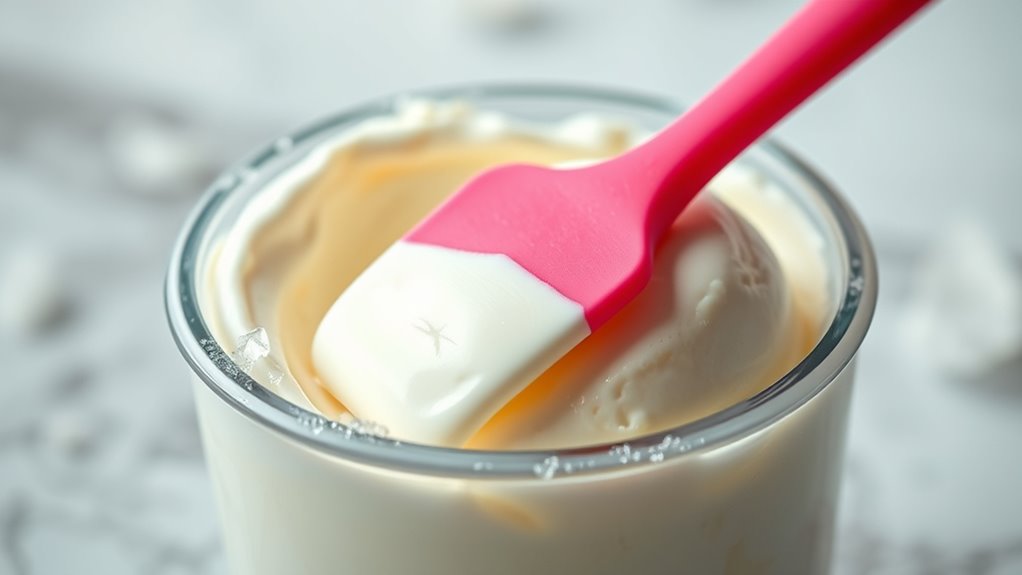

To prevent your ice cream from picking up ice crystals after opening, store it in an airtight container and press plastic wrap directly on the surface before sealing. Always reseal quickly after serving to limit exposure to warm air and moisture, which cause crystals to form. Avoid repeated thawing and refreezing, and handle it gently when serving. Mastering these tips keeps your ice cream smooth and creamy—keep exploring to learn more helpful tricks.
Key Takeaways
- Immediately reseal the container with an airtight lid after use to minimize air exposure.
- Press plastic wrap directly onto the ice cream surface before sealing to reduce moisture contact.
- Store in a freezer set around 0°F (-18°C) to prevent rapid ice crystal growth.
- Limit the number of times the ice cream is thawed and refrozen to avoid larger crystals.
- Scoop with a warmed utensil and handle gently to prevent surface ice crystal formation.
When making ice cream at home, one common challenge is preventing the formation of ice crystals that can ruin its smooth texture. Ice crystal formation occurs when water molecules within the ice cream freeze into large, uneven crystals instead of small, fine ones. These large crystals create a gritty or icy mouthfeel, which diminishes the creamy experience you’re aiming for. To combat this, controlling your freezer temperature is essential. If your freezer is too cold, it accelerates ice crystal growth, making your ice cream less enjoyable over time. Conversely, if it’s too warm, your ice cream can soften and develop ice crystals more readily upon repeated openings. The sweet spot for freezing your homemade ice cream is around 0°F (-18°C). Maintaining this consistent temperature helps keep the ice crystals small and the texture smooth.
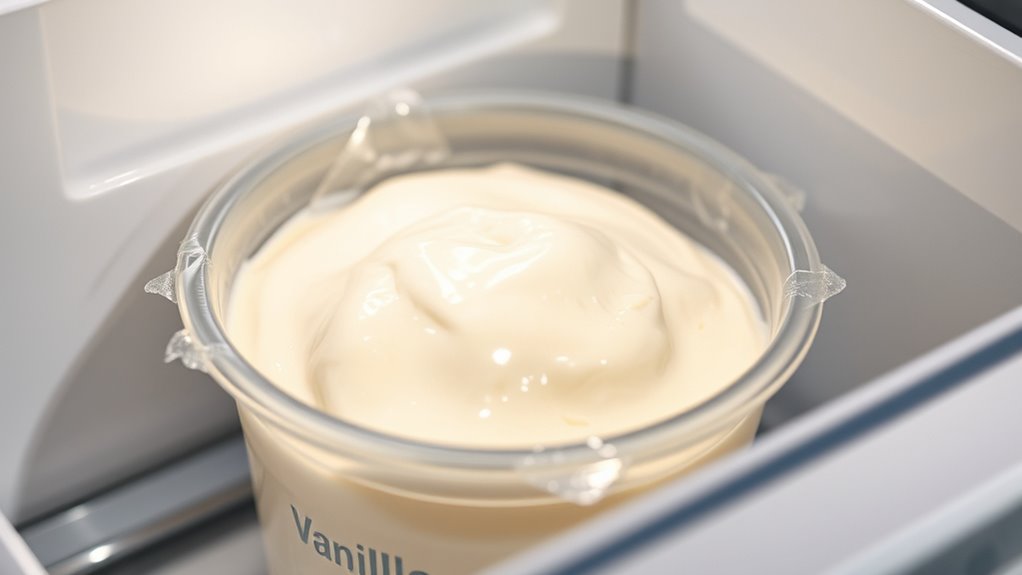
Another effective way to prevent ice crystal formation after you open your container is to minimize exposure to air. Every time you open the freezer, warm air enters and can cause moisture to condense and then freeze, leading to larger ice crystals. To avoid this, always ensure you immediately reseal your ice cream container tightly. Using airtight containers designed for freezing helps create a barrier against moisture and air, reducing the risk of ice crystal growth. You can also press a piece of plastic wrap directly onto the surface of the ice cream before sealing with the lid to further limit air contact. This extra layer blocks out moisture and keeps your ice cream’s surface smooth and free of ice crystals. Additionally, understanding the importance of freezer temperature control is vital for maintaining ideal ice cream texture.
Another tip is to avoid repeatedly thawing and refreezing your ice cream. Each cycle encourages ice crystal growth, so only take out what you plan to eat and return the rest promptly. If you notice ice crystals forming or your ice cream becoming too firm, gently softening it in the fridge for a few minutes can make scooping easier without risking additional crystal growth. Using a sturdy spoon or scoop warmed briefly in hot water also helps break through any ice crystals on the surface, making serving easier without compromising the overall texture.

LayYun Ice Cream Containers for Homemade (4 Pack – 1 Quart Each), Reusable PP Plastic Ice Cream Storage Containers for Freezer, Leak-Free Ice Cream Containers with Silicone Lids
- Capacity: 1 Quart (1 Liter) per container
- Set Includes: 4 reusable containers
- Material: High-quality PP plastic and silicone lids
As an affiliate, we earn on qualifying purchases.
As an affiliate, we earn on qualifying purchases.
Frequently Asked Questions
Can Resealing the Container Reduce Ice Crystal Formation?
Yes, resealing the container can reduce ice crystal formation. When you use an airtight sealing method, it helps with moisture control, preventing excess air and humidity from entering. This minimizes the chances of ice crystals forming on your ice cream. Make sure to press out any excess air before sealing, and store it in a consistently cold part of your freezer. Proper resealing keeps your ice cream smooth and delicious longer.
Does Adding Sugar or Corn Syrup Help Prevent Ice Crystals?
Adding sugar or corn syrup helps prevent ice crystals in your ice cream. Sugar’s role is to lower the freezing point, keeping the ice cream smooth, while corn syrup contains glucose that inhibits crystal growth. Using these ingredients in your homemade ice cream or adding a small amount to store-bought can improve texture, making it creamier and less icy. Just remember to mix them well for the best results.
How Does the Storage Temperature Affect Crystal Growth?
Imagine your ice cream as a delicate dance partner; when stored at stable temperatures, it glides smoothly without missteps. Keeping your freezer consistently cold, around or below the ideal freezing point, slows crystal growth. Temperature fluctuations act like sudden jerks, causing crystals to grow unevenly and become larger. To keep your ice cream creamy, avoid frequent door openings and store it at a steady, cold temperature.
Is It Better to Store Ice Cream Upright or Sideways?
You should store ice cream upright to minimize freezer orientation issues and reduce air exposure. Keeping the container in a vertical position helps prevent the formation of ice crystals on the surface, ensuring better texture. Sideways storage can cause the container to become unstable or lead to uneven freezing. Always close the lid tightly and maintain a consistent freezer temperature to keep your ice cream creamy and free of ice crystals.
Can Using a Vacuum-Sealed Bag Prevent Ice Crystals?
Think of vacuum sealing as wrapping your ice cream in a protective cloak. It creates a strong moisture barrier that keeps air and humidity out, preventing ice crystals from forming. By removing excess air, you reduce freezer burn and ice crystal growth, ensuring your treat stays smooth and creamy. So, yes, vacuum sealing your ice cream can effectively prevent ice crystals, keeping it fresh and delicious longer.
Conclusion
To keep your ice cream smooth and scoopable, always store it properly and avoid temperature fluctuations. Did you know that over 60% of ice cream lovers notice ice crystals forming within just a week of opening? By sealing the container tightly and placing it in the coldest part of your freezer, you can enjoy creamy, crystal-free ice cream longer. A little extra care makes all the difference in every delicious scoop!