
To achieve egg-free stability, combine plant-based thickening agents like cornstarch, arrowroot, or tapioca starch with gums such as xanthan or guar to mimic eggs’ binding properties. Use starches to absorb liquids and form gels that hold ingredients together, while gums help stabilize emulsions and trap air for lightness. Incorporating aquafaba or flaxseed gel can further improve texture and volume. Continuing with these tips will help you master creating consistent, stable baked goods without eggs.
Key Takeaways
- Combining starches like cornstarch or tapioca with gums such as xanthan or guar creates stable, cohesive egg replacements.
- Starches absorb liquids and swell to form gels, mimicking eggs’ binding properties in baked goods.
- Gums stabilize mixtures by preventing separation and maintaining structure during baking.
- Using plant-based emulsifiers like aquafaba or flaxseed gel enhances stability and volume in egg-free recipes.
- Proper balance of starches and gums improves moisture retention, texture, and overall shelf life of egg-free baked goods.
Have you ever wondered how baked goods and recipes stay stable without eggs? It’s a common question, especially if you’re exploring plant-based diets or have allergies. The good news is, you can achieve the same structure and moisture retention by using plant-based thickeners and emulsification techniques. These alternatives help bind ingredients together, trap air, and maintain the integrity of your baked creations. Understanding the science behind these ingredients can help you optimize your recipes for better results.
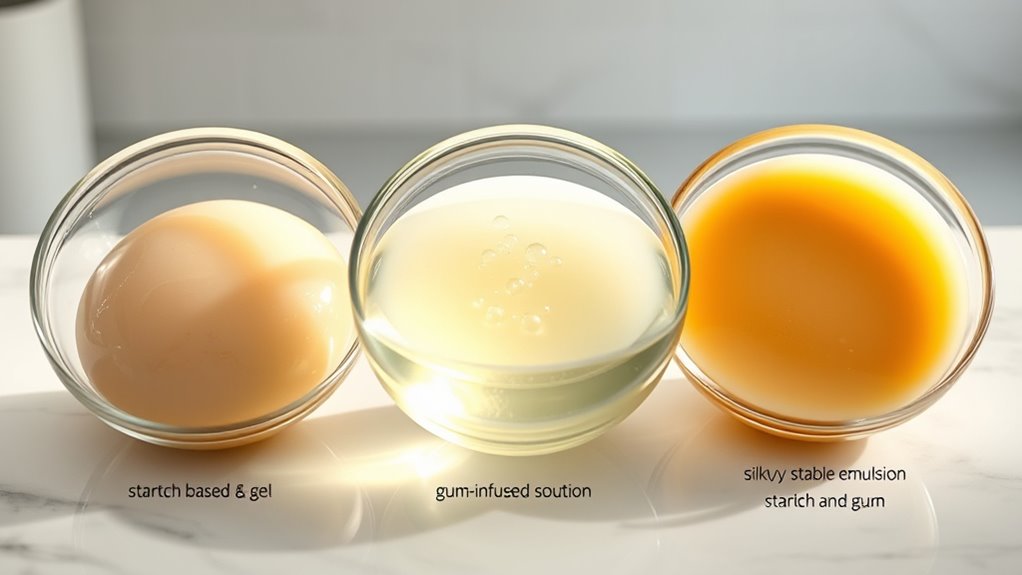
Plant-based thickeners like cornstarch, arrowroot, tapioca starch, and potato starch are key players in egg-free baking. When heated, they form gels that mimic the binding properties of eggs. For example, mixing cornstarch with water creates a slurry that thickens upon cooking, providing stability to cakes, muffins, and cookies. Tapioca starch is especially useful for creating a chewy texture in gluten-free bread, as it forms a cohesive network that holds everything together. These starches work because they absorb liquids and swell, giving baked goods a tender, moist crumb without the need for eggs.
Plant-based starches like cornstarch and tapioca create gels that mimic eggs, providing stability and moisture.
Emulsification techniques are equally essential in egg-free recipes. Eggs naturally act as emulsifiers, keeping fats and liquids uniformly combined. Without eggs, you need to replicate this function to prevent separation and ensure a stable batter. Plant-based emulsifiers, such as aquafaba (the liquid from cooked chickpeas), soy lecithin, or flaxseed gel, serve this purpose well. When whipped, aquafaba creates a foam that traps air, adding lightness and volume similar to egg whites. Flaxseed gel, made by soaking ground flaxseed in water, forms a viscous substance that holds oil and water together, helping to stabilize your mixture. These emulsification techniques improve texture, extend shelf life, and prevent the separation of ingredients during baking.
Combining plant-based thickeners with emulsifiers offers a powerful approach to egg-free baking. For instance, using a flaxseed gel with tapioca starch can produce a batter that holds together perfectly, even in delicate cakes or muffins. By understanding how these ingredients work together, you can customize recipes to achieve the desired structure and moisture. It’s all about balancing the right amount of thickening and emulsifying agents to mimic the role eggs play in traditional recipes.
In the end, mastering plant-based thickeners and emulsification techniques allows you to create stable, delicious baked goods without eggs. Not only does this open up options for vegans and those with allergies, but it also encourages creative experimentation in the kitchen. With a little practice, you’ll find that achieving egg-free stability is both straightforward and rewarding. Recognizing the chemical interactions involved can further enhance your baking skills and lead to more consistent results.
As an affiliate, we earn on qualifying purchases.
Frequently Asked Questions
How Do Starch and Gums Interact in Egg-Free Recipes?
Starch and gums work together to improve egg-free recipes by enhancing binding properties and thickening mechanisms. You’ll notice that starches provide structure through gelatinization, while gums like xanthan or guar thicken mixtures and add elasticity. When combined, they create a stable, cohesive texture, mimicking eggs’ natural binding and thickening effects. This synergy helps your baked goods hold together better, resulting in a more satisfying, egg-free final product.
Are There Any Allergens in Common Starches and Gums?
About 1 in 10 people have food allergies, making allergen considerations vital. Common starches like cornstarch and tapioca are naturally gluten-free, often making them safe alternatives. However, some gums, such as guar gum, can cause sensitivities in certain individuals. Always check labels for potential allergens, especially when considering natural alternatives, so you can avoid reactions and guarantee your recipes are safe for everyone.
How Does Temperature Affect the Stability Provided by Starch and Gums?
Temperature considerably impacts the stability provided by starch and gums due to thermal effects on molecular stability. When you heat these ingredients, their molecules can break down or change structure, weakening their ability to thicken or gel. As temperature rises, you might notice less stability, resulting in a runnier or less cohesive product. To maintain consistency, control heat carefully, ensuring the thermal effects don’t compromise the molecular stability of your starches and gums.
Can Starch and Gums Replace Eggs in All Baked Goods?
Starch and gums can’t replace eggs in all baked goods, but they work well as vegetable alternatives in gluten-free baking. You’ll find they provide structure and moisture, especially in cakes, muffins, and cookies. However, for recipes needing leavening or rich browning, eggs still have unique benefits. Experiment with different starches and gums to find the best combination for your specific baked treats, but expect some limitations.
What Are the Best Ratios of Starch to Gums for Different Textures?
For ideal egg-free baked goods, you should adjust starch blending and gum concentration based on texture. Generally, a ratio of 2:1 starch to gums works well for a tender crumb, while a 1:1 ratio creates a chewier result. For lighter textures, use less gum and more starch. Remember, small adjustments matter, so experiment to find the perfect balance for your specific recipe and desired outcome.
Conclusion
Just like a sturdy bridge holds everything together, using starch and gums can keep your egg-free baked goods stable and delicious. By choosing the right combination, you guarantee your treats hold their shape and texture without eggs. It’s a simple switch that makes your recipes reliable, even without eggs. So, next time you’re baking without eggs, remember that starch and gums are your best friends—helping your creations stay firm and fabulous, just like a strong, unbreakable bridge.