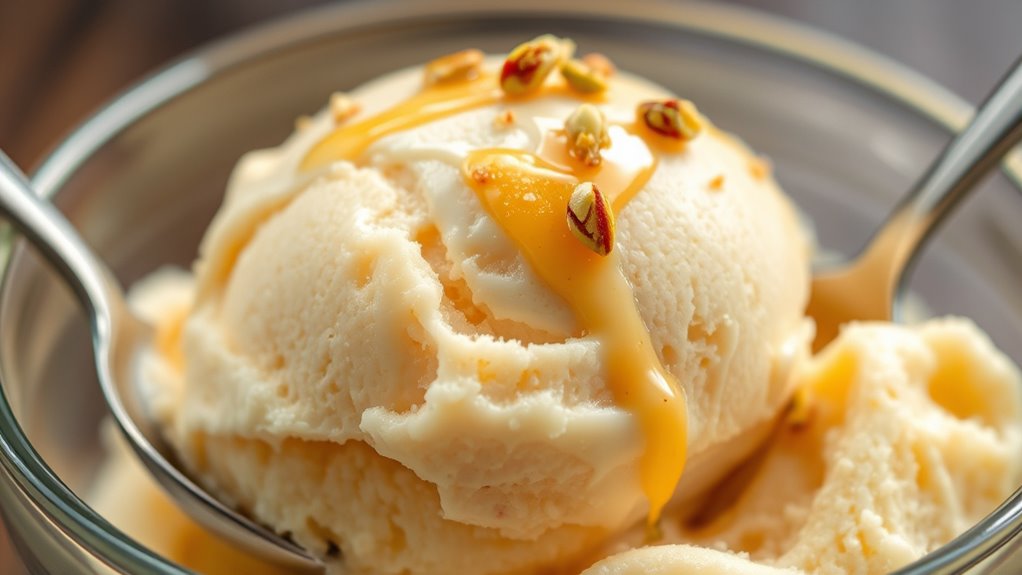

Booza is a traditional Levantine ice cream known for its incredible stretchiness and chewy texture, offering a unique sensory experience unlike Western smooth ice creams. Its elastic bite results from using mastic and sahlab, connecting you to centuries of cultural craftsmanship. This dessert isn’t just for taste—it’s a symbol of heritage and community, enjoyed during special occasions. To discover more about its rich history and preparation, keep exploring what makes booza truly special.
Key Takeaways
- Booza is a traditional Levantine ice cream known for its exceptional stretchiness and chewy texture.
- Its unique texture results from the use of mastic and sahlab, and traditional churning and stretching methods.
- Booza plays a significant cultural role in Levantine communities, symbolizing tradition and social bonding.
- The preparation process involves centuries-old techniques that connect people to their cultural heritage.
- Variations in texture and consistency reflect regional practices, emphasizing booza’s cultural diversity and historical significance.

Booza is a unique type of ice cream from the Levant region known for its remarkable stretchiness and chewy texture. When you try it, you’ll immediately notice how different it feels compared to Western-style ice creams. Instead of a smooth, creamy scoop, booza offers a chewy, elastic bite that seems to stretch as you pull it away from your spoon. This exceptional texture results from the traditional use of mastic and sahlab, which give booza its signature elasticity. The texture variations are what make booza so enthralling; it’s not just dessert but an experience. Sometimes, you’ll notice it’s denser and more fibrous, while other times, it has a slightly softer, more pliable consistency depending on the recipe and serving method. These variations are often influenced by regional practices and personal preferences, making each serving slightly unique.
Beyond its physical qualities, booza holds deep cultural significance in the Levant. It’s more than just a sweet treat; it’s a symbol of tradition and community. In Lebanon, Syria, Jordan, and Palestine, booza is often enjoyed during special occasions, festivals, and family gatherings. It’s a dessert that brings people together, and sharing it has become a ritual that reinforces social bonds. The way booza is prepared and served reflects local customs and culinary heritage, passing down techniques through generations. For many Levantine communities, making booza isn’t just about creating a delicious dessert—it’s an act of cultural preservation. The process of churning and stretching the ice cream connects people to their history and shared identity.
If you’re curious about trying booza, understanding its cultural significance will deepen your appreciation. It’s a reminder of how food can embody history, community, and tradition. The chewy, stretchy texture isn’t just a culinary curiosity; it’s a reflection of centuries-old practices that have endured despite modern influences. When you taste booza, you’re experiencing a piece of Levantine culture. Its texture variations tell stories of regional differences, while its cultural importance highlights its role as a symbol of heritage and unity. So, as you enjoy this distinctive ice cream, remember that each bite carries a legacy—an edible link to a rich history that continues to thrive today.
Frequently Asked Questions
What Are the Traditional Ingredients Used in Booza?
You’ll find that traditional booza uses ingredients like milk, mastic, sahlab, and mastic resin, which give it its signature stretchy texture. This ice cream has a rich history in Levantine culture, symbolizing hospitality and celebration. Its unique ingredients, especially mastic, connect it to centuries of culinary tradition, emphasizing its cultural significance. You’ll notice how these components create a distinctive, chewy treat that’s beloved across the region.
How Is Booza Made to Achieve Its Stretchy Texture?
To achieve booza’s signature stretchy texture, you mix traditional ingredients with frozen dessert innovations like adding gum Arabic or sahlab, which create elasticity. You then churn the mixture slowly to preserve its stretchiness. This process reflects its cultural significance, as it’s a cherished treat in Levantine traditions. The careful balance of ingredients and technique results in a unique, chewy frozen dessert that stands out among other frozen innovations.
Are There Any Health Benefits Associated With Booza?
Think of booza as a sweet gift from the Levant that offers some health benefits. It contains probiotics that support digestion and a good amount of calcium for strong bones. Its nutritional content varies, but it can be a treat that boosts your gut health while satisfying your sweet tooth. Just remember, like all desserts, enjoying it in moderation helps you get the benefits without overdoing the sugar.
Can Booza Be Made Dairy-Free or Vegan?
Yes, you can make booza with dairy-free alternatives or turn it into a vegan dessert option. You might use coconut milk, almond milk, or cashew cream as a base, mimicking the creamy texture. Adding natural thickeners like agar-agar or guar gum helps achieve the stretchiness. Experimenting with these dairy-free ingredients allows you to enjoy a delicious, vegan-friendly version of this traditional Levantine treat.
What Are the Popular Toppings Served With Booza?
You’ll love the way fruit toppings and nut garnishes turn booza into a flavor symphony. Imagine vibrant berries, sweet mango slices, or tangy pomegranate seeds dancing atop its stretchy, creamy surface. Add crunchy pistachios, almonds, or walnuts for a delightful contrast. These toppings don’t just decorate; they elevate your booza experience, turning each spoonful into a colorful, textured adventure that keeps your taste buds craving more.
Conclusion
Now that you’ve tasted booza, you’ve uncovered a treasure from the Levant, a creamy ribbon of tradition that stretches like a melody. Its chewy texture and sweet charm invite you to savor every bite, connecting you to centuries of history and culture. Just as a song lingers in your mind, booza’s rich flavor leaves a lasting impression, turning a simple treat into a delicious journey that dances on your taste buds long after the last spoonful.