
The journey of frozen desserts begins in ancient Persia, where royalty enjoyed icy treats made from flavored snow and fruit juices stored in underground pits. As ideas traveled west along trade routes, the Islamic world’s use of fruits, honey, and spices influenced European aristocrats, especially in Italy and France. Innovations like sugar, dairy, and techniques during the Renaissance helped shape modern gelato and ice cream. Keep exploring to discover how these age-old traditions continue to evolve today.
Key Takeaways
- Ancient Persia pioneered icy treats with flavored snow and underground storage, influencing later European frozen desserts.
- Trade routes facilitated the transfer of Persian icy treat ideas to Italy during the Islamic Golden Age.
- Italian innovators adapted Persian techniques, incorporating sugar, dairy, and local ingredients like pistachios and citrus.
- Renaissance experimentation in Italy advanced frozen dessert techniques, making them more accessible beyond Persian aristocracy.
- The fusion of Persian and Italian methods laid the foundation for modern gelato, sorbets, and ice creams worldwide.
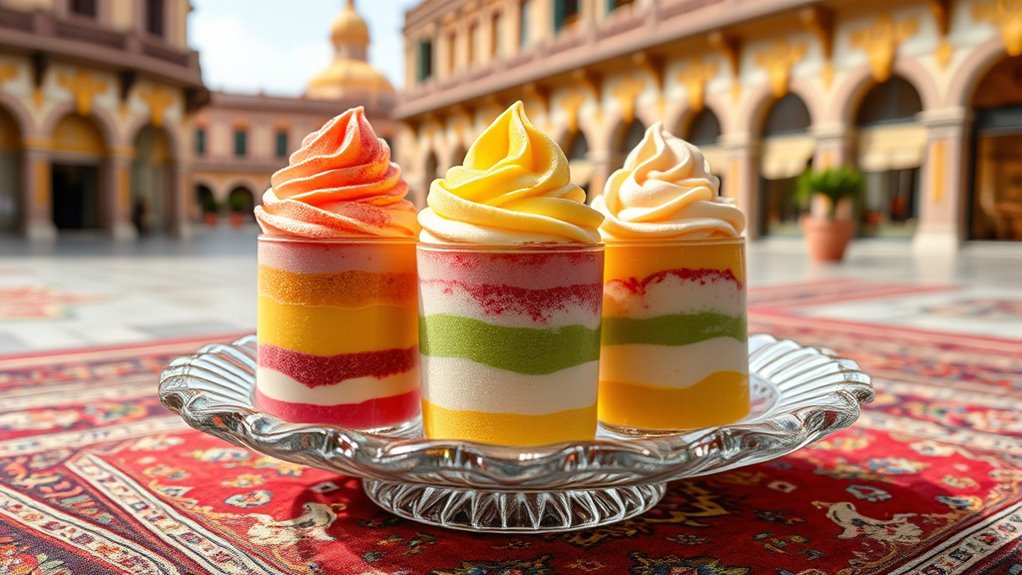
Have you ever wondered how frozen desserts became a beloved treat around the world? The answer lies in a fascinating journey shaped by cultural influences and culinary innovations that span centuries and continents. It all started in ancient Persia, where early versions of icy treats were enjoyed by royalty and aristocrats. Persians mastered the art of cooling sweetened fruit juices and flavored snow, using snow stored in underground pits or mountain ice. These early frozen confections reflected their cultural influences, blending local ingredients with innovative techniques to create invigorating delicacies. As trade routes expanded, these ideas traveled westward, reaching the Middle East and eventually Europe. The Islamic world introduced new flavor combinations and methods, such as mixing fruits, honey, and aromatic spices into icy treats. These innovations influenced European aristocrats, especially in the courts of Italy and France, where culinary creativity flourished. The use of natural refrigeration methods was crucial in preserving and enhancing these frozen desserts, enabling their spread and evolution. Italy, in particular, played a pivotal role in the evolution of frozen desserts. During the Renaissance, Italian chefs experimented with new techniques and ingredients, transforming simple snow-based desserts into more sophisticated creations. They introduced sugar as a sweetening agent, which allowed for richer flavors and longer preservation. This innovation was essential because it made frozen desserts more accessible beyond the elite classes. The Italians also began incorporating dairy, creating early versions of gelato, which combined cream, milk, and flavorings. This marked a major step forward in culinary innovation, as it added a creamy texture and depth of flavor that set Italian frozen desserts apart. Over time, regional variations emerged, with each area adding its own local ingredients, such as pistachios, almonds, or citrus, further enriching the tradition.
European colonization and trade brought these culinary influences to the New World, where they mingled with indigenous ingredients and techniques. In the 17th and 18th centuries, innovations like the hand-crank ice cream maker made it easier for households to produce frozen desserts at home. These innovations democratized access to frozen treats, turning them into popular staples in households and restaurants alike. Throughout this journey, cultural influences played an essential role in shaping the flavors, techniques, and presentation of frozen desserts worldwide. What began as simple snow-based treats in Persia evolved into the wide array of ice creams, sorbets, and gelatos we enjoy today. The continuous culinary innovations, driven by cultural exchanges, have guaranteed that frozen desserts remain a beloved part of global cuisine, delighting taste buds across generations.
As an affiliate, we earn on qualifying purchases.
Frequently Asked Questions
How Did Ancient Persia Originally Prepare Frozen Desserts?
In ancient Persia, you’d prepare frozen desserts using innovative preservation techniques, like mixing fruit juices and honey, then cooling them in snow or ice stored in underground chambers. These treats were often part of ceremonial food practices, symbolizing hospitality and celebration. You’d carefully control the temperature to maintain their texture, creating invigorating desserts that showcased both your skill and respect for tradition.
What Ingredients Were Used in Persia’s Earliest Frozen Treats?
In Persia’s earliest frozen treats, you’d find ingredients like fruit juices, honey, and aromatic spices to create rich, flavorful desserts. They used ancient flavorings such as rosewater and saffron to enhance taste. Ice preservation techniques played a vital role, with crushed ice and salt mixed to keep the treats cold. This combination allowed them to enjoy cooling, delicious desserts even in hot climates, showcasing their innovative culinary skills.
When Did Frozen Desserts First Appear in Italian Cuisine?
Frozen desserts first appeared in Italian cuisine during the Renaissance, around the 16th century, when sorbet innovations began to flourish. You’ll find that these icy treats quickly became part of Italy’s rich culinary traditions, blending flavors and techniques from different regions. As you explore Italian desserts, notice how the evolution of sorbets reflects a deep history of creativity and cultural exchange, making them a timeless and beloved part of Italy’s culinary heritage.
How Did Frozen Desserts Spread From Persia to Italy Historically?
You see, frozen desserts traveled like whispers along trade routes, carried by merchants crossing deserts and seas. The harsh climate in Persia inspired early cooling methods, which then spread through trade, influencing Italy’s culinary landscape. As traders exchanged goods and ideas, these icy delights found new homes, transforming from Persia’s innovations into Italy’s cherished treats. Trade routes and climate played like invisible bridges, connecting cultures through the gift of frozen sweetness.
Are There Regional Variations of Frozen Desserts Within Persia and Italy?
Yes, you’ll find regional variations of frozen desserts within Persia and Italy. In Persia, flavor profiles differ with ingredients like rosewater, saffron, and pistachios, creating diverse tastes across regions. Italy showcases variations like gelato, sorbetto, and granita, each emphasizing local ingredients such as fresh fruits and nuts. These differences reflect distinct regional flavor profiles and ingredient variations, making each frozen dessert unique to its area’s culinary traditions.
Conclusion
Your journey through the story of frozen desserts is like tracing a delicate web spun across continents, connecting Persia to Italy. Each flavor and tradition adds a vibrant thread to this sweet tapestry. As you savor these icy delights, remember you’re tasting centuries of innovation and cultural exchange. So next time you enjoy a frozen treat, realize you’re part of a centuries-old voyage—an everlasting voyage that keeps invigorating itself with every bite.