
To perfect your eggnog custard, understand how dairy stabilizes and how egg proteins coagulate when heated. Gently heating the mixture helps proteins thicken without separating or curdling, while stabilizers like sugar or starch reinforce texture. Controlling temperature prevents lumps and guarantees a smooth, creamy consistency. By mastering these chemistry principles, you’ll produce a luxurious holiday drink. Keep exploring, and you’ll uncover more tips to elevate your eggnog to festive perfection.
Key Takeaways
- Proper heating of eggs causes proteins to coagulate, thickening the custard without curdling.
- Stabilizers like sugars or emulsifiers maintain smooth texture and prevent separation during cooking.
- Gentle, gradual heating ensures uniform protein coagulation and avoids lumps or rubbery textures.
- Controlling temperature prevents over-coagulation, resulting in silky, velvety eggnog custard.
- Understanding dairy-protein interactions helps troubleshoot issues like curdling and ensures a festive, smooth finish.
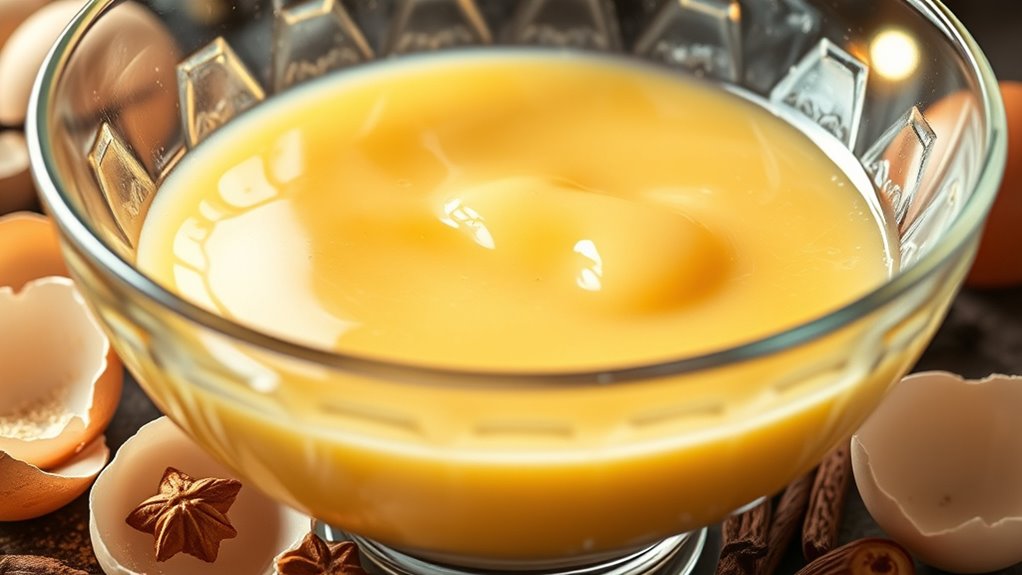
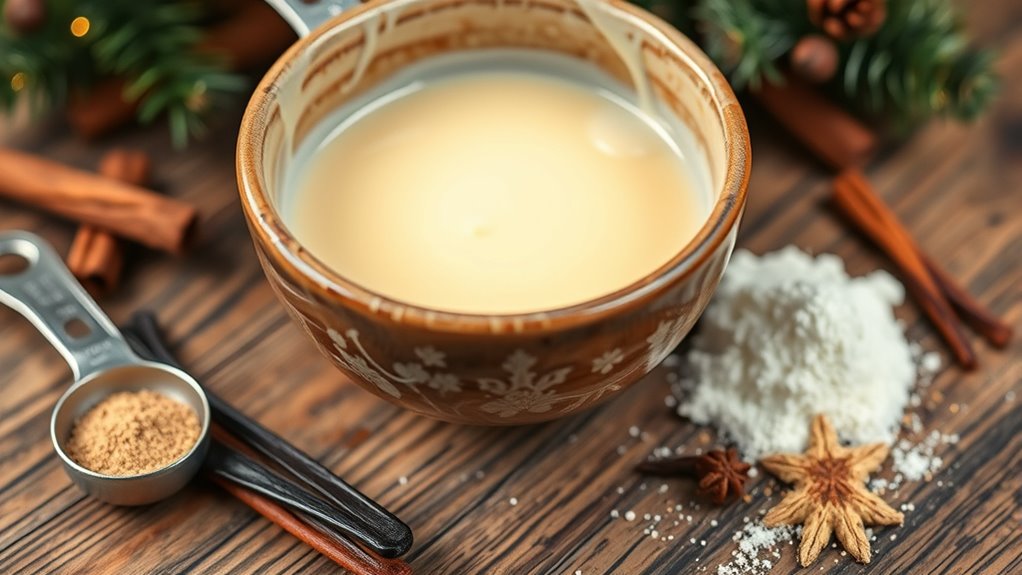
Eggnog base chemistry involves understanding the key ingredients and how they interact to create the rich, creamy consistency you enjoy. At the heart of this process are dairy stabilization and protein coagulation, two essential factors that determine the texture and stability of your eggnog. Dairy stabilization refers to how the milk and cream components are maintained in a liquid state without separating or curdling. When you heat the mixture, proteins and fats can sometimes break down or clump together, leading to an undesirable separation. To prevent this, stabilizers like sugars, emulsifiers, or even gentle heating techniques are used to maintain a smooth, uniform consistency. This guarantees your eggnog remains velvety and cohesive, especially when heated during the custard-making process. Understanding protein behavior during heating can help you better control the texture and prevent common issues. Protein coagulation plays a vital role in setting the custard. When you add eggs to your mixture, the heat causes the proteins in the eggs to denature and then coagulate, forming a network that thickens the liquid. This process is delicate; if you heat the mixture too quickly or to too high a temperature, the proteins can coagulate too rapidly, resulting in a lumpy or rubbery texture. To achieve a smooth custard, you need to control the temperature carefully, often by gently heating and stirring constantly. The ideal temperature allows proteins to coagulate just enough to thicken the mixture without overdoing it. This precise control results in a custard with a silky, creamy mouthfeel that holds together well once cooled.
Understanding dairy stabilization and protein coagulation ensures smooth, creamy eggnog every time.
Understanding dairy stabilization and protein coagulation also helps you troubleshoot common eggnog issues. For instance, if you notice curdling, it might be due to excessive heat or an imbalance in stabilizers. Adding a splash of milk or cream gradually while heating can help temper the proteins and prevent coagulation issues. Likewise, incorporating stabilizers like cornstarch or gelatin can reinforce the dairy matrix, preventing separation and ensuring your eggnog remains smooth from start to finish.
In essence, mastering the chemistry behind dairy stabilization and protein coagulation empowers you to craft a perfect holiday custard. It’s about striking a balance—carefully controlling heat, incorporating stabilizers when needed, and understanding how proteins behave during cooking. This knowledge enables you to produce a luxurious, well-textured eggnog that’s both flavorful and visually appealing, making your holiday celebrations all the more special.
As an affiliate, we earn on qualifying purchases.
Frequently Asked Questions
Can Eggnog Custards Be Made Dairy-Free?
Yes, you can make dairy-free eggnog custards. Just swap out dairy with dairy-free alternatives like almond, coconut, or soy milk. Use plant-based thickeners such as cornstarch, arrowroot, or tapioca to achieve the right creamy texture. These substitutions work well and let you enjoy delicious, festive custards without dairy. Just keep an eye on the flavors and consistency to get the perfect holiday treat!
What Are the Best Substitutes for Eggs in Custards?
Imagine savoring a creamy custard without eggs—plant-based alternatives like silken tofu or mashed bananas work beautifully. They provide the necessary richness, while thickening agents such as cornstarch or arrowroot help achieve the desired texture. These substitutes not only cater to dietary needs but also keep your holiday treats indulgent and smooth, proving that dairy-free custards can be just as luscious and satisfying.
How Does Alcohol Affect Custard Setting?
Alcohol can prevent your custard from setting properly because it slows down protein coagulation. When you add alcohol, some evaporates during cooking, but enough remains to interfere with the custard’s texture. This results in a softer, runnier consistency. To avoid this, add alcohol in moderation and cook the custard thoroughly to promote evaporation, ensuring a firmer set and smoother texture.
What Are Common Mistakes When Making Eggnog Custards?
You might stumble into overcooking custard or rushing improper tempering, turning your silky mixture into a curdled mess. Think of custard as a delicate dance—if you rush or ignore gentle heat, it stumbles. Be patient, whisk steadily, and warm gradually. Overcooking traps the eggs, causing lumps, while improper tempering introduces sudden heat, curdling the mixture. Master these, and your eggnog custard will be smooth and rich.
How Long Can Homemade Eggnog Custard Be Stored?
You can store homemade eggnog custard in the refrigerator for up to 2-3 days. Make sure to check for spoilage signs like sour smell, changes in texture, or mold. To keep it fresh longer, store it in an airtight container and keep it chilled. Avoid leaving it out at room temperature, as bacteria can grow quickly and cause spoilage. Consuming it within the recommended storage duration guarantees safety and quality.
Conclusion
Now that you understand the chemistry behind eggnog base, think of it as a delicate recipe for a holiday symphony. Each ingredient, from eggs to spirits, plays a crucial note, creating harmony through careful temperature control and mixing. When you master these reactions, your custards will turn into smooth, rich melodies that delight every palate. So, embrace the science, and let your holiday concoctions shine like a beautifully orchestrated performance.