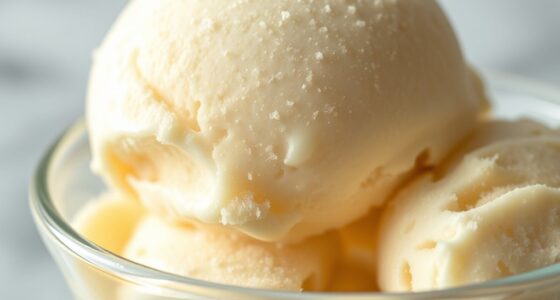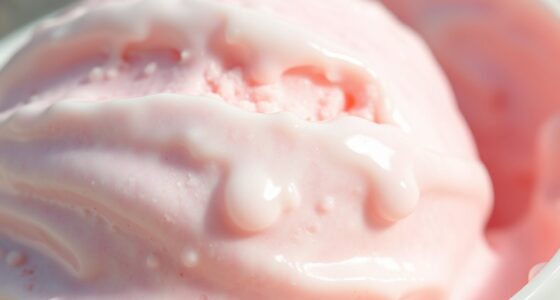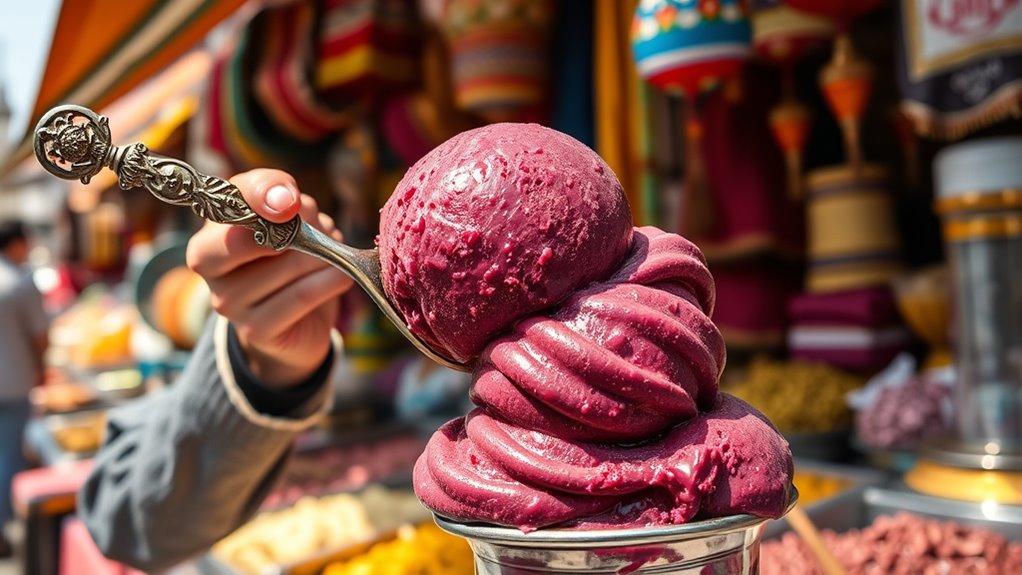

Turkish ice cream is so chewy because of natural ingredients called salep and mastic. Salep, made from wild orchid tubers, thickens the ice cream and makes it stretchy, while mastic, a pine resin, adds aromatic flavor and enhances the chewy texture. Together, these ingredients create a smooth, elastic, and velvety treat that’s both fun to stretch and rich in tradition. If you want to discover more about these unique ingredients, keep exploring that delicious history.
Key Takeaways
- Salep, a natural thickening flour from wild orchid tubers, gives Turkish ice cream its signature stretchiness and smooth, elastic texture.
- Mastic resin adds aromatic piney flavors and enhances the ice cream’s chewiness and elasticity when combined with salep.
- The natural ingredients work together to create a luscious, velvety consistency with a satisfying, chewy mouthfeel.
- Traditional techniques and ingredients foster interaction and playful stretching, heightening the sensory experience of Turkish ice cream.
- Preserving these natural components and methods keeps the ice cream uniquely chewy, authentic, and rooted in cultural heritage.
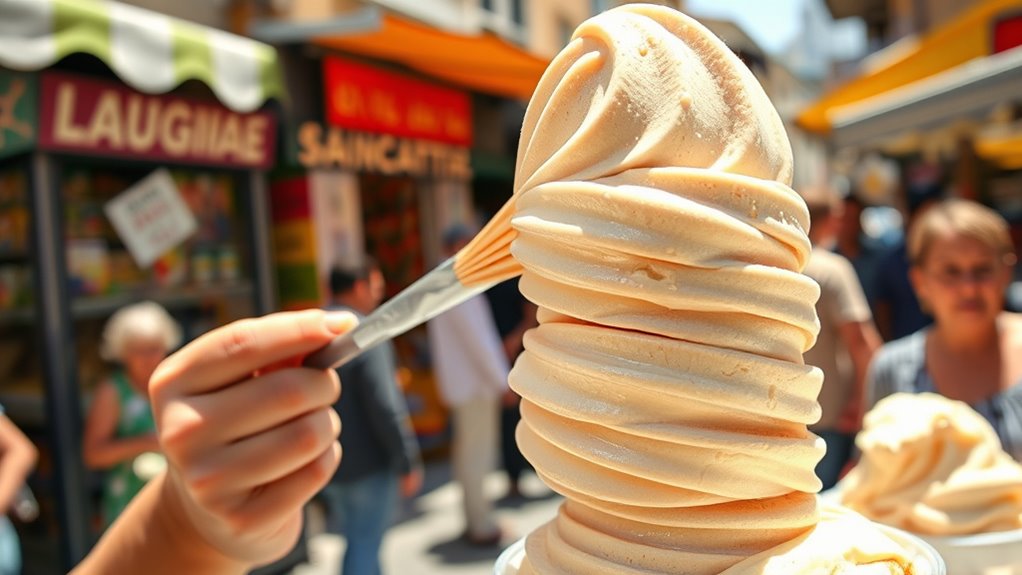
Have you ever tasted Turkish ice cream? If not, you’re missing out on a unique experience that combines rich flavors with an irresistibly chewy texture. One of the secrets behind this distinctive chewiness lies in the ingredients used, specifically salep and mastic. These natural components do more than just add flavor; they play an essential role in creating the ice cream’s signature consistency. When you indulge, you’re experiencing more than just sweetness—you’re savoring a carefully crafted balance of texture and taste that sets Turkish ice cream apart. The magic begins with salep, a flour made from wild orchid tubers, which acts as a natural thickening agent. Its unique properties help enhance the texture, giving the ice cream that luscious, stretchy quality you associate with Turkish varieties. Salep’s ability to improve texture isn’t just about thickness; it also helps create a smooth, elastic mouthfeel that’s both satisfying and fun to eat. Paired with mastic, a resin derived from the mastic tree, the ice cream gains an additional layer of complexity. Mastic adds a slightly piney, aromatic flavor, and its chewy consistency complements the salep’s stretchiness. Together, they form a flavor combination that’s both harmonious and intriguing, inviting you to explore more than just the surface of the dessert. These ingredients work in tandem to enhance the overall texture, making each bite a delightful mix of smoothness and elasticity. As you enjoy Turkish ice cream, you’ll notice that the chewiness isn’t just a random trait but a carefully cultivated feature that invites interaction. The elasticity encourages you to play with the ice cream, stretching it without breaking, which heightens the sensory pleasure. This texture enhancement isn’t accidental; it’s a deliberate result of traditional techniques and natural ingredients handed down through generations. The use of salep and mastic ensures that Turkish ice cream maintains its uniqueness, even in a world flooded with various frozen desserts. Their incorporation brings a depth of flavor and a distinctive mouthfeel that’s hard to find elsewhere. Additionally, the willingness to experiment with alternative ingredients has allowed artisans to innovate while preserving traditional qualities. When you experience Turkish ice cream, you’re tasting a piece of history, crafted with ingredients that elevate both flavor combinations and texture enhancement. It’s that chewy, stretchy quality that makes it memorable, transforming a simple treat into a multisensory experience. So next time you try this ice cream, pay attention to its texture—it’s no coincidence but a symbol of centuries of tradition and natural ingredients working in perfect harmony.
Frequently Asked Questions
How Does the Texture of Turkish Ice Cream Compare to Other Ice Creams?
You’ll notice Turkish ice cream has a unique texture compared to other ice creams—it’s noticeably chewier and more elastic. This texture comparison results from ingredients like salep and mastic, which give it a distinctive mouthfeel. The flavor profile is often richer and more complex, combining creamy sweetness with subtle herbal notes. Overall, its chewy, stretchy quality sets it apart, making each bite a playful, flavorful experience unlike typical ice creams.
Are There Health Benefits Associated With Salep and Mastic?
Did you know that salep and mastic, key natural ingredients in Turkish ice cream, offer health benefits? Salep, rich in prebiotic fibers, can support digestion and boost immunity, while mastic has anti-inflammatory properties. Using these natural ingredients not only enhances flavor but also provides potential health advantages. By enjoying Turkish ice cream, you’re indulging in treats that combine unique taste with beneficial natural elements.
Can I Make Traditional Turkish Ice Cream at Home?
You can definitely make traditional Turkish ice cream at home using homemade recipes. While authentic recipes call for salep and mastic, you can try ingredient substitutions like cornstarch or vanilla extract if those aren’t available. Just follow the steps carefully, stir constantly, and enjoy your chewy, creamy dessert. With a little patience, you’ll create a delicious treat reminiscent of the classic Turkish delight.
How Long Does Turkish Ice Cream Stay Chewy After Serving?
Your Turkish ice cream can stay chewy for quite a while if you store it properly—up to a few hours in the freezer, but it’s best enjoyed fresh. The storage duration affects its texture retention, so the longer it sits, the more it loses that signature chewiness. To keep that delightful stretch, serve it soon after preparation, and avoid long-term freezing, which can make it lose its signature elasticity.
Are There Regional Variations in Turkish Ice Cream Recipes?
You’ll find regional flavor variations in Turkish ice cream, influenced by local ingredients and cultural traditions. In some areas, you might taste added herbs, nuts, or fruits, giving each version a unique twist. Cultural influences shape these recipes, reflecting local tastes and history. These regional differences make Turkish ice cream diverse and exciting, offering a delightful experience no matter where you try it.
Conclusion
So, next time you enjoy Turkish ice cream, remember it’s not just about the chewy texture—it’s the magic of salep and mastic working together. Some say the stretchiness comes from a secret ingredient or old tradition, but it’s really the unique combination of these natural elements that gives it that signature chew. So, when you savor every bite, you’re experiencing centuries of craft and tradition in each chewy, delicious scoop.