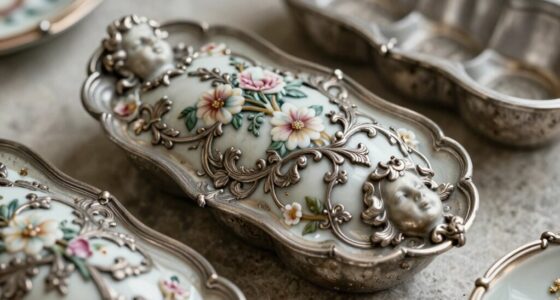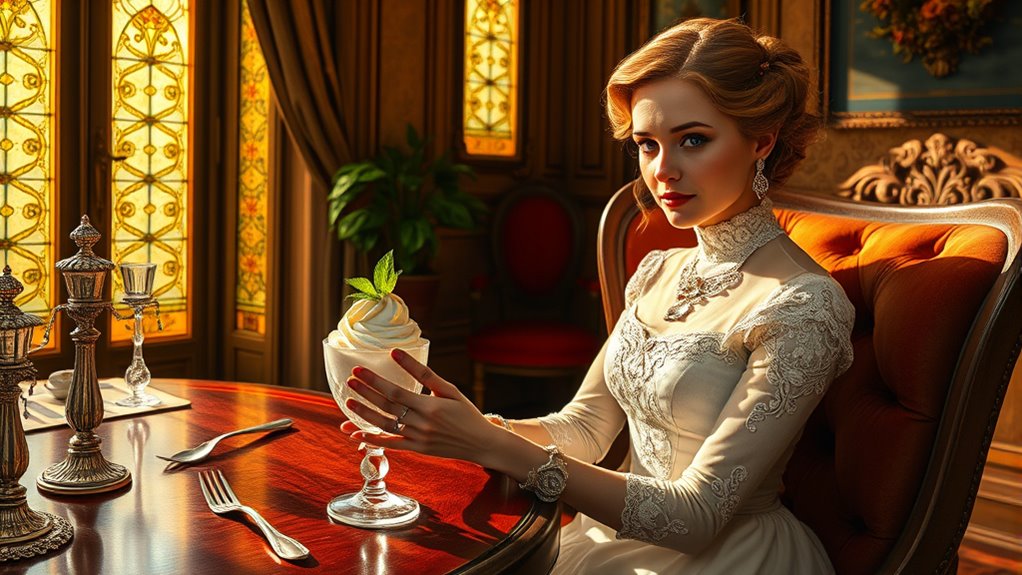

During the Victorian era, ice cream was a symbol of wealth and social status enjoyed only by the affluent. It required expensive ingredients, specialized equipment, and access to ice cellars, making it a luxury reserved for the upper classes. Serving or owning ice cream showcased refinement and sophistication, with exclusive salons serving as social hubs for the elite. If you explore further, you’ll discover how this luxury transformed into a popular treat enjoyed by all generations.

Get baking supplies delivered free with Prime
- Fast, free delivery on millions of items
- Prime Video, Amazon Music and more included
- Member-only deals all year
Key Takeaways
- In Victorian times, ice cream symbolized wealth, serving as a marker of social status among the upper classes.
- The complex, costly process of making ice cream limited its consumption to affluent households with specialized equipment.
- Exclusive ice cream salons and parlors were social venues for the Victorian elite, reinforcing class distinctions.
- Technological advances later made ice cream more accessible, transitioning it from an elite privilege to a popular treat.
- Today, ice cream’s history highlights its evolution from a symbol of privilege to a universally enjoyed dessert.
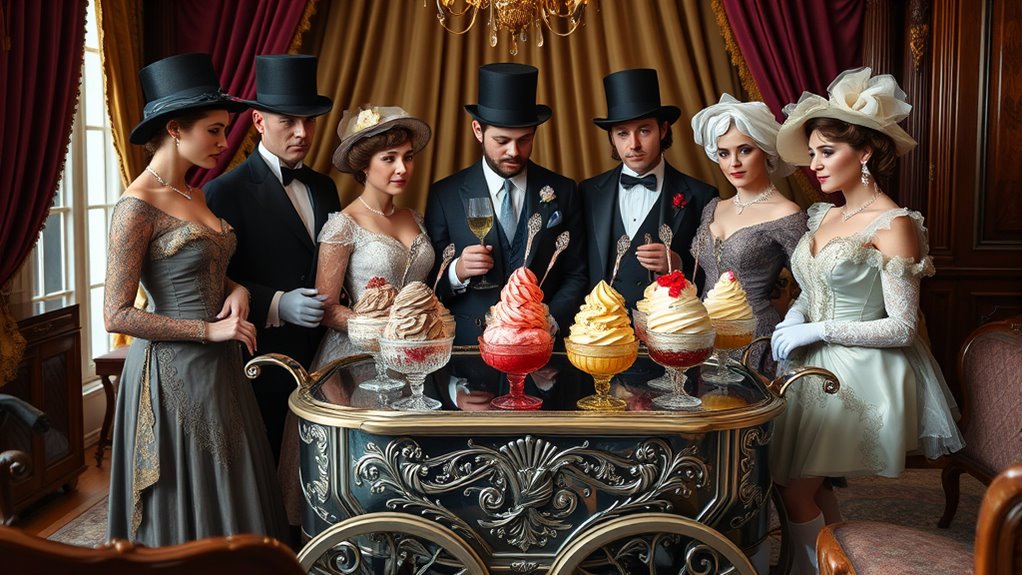
Have you ever wondered how ice cream became a beloved treat during the Victorian era? Back then, it wasn’t the casual dessert you enjoy today. Instead, it represented a significant part of the dessert evolution, rooted deeply in social status. During this period, ice cream was a luxury, reserved for the wealthy elite who could afford the ingredients and the specialized equipment needed to produce it. It wasn’t just a sweet indulgence; it was a symbol of wealth and refinement. As you explore Victorian society, you’ll see that owning an ice cream parlor or serving ice cream at social gatherings signaled your high standing. It was a way to showcase sophistication and taste, setting the upper classes apart from the rest of society.
In Victorian times, ice cream symbolized wealth and social status, reserved for the elite.
In those days, the art of making ice cream was complex and costly. The process required ice and salt to freeze the mixture, and these ingredients weren’t easily accessible to everyone. Wealthy families often had ice cellars and imported ingredients from abroad to ensure their desserts were as luxurious as possible. Serving ice cream at a dinner party wasn’t just about flavor; it was a statement. The presentation, the flavors, and the manner in which it was served all reflected social status. The more elaborate the presentation, the higher the social standing of the host. For the Victorian elite, ice cream became a visual and culinary showcase of their wealth and taste.
As ice cream grew in popularity among the upper classes, it also started to influence social customs. Exclusive ice cream salons and parlors emerged, where only the affluent could indulge. These venues became gathering spots for the Victorian social elite, further reinforcing the connection between ice cream and social hierarchy. Over time, as technology improved and refrigeration became more accessible, the dessert’s distribution expanded beyond the upper classes. But initially, it remained a symbol of privilege, a way for the wealthy to demonstrate their social status through their culinary choices.
Understanding this history helps you appreciate how far ice cream has come. What once was a marker of exclusivity has now become a common treat enjoyed by all. Still, knowing its roots in social status and dessert evolution adds a richer layer to your experience of this beloved dessert. Today, ice cream is no longer just a symbol of wealth but a universal pleasure, transcending class and bringing people together. The Victorian era laid the foundation for this transformation, turning ice cream from an elite delicacy into a global favorite.
As an affiliate, we earn on qualifying purchases.
Frequently Asked Questions
How Was Victorian-Era Ice Cream Initially Flavored and Preserved?
You would find Victorian-era ice cream flavored using simple flavoring techniques like adding fruits, nuts, and extracts such as vanilla or rose water. Preservation methods included using sugar and ice to keep it cold, as well as early refrigeration techniques. These methods helped maintain the ice cream’s texture and flavor, making it a luxurious treat enjoyed by the elite. Over time, innovations improved flavoring techniques and preservation, making ice cream more accessible.
What Social Customs Surrounded the Consumption of Ice Cream in Victorian Society?
Imagine elegant gatherings where you savor delicately flavored ice cream, often served in ornate bowls or on fine china. In Victorian society, these treats symbolized social exclusivity, reserved for the upper classes. You adhered to strict etiquette norms, like using silver spoons and engaging in refined conversation. Sharing ice cream became a display of wealth and sophistication, reinforcing social hierarchies and adding an air of luxury to special occasions.
Were There Any Notable Victorian Figures Known for Their Love of Ice Cream?
You’d be interested to know that some notable Victorian figures were known for their love of ice cream. Royal preferences played a role, with Queen Victoria herself enjoying it, helping to popularize the treat among the upper classes. Celebrity endorsements also emerged, as prominent figures publicly favored certain flavors or brands, boosting ice cream’s status from a luxury to a beloved indulgence accessible to more people.
How Did the Technology of the Time Influence Ice Cream Production?
You see, the technology of the Victorian era considerably impacted ice cream production. Innovations like improved ice cream machinery allowed for faster, more consistent mixing, while refrigeration methods, such as ice cellars and hand-cranked machines, kept ingredients cold during preparation. These advances made it easier to mass-produce ice cream, making it more accessible beyond the elite, and laid the foundation for the modern ice cream industry you enjoy today.
Did Victorian-Era Ice Cream Influence Modern Ice Cream Flavors and Styles?
You’ll find Victorian-era ice cream impacted modern flavors and styles through gelato innovations and flavor evolution. Victorian inventors experimented with new ingredients and techniques, paving the way for diverse textures and tastes today. These early innovations inspired contemporary chefs to explore unique flavor combinations, blending traditional methods with modern creativity. As a result, Victorian influences continue to shape how we enjoy ice cream, making it more diverse, flavorful, and exciting.
Conclusion
As you reflect on Victorian-era ice cream, it’s fascinating how what was once reserved for the elite eventually became a common delight. Coincidentally, your love for a simple scoop today echoes that exclusive past, reminding you how tastes and access evolve over time. Just as ice cream once symbolized status, now it’s a shared pleasure, bridging worlds you never imagined. History’s twists show that even the most exclusive treats can become everyday joys.
Columbus Day / Indigenous Peoples' Day Picks
long weekend sales
As an affiliate, we earn on qualifying purchases.